Key Takeaways
- Brian Armstrong and CZ argued on March 9 that AI agents could become major transaction-makers, with crypto emerging as the most natural payment rail.
- Coinbase has launched Agentic Wallets for autonomous AI agents, while BNB-linked infrastructure is pushing EIP-3009-based payment flows for AI-native and machine-to-machine use cases.
- Banking compliance still begins with identifiable customers and beneficial owners, making the traditional account model awkward for standalone software agents.
- Microsoft is signaling a similar shift, with Satya Nadella describing a future “digital worker” with its own identity, tools and desktop.
Crypto’s next big user may not be human.
Within hours of each other on March 9, Coinbase CEO Brian Armstrong and Binance founder Changpeng Zhao made essentially the same call.
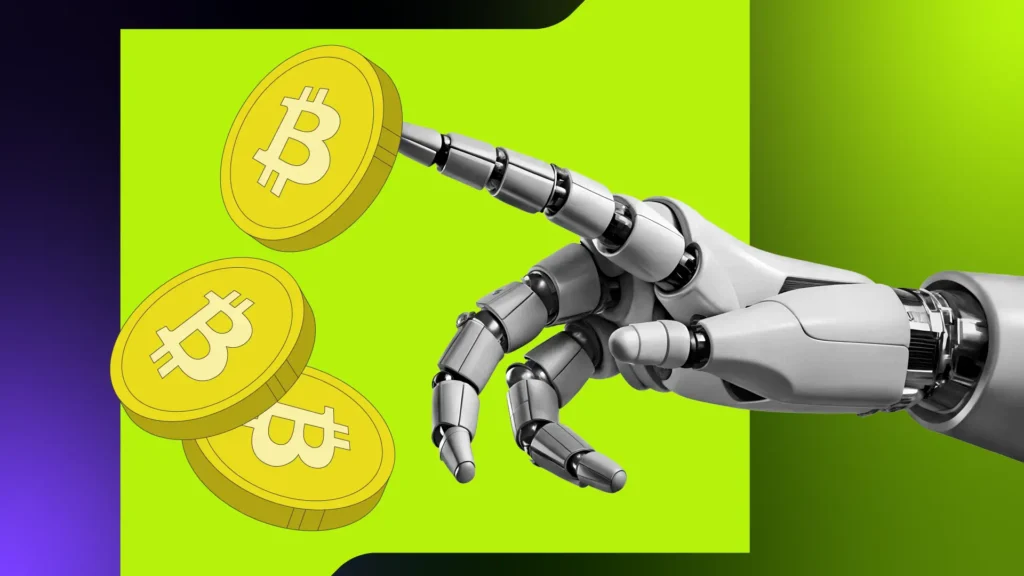
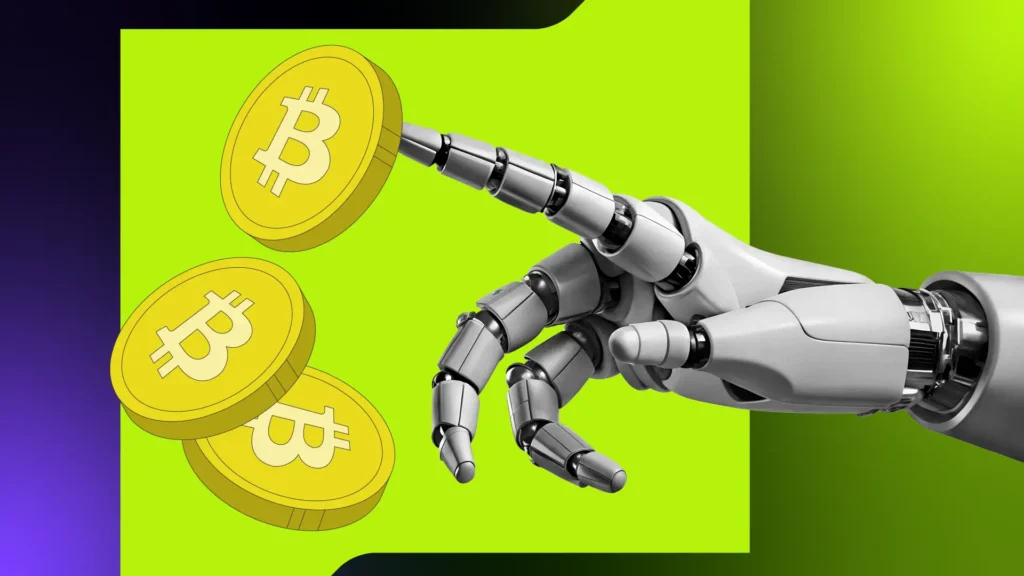
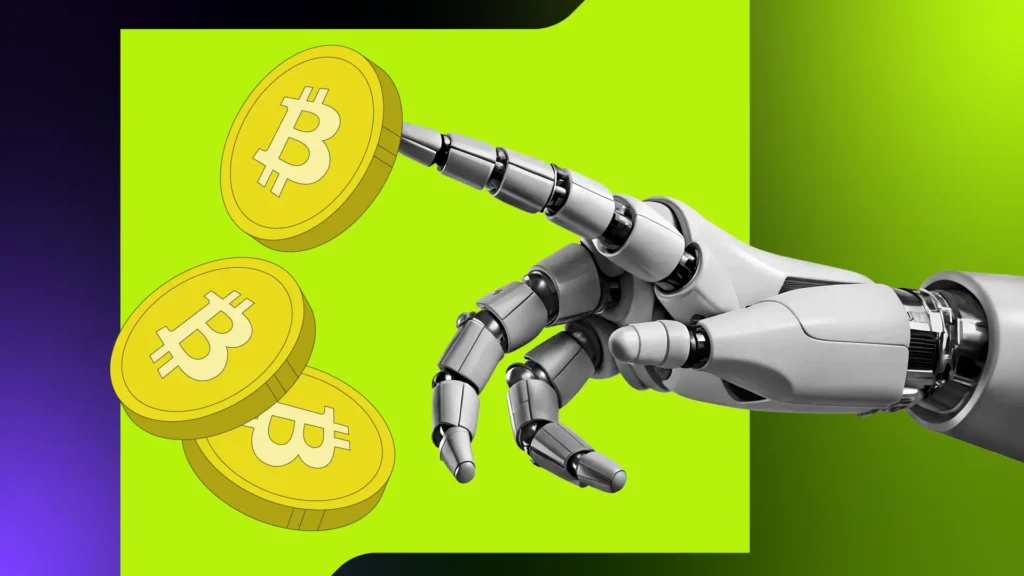
Armstrong said AI agents will soon outnumber humans in transactions because they cannot open bank accounts but can own crypto wallets.
CZ pushed the thesis further, saying AI agents will make “1 million times more payments than humans” and “will use crypto.”
Beneath the oversized forecasts is a deeper structural shift.
Software is increasingly acting as an economic participant, while much of the financial system still rests on human-centered identity and legal-entity frameworks.
The key issue is which rails are being built to support that transition.
Crypto Is Already Building for Machine Commerce
Coinbase has already moved from slogan to product.
On Feb. 11, the company launched Agentic Wallets, described as “the first wallet infrastructure built specifically for agents.”
Coinbase says the product gives agents autonomous spending, earning and trading capabilities, with built-in guardrails and the x402 protocol underneath.
The company is explicitly framing wallets as infrastructure for software that needs to act on its own.
In practical terms, that means enabling an agent to pay for APIs, data, compute or other services without requiring human approval for every transaction.
BNB-linked infrastructure is moving in the same direction.
In its December launch post for United Stables’ U, BNB Chain said the stablecoin is being developed to support EIP-3009 for gas-less, signature-based transfers.
And together with x402-enabled delegated execution, U will serve AI agents, autonomous trading systems, automated treasury operations and machine-to-machine payments.
BNB Chain later promoted native EIP-3009 support for agent payments, the same theme CZ amplified in his March 9 post.
The technical detail matters because EIP-3009-style flows are better suited to automated systems than older approve-and-transfer processes.
Signed payment authorization can be separated from transaction submission, making relayers, gas sponsorship and cleaner machine-driven payment flows more feasible.
That is the kind of infrastructure agents actually need.
Why Banks Have a Harder Time Serving Agents
Armstrong is pointing to a real structural mismatch.
FinCEN’s CIP guidance says a customer is generally “a person that opens a new account,” and clarifies that when an agent acts on behalf of someone competent, the customer remains the named account owner rather than the intermediary.
The broader U.S. CDD framework reinforces the same logic.
FinCEN says covered financial institutions must identify and verify customers and, for legal-entity customers, identify and verify beneficial owners.
Even with FinCEN’s February 2026 exceptive relief modifying when beneficial-owner verification must happen at each new account opening, the rulebook still assumes that account relationships resolve back to natural persons and legal entities.
Banks can still serve agentic commerce through companies, custodians, delegated authority and API-based wrappers.
Their account model begins with legal identity, while crypto wallets begin with keys and network access.
That distinction helps explain crypto’s early lead in building rails for software actors.
Microsoft Is Pointing at the Same Future
This idea is also surfacing outside the crypto industry.
At Microsoft’s Morgan Stanley Technology, Media & Telecom Conference, CEO Satya Nadella described a future “full digital worker” with “its own identity,” “its own tools,” and “its own desktop.”
He said Microsoft increasingly looks at “all agents as users,” and pointed to coding as the first place where that business-model shift is becoming visible.
This matters because autonomous software is already integrating into real products and workflows as an active participant.
In that setting, payment and identity questions start to look less speculative and more like core infrastructure.
The Real Bet is on Payment Cadence
A stronger reading of the Armstrong-CZ thesis centers on transaction volume and cadence.
AI agents may generate large numbers of small, frequent, automated payments for compute, bandwidth, data, software access and task execution.
That profile fits programmable wallets, stablecoins and sponsored onchain payment flows naturally.
Major questions still hang over the model.
Liability, fraud, tax reporting, sanctions screening and legal responsibility all become harder to map when software moves money at machine speed.
Wallet infrastructure may advance faster than the governance frameworks around it.
The Market Is Growing, but Still Early
There is also some caution around the agentic AI buildout.
Gartner said in June 2025 that more than 40% of agentic AI projects could be canceled by the end of 2027 because of cost, weak business value or inadequate risk controls.
Bottom line
A larger shift is already underway.
Crypto firms are building native payment rails for software actors while the banking system is still adapting its identity and compliance models to them.
Coinbase and BNB-linked infrastructure are already shipping parts of that machine-commerce stack, and Microsoft is signaling from another direction that agents are becoming real participants in enterprise software.
Taken together, the trend is clear: if the next wave of economic actors includes autonomous software, the wallet may matter more than the bank account.

PhD, researcher and writer exploring AI, blockchain, and the philosophy of tech, with a focus on DeScAI, governance, and trust.