Key Takeaways
- Fraudsters impersonate Iranian officials, demanding Bitcoin or USDT in exchange for fake passage clearance through the Strait of Hormuz.
- Iran now requires laden tankers to pay transit fees in cryptocurrency or yuan following the recent conflict.
- The Hormuz crisis is accelerating crypto’s role as neutral, sanctions-resistant money in global trade.
The Strait of Hormuz has long been one of the most sensitive pressure points in global trade.
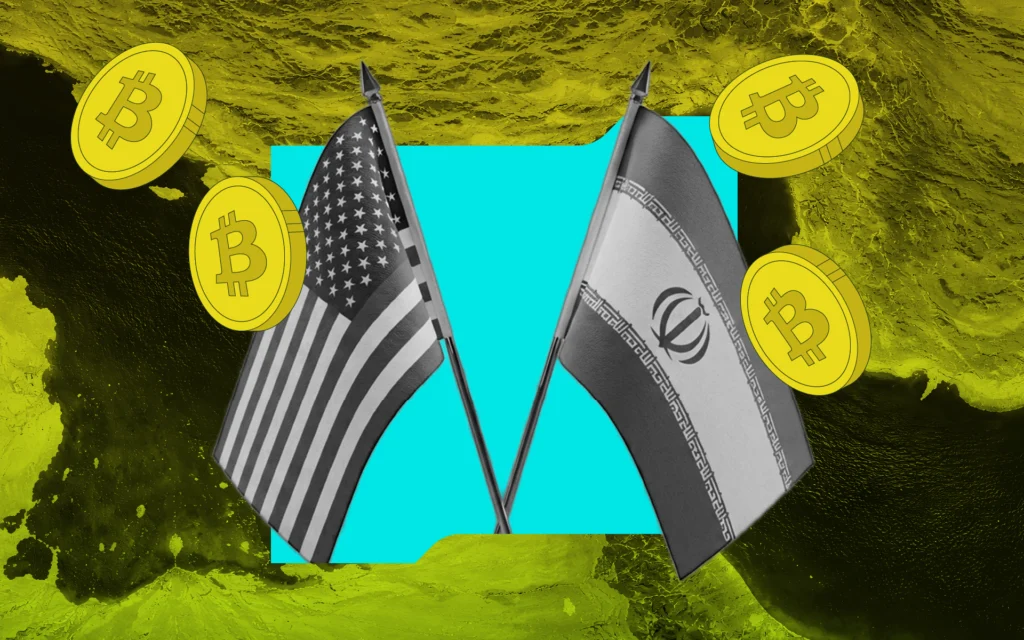
Now, it is becoming something else entirely: a real-time test case for how cryptocurrency operates under geopolitical stress.
In the aftermath of the recent U.S.–Iran conflict and a fragile ceasefire, hundreds of vessels remain stuck west of the strait.
For shipowners and crews, the risks are no longer limited to military escalation or insurance uncertainty.
They now include navigating a new—and often confusing—layer of crypto-driven demands, some official, others outright fraudulent.
What’s emerging is a split reality.
On one side, a state-backed system that collects transit fees using digital assets. On the other hand, opportunistic scams exploit the same framework.
A New Threat: Fake “Clearance” Requests in Crypto
Shipping firms are now dealing with a surge in highly targeted scams.
On April 21, Greek maritime risk firm MARISKS issued a warning about phishing campaigns aimed at vessels stranded in the Gulf.
Fraudsters posing as Iranian officials are contacting ship operators and offering “clearance” through the Strait of Hormuz—at a price.
The process is designed to look legitimate.
Scammers ask operators to submit detailed documentation, including vessel ownership, cargo manifests, and crew lists, supposedly for review by Iranian authorities.
Once “approved,” they receive a payment demand, often ranging from hundreds of thousands to millions of dollars, payable immediately in Bitcoin or USDT.
A sample message obtained by Reuters read: “After providing the documents… we will be able to determine the fee to be paid in cryptocurrency.”
MARISKS made it clear these messages are fraudulent. But in a high-pressure environment, the distinction is not always obvious.
At least one vessel reportedly paid such a fee but was then fired upon while attempting transit.
With roughly 300 ships and 20,000 seafarers still caught in limbo, the stakes are high.
Delays can cost operators heavily in demurrage fees, and uncertainty around safe passage creates the kind of urgency scammers exploit.
Crypto, in this context, is an ideal tool. Payments are fast, irreversible, and difficult to trace, allowing attackers to extract funds quickly and disappear.
A Real Policy Shift Behind the Scams
The scams are effective in part because they mirror a real policy change.
Since mid-March 2026, Iran has introduced a sovereign toll system for vessels passing through the strait.
Under this system, laden oil tankers must pay a transit fee—often starting at $1 per barrel and reaching up to $2 million for larger shipments.
Crucially, tankers and shipping companies must make these payments in Bitcoin, USDT, or Chinese yuan.
The process is structured. Operators submit vessel and cargo details to Iranian authorities.
After verification, they receive a payment request and a narrow window—sometimes just seconds—to transfer the exact amount to a specified wallet.
Only then are they issued a permit code and guided through a designated route.
Iranian officials have defended the approach as a practical solution under sanctions.
Hamid Hosseini, spokesperson for the Oil, Gas and Petrochemical Products Exporters’ Union, said crypto ensures payments “can’t be traced or confiscated due to sanctions.”
From Sanctions Tool to Strategic Infrastructure
Iran’s move did not emerge overnight.
The country has already built a sizable crypto economy, estimated at $7–8 billion, using digital assets to facilitate trade and bypass restrictions.
The Hormuz system expands that model into a new domain: control over physical infrastructure tied to global energy supply.
By moving payments away from traditional systems like SWIFT and onto blockchain-based rails, Iran reduces its exposure to external financial pressure.
Funds flow directly into wallets controlled by state-linked entities, outside the reach of conventional enforcement mechanisms.
This approach is already influencing how the market responds.
Bitcoin prices have shown sensitivity to developments in the region, reflecting growing recognition that crypto can serve as a hedge when traditional systems are disrupted.
A Glimpse of a Different Financial Order
The implications go beyond the Strait of Hormuz.
Analysts at firms like Chainalysis and TRM Labs see this as a turning point in state-level crypto adoption.
It demonstrates how digital assets can function as neutral, borderless money in high-risk environments—particularly where trust in existing systems is limited or fragmented.
That raises a broader question: if one country can monetize a global chokepoint using crypto, what stops others from doing the same?
Canal routes, resource corridors, and cross-border trade agreements could all, in theory, adopt similar models.
For countries facing sanctions or political pressure, the appeal is obvious.
At the same time, the shift creates new challenges. Western regulators have limited tools to intervene in real-time crypto transactions.
Once companies make the payment, it becomes significantly harder to reverse or freeze it.
Between Opportunity and Risk
For now, the situation in Hormuz remains fluid.
Officials urge shipping firms to verify all communications through official channels and treat any unsolicited crypto demands with caution.
The overlap between legitimate policy and fraudulent activity has created a landscape where mistakes can be costly.
But the larger trend is harder to ignore.
Crypto is no longer just a speculative asset or a niche payment method.
In moments of geopolitical strain, it is increasingly acting as infrastructure—used by states, exploited by bad actors, and relied upon by industries navigating uncertainty.
What’s happening in the Strait of Hormuz may be an early signal of how global trade adapts as traditional financial systems no longer dominate.

Prashant Jha is a seasoned crypto journalist based in Delhi, India, with a Bachelor’s Degree in Computer Science Engineering. Passionate about the evolving world of blockchain and cryptocurrencies, he has been a dedicated voice in the industry since 2018. Prashant’s expertise lies in regulatory reporting, where he unravels complex legal and financial developments with clarity and precision. Before joining CCN in 2024, he honed his craft at Cointelegraph, establishing himself as a trusted name in crypto journalism.
His coverage spans major industry events, including the high-profile collapses of FTX, Three Arrows Capital (3AC), and LUNA, offering readers insightful analyses of their regulatory and market implications. Prashant’s technical background enables him to bridge the gap between intricate blockchain technology and its real-world applications, making his work accessible to novices and experts.
Beyond his professional pursuits, Prashant is an avid music enthusiast, often exploring diverse genres to unwind. A sports lover, he has a particular passion for cricket and frequently engages in discussions about the game. His multifaceted interests and sharp journalistic instincts make him a valuable contributor to CCN, where he continues shaping the crypto landscape's narrative.