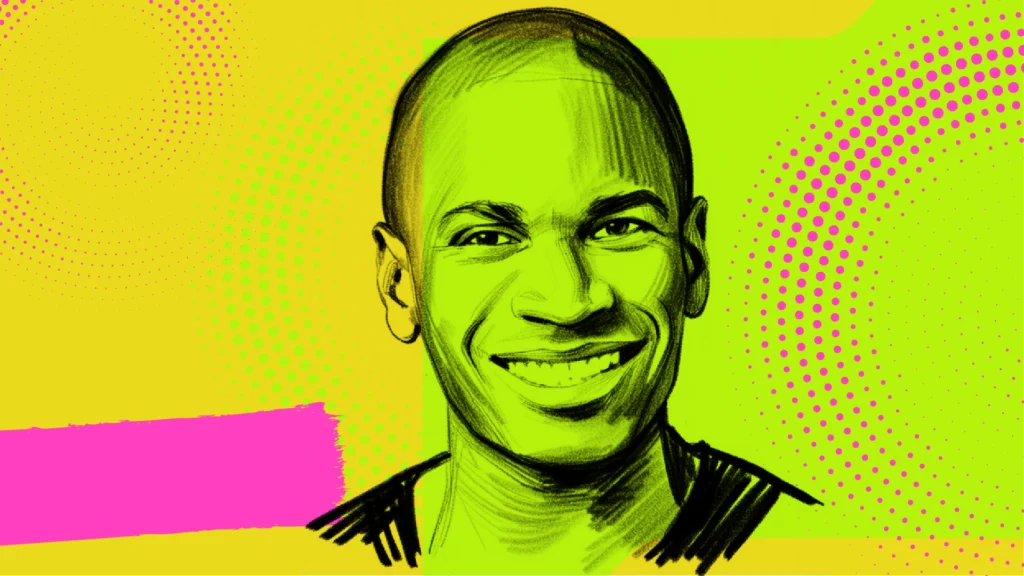
Arthur Hayes says the US CLARITY Act won’t impact Bitcoin, arguing liquidity and money printing—not regulation. | Credit: Gemini.
Share
Key Takeaways
Arthur Hayes says the US CLARITY Act will have little impact on Bitcoin.
He maintains a $125,000 target for Bitcoin.
Hayes warns AI-driven job losses could strain consumption and the banking system.
BitMEX co-founder Arthur Hayes said the upcoming US CLARITY Act will do little to influence Bitcoin and the crypto market’s long-term trajectory, arguing that global liquidity conditions remain the dominant driver of prices.
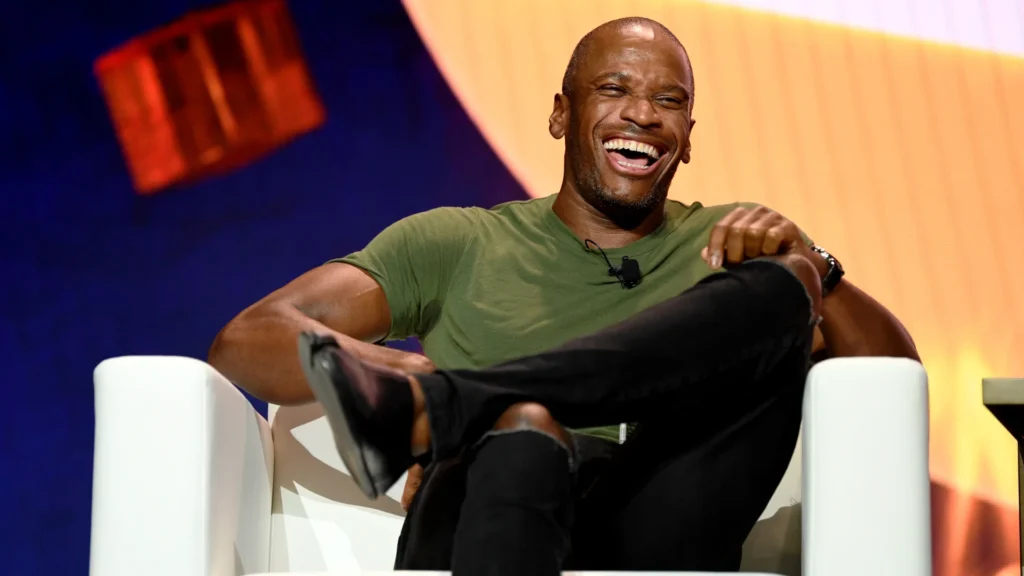
Speaking at the Consensus 2026 conference, Hayes again backed his macro-driven thesis, tying Bitcoin’s performance to money supply expansion.
Hayes said that AI-related job disruption and rising geopolitical tensions may ultimately force central banks to inject more liquidity into the global economy.
Try Our Recommended Crypto Exchanges
Sponsored
Disclosure
We sometimes use affiliate links in our content, when clicking on those we might receive a commission at no extra cost to you. By using this website you agree to our terms and conditions and privacy policy.
Hayes was blunt in dismissing the significance of pending US crypto legislation, including efforts to establish clearer rules for stablecoins and digital assets.
“So what is CLARITY going to bring? Nothing unless there’s what I can argue is there’s more money printing,” he said.
“Otherwise, there’s no value here, because it’s just another asset on a bank balance sheet,” he added.
Hayes also noted that the industry has already grown into a multi-trillion-dollar market without regulatory certainty.
“If that’s something that you want to integrate in your business, or you believe your clients need that asset, you’ll find a way, just like you found a way from 2009 till the present,” he said.
He also argued that regulation primarily benefits centralized companies rather than the underlying crypto assets themselves.
“That doesn’t have any effect on whether Bitcoin or crypto is effective,” he said. “The reason why we’re all here… is because it has some utility outside of the traditional banking system.”
He added that he did not care whether the CLARITY Act helps bring in “big players,” since Bitcoin has already proven it works.
Liquidity to Drive Bitcoin Higher
Instead of regulation, Hayes again pointed to monetary expansion as the key catalyst for Bitcoin’s next move.
“Bitcoin is a combination of a tech stock which works, and its liquidity. That’s all that matters,” he said.
Adding: “If there’s more [fiat] in the future than today, then Bitcoin will be more valuable.”
He said recent geopolitical developments could accelerate that process, claiming the world had entered into a “wartime economy.”
“… and that means more money printing,” Hayes said.
According to Hayes, increased government spending and credit creation will support risk assets such as Bitcoin, which he said explains Bitcoin’s recent relative strength.
“That’s why Bitcoin has outperformed the NASDAQ tech stocks and gold since Feb. 28,” he said.
AI Disruption and Economic Stress
A central pillar of Hayes’ thesis is the impact of AI on employment and consumption, which he said could expose vulnerabilities in highly leveraged economies.
“It doesn’t take that many people to lose their jobs for this to be a problem,” he said.
While acknowledging that workers may eventually find new roles, he argued the transition period itself could create acute financial stress—particularly in advanced economies where household debt levels are high.
“You’re talking about the bottom tier of workers… who still make quite a bit of money… who no longer have a job,” Hayes said.
He pointed to workers in sectors like technology, where companies are increasingly using AI to automate tasks such as coding.
These workers, he noted, tend to be among the highest consumers in the economy and often carry substantial financial obligations, including mortgages, credit cards and other loans.
“How are they going to pay their mortgage… or just consume at the level they were consuming?” he said.
According to Hayes, even a relatively small percentage of displaced high-income workers could have an outsized impact on the broader economy.
A drop in their spending would hit corporate revenues, particularly in discretionary sectors, while rising defaults would directly affect the banking system.
This, he explained, creates a feedback loop that leads to reduced consumption and weaker business performance, which in turn can trigger further layoffs and tighter credit conditions.
In such a scenario, Hayes said, policymakers may be forced to respond with monetary easing to stabilize the system.
“I think Bitcoin was telling us that there’s not enough money being created to forestall this AI deflationary event,” he said.
$125,000 Bitcoin Call
Hayes reaffirmed his expectation that Bitcoin will reach $125,000, driven by expanding liquidity rather than regulatory developments.
“I think I’ve gone down like $125,000,” he said, referring to a lower target than previously stated.
He emphasized that the outlook hinges on the central bank and credit expansion.
“If my thesis on the pace of central bank and commercial bank money plays out, then Bitcoin will be more viable,” he said.
For Hayes, the conclusion remains straightforward: “More money printing… It’s just that simple.”
Hyperliquid Bet
Beyond Bitcoin, Hayes said he is heavily focused on Hyperliquid, reflecting his broader outlook that trading infrastructure remains crypto’s most successful use case.
He described Hyperliquid as the next evolution of that model, combining speed, accessibility and token-driven incentives.
Hayes pointed to the platform’s economics as a key differentiator.
“They’ve got a great token and token model where all the revenue goes back to the token holders in the form of buybacks,” he said.
Hayes said the added absence of venture capital allocations creates a “clear path” for value accrual.
Kurt Robson is a London-based reporter at CCN, specialising in the fast-moving worlds of crypto and emerging technology. He began his career covering local news in Cornwall after graduating from Falmouth University with First Class Honours in Journalism. There, he cut his teeth on everything from council meetings to missing swans.
He quickly rose through the ranks to become a frontline journalist at several of the UK’s leading national newspapers. Over the years, he has interviewed musicians and celebrities, reported from courtrooms and crime scenes, and secured multiple front-page exclusives.
Following the upheaval of the COVID-19 pandemic, Kurt shifted his focus to technology journalism—just ahead of the AI boom. With a natural curiosity and a trained eye for emerging trends, he has found a new rhythm in reporting on innovation.
At CCN, Kurt's work focuses on the cutting edge of crypto, blockchain, AI, and the evolving digital world. Drawing on his background in people-first reporting and his deep interest in disruptive tech, Kurt delivers stories that are insightful, entertaining, and human-centric.