XRP Holders Are Excited About a BRICS Pay Link — Here’s What’s Actually Confirmed
Share
Key Takeaways
BRICS Pay is preparing to expand its business-to-business cross-border payment service in the second half of 2026, with settlements across 23 currencies.
The system is designed to connect national payment rails directly, potentially competing for payment flows targeted by SWIFT, Ripple, and Stellar.
BRICS Pay does not currently rely on XRP or XLM, and its developers explicitly describe it as a complement rather than a replacement for SWIFT.
A new cross-border payment network backed by the BRICS business ecosystem is nearing commercial deployment, creating another potential rival to SWIFT and to blockchain-based payment rails built around XRP and Stellar (XLM).
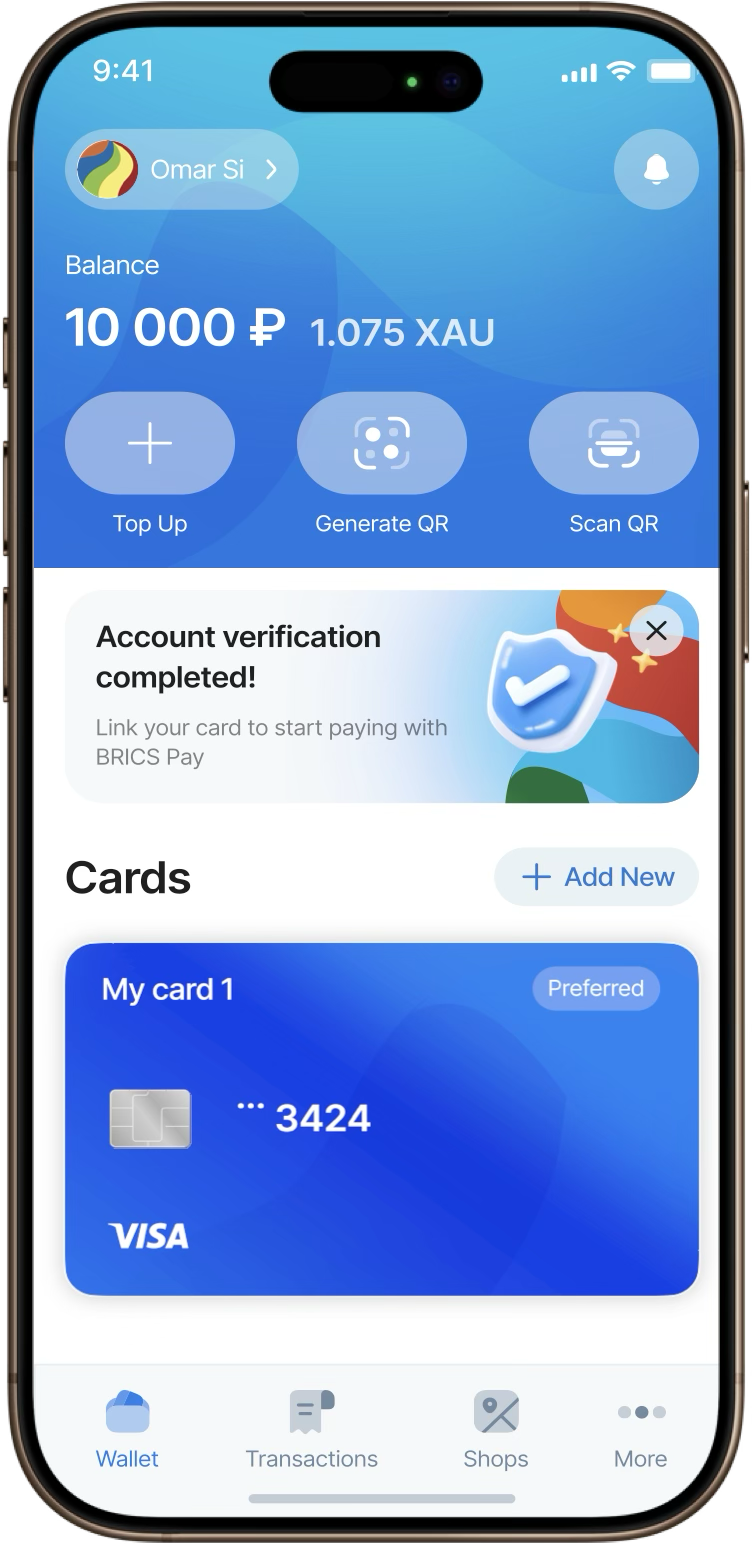
BRICS Pay is developing a distributed payment infrastructure connecting national and commercial payment systems across BRICS+ economies.
Its corporate B2B service is scheduled for commercial rollout in the second half of 2026, following pilot testing, according to the project’s published roadmap.
The network targets the same fundamental problem Ripple, Stellar, and SWIFT are racing to solve: moving money internationally without lengthy correspondent-banking chains.
BRICS Pay Targets 23 Currencies
BRICS Pay’s B2B architecture uses payment gateways that convert between national currencies and route transactions through participating infrastructure.
Its current documentation lists support for 23 currencies, including the US dollar, Chinese yuan, Indian rupee, Brazilian real, Russian ruble, and South African rand. Stablecoins may also temporarily function as bridge assets during the system’s transitional phase.
Unlike XRP Ledger or Stellar, BRICS Pay is not a blockchain itself. Project representatives describe it as a distributed network of gateways connecting existing payment systems.
Its planned Decentralized Cross-Border Messaging System, or DCMS, would provide an additional interbank messaging channel alongside SWIFT.
That distinction is important. BRICS Pay itself states that it is not designed to replace SWIFT, but to provide a parallel route when existing channels are expensive, slow, or unavailable.
When Will BRICS Pay Launch?
BRICS Pay does not have a single launch date because its rollout is being split across different products. Its consumer-to-business payment service began its rollout in the first quarter of 2026, initially targeting foreign tourists using national QR payment systems.
Borderless Payments Across BRICS+ Countries. | Source: brics-pay.com
The official roadmap then scheduled integration with payment infrastructure in the CIS, Türkiye, UAE, and Egypt for the second quarter, followed by broader BRICS+ integration in Q4 2026.
The more important milestone for cross-border corporate payments is still ahead. BRICS Pay representatives said B2B pilot testing was planned for mid-2026, with commercial launch targeted for the second half of 2026. The separate BRICS DCMS interbank messaging system, positioned as an alternative channel to SWIFT messaging, is expected to move through pilot and commercial deployment across 2026 and 2027.
That means BRICS Pay is already being rolled out in stages, but the part most directly relevant to SWIFT, Ripple’s cross-border infrastructure, and Stellar-based settlement is the B2B system, which is expected to move into commercial use later in 2026.
Where XRP and XLM Fit
The potential competition with XRP and XLM is less direct but still significant.
Ripple uses XRP as a bridge asset in its On-Demand Liquidity infrastructure, allowing value to move between currencies without institutions having to pre-fund accounts. Ripple says its broader payments network has processed more than $100 billion and operates across more than 60 markets.
Stellar is similarly positioned around payments and asset settlement. The Stellar Development Foundation reported $5.5 billion in stablecoin payment volume during Q1 2026, up 72% year over year.
BRICS Pay therefore does not need to adopt XRP or XLM to compete with them. If banks can move local currencies directly through connected domestic payment systems, the need for an independent crypto bridge asset could be reduced in those corridors.
The effort is also becoming broader than BRICS Pay. Reserve Bank of India Governor Sanjay Malhotra said this week that BRICS members are discussing linking their fast-payment systems and potentially their CBDCs, although those talks remain in the early stages.
For XRP, XLM and SWIFT, that means the cross-border payments race is gaining another route: national payment networks connected directly to each other rather than through a traditional correspondent bank or public cryptocurrency.
Disclaimer:
The information provided in this article is for informational purposes only. It is not intended to be, nor should it be construed as, financial advice. We do not make any warranties regarding the completeness, reliability, or accuracy of this information. All investments involve risk, and past performance does not guarantee future results. We recommend consulting a financial advisor before making any investment decisions.
Dr. Guneet Kaur is a senior editor at CCN.com and a Science Fellow at Exponential Science. She is a fintech and blockchain expert with extensive experience in digital finance education, blockchain ecosystems, and cryptocurrency markets. She has worked with global media such as Cointelegraph, as well as education and blockchain platforms, to design and lead strategic content and learning initiatives. As an educator and assessor for top-tier executive programs, she bridges real-world fintech trends with academic insight.
Dr. Kaur is also a published researcher and peer reviewer across fintech and data science journals, including Financial Innovation Journal and International Journal of Big Data Intelligence and Applications. Her work spans data-driven analysis, Web3 innovation, and technical content development. With a strong foundation in both industry and academia, she translates complex financial technologies into practical applications, empowering learners, professionals, and institutions across the rapidly evolving digital finance landscape.