Discover 2025’s crypto security trends. With exchange hacks rising and cold wallets proving safest, learn how to protect your assets this winter season. | Credit: Veronica Cestari/CCN.com
Share
Key Takeaways
Despite being built on decentralization, many DeFi platforms depend on centralized data oracles.
When a protocol relies on one exchange for its price feed, any downtime, API failure, or manipulation on that exchange can instantly cascade through markets.
Exchanges acting as trading venues and oracles can profit from manipulating prices.
Most centralized oracles do not publicly disclose how prices are calculated or verified, forcing the DeFi ecosystem to trust a central actor.
In decentralized finance (DeFi), one concept reigns supreme: trust minimization. The idea is simple but powerful: design systems without a single authority to report the truth. Yet, as DeFi has matured, a contradiction has emerged.
Many decentralized applications (dApps) now rely on price data from centralized entities, often, the very exchanges that profit from those prices.
This growing dependence on centralized oracles, particularly when exchanges act as both the source and verifier of market data, represents one of the most underappreciated risks in modern crypto markets. It’s a paradox at the heart of DeFi: decentralization built on centralized truth.
This article unpacks what happens when exchanges effectively become their own price feeds, why it’s risky, and how the industry can mitigate the danger.
Try Our Recommended Crypto Exchanges
Sponsored
Disclosure
We sometimes use affiliate links in our content, when clicking on those we might receive a commission at no extra cost to you. By using this website you agree to our terms and conditions and privacy policy.
In blockchain systems, smart contracts can’t directly access real-world data. They operate within a closed environment, insulated from external information like exchange rates, stock prices, or weather data.
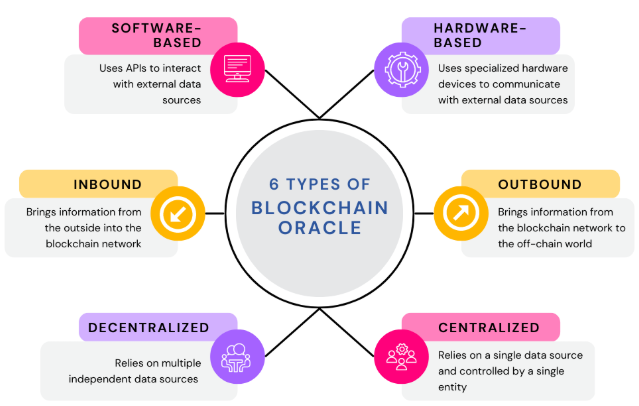
Six types of blockchain oracle. | Credit: Techslang
Oracles serve as intermediaries that feed external data into the blockchain to bridge this gap. They’re the eyes and ears of smart contracts, providing information necessary for functions such as:
Centralized oracles pull data from a single source, often one exchange or provider. They are fast and straightforward but represent a single point of failure.
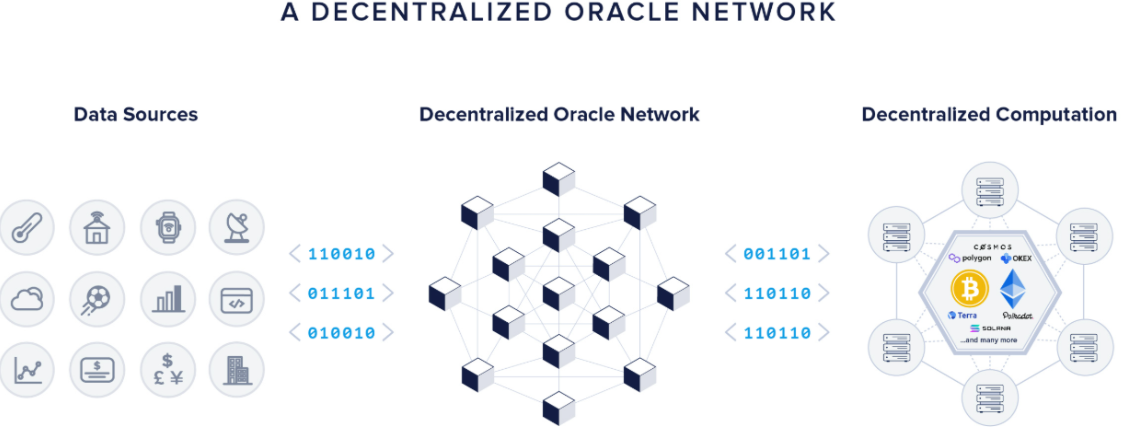
Decentralized oracles, like Chainlink or Pyth, aggregate data from multiple independent sources, using consensus or cryptographic proofs to ensure reliability.
While decentralized oracles are the ideal in theory, many protocols, especially smaller ones, continue to use centralized feeds for cost or simplicity. This is where the real risk begins to surface.
When Exchanges Become the Oracle
Imagine a crypto exchange operating a trading venue and a price oracle.
It runs its own spot and derivatives markets, where prices are determined by the trades on its order book. Then, the same company publishes a “market reference price” feed consumed by lending platforms, perpetual protocols, and stablecoin issuers.
In this setup, the exchange isn’t just a market participant and the arbiter of truth. Its internal prices determine how collateral is valued, when liquidations occur, and how positions are settled across the broader DeFi ecosystem.
At first glance, this might seem efficient. After all, the exchange has real-time access to high-quality trading data. But look deeper, and the arrangement reveals deep structural risks.
For example, on Oct. 11, 2025, the synthetic dollar token USDe briefly lost its peg on Binance, plunging to around $0.65 from $1.00.
Binance acknowledged the issue as an “oracle” malfunction tied to internal data feeds, and announced it would compensate impacted users to the tune of approximately $283 million.
Hidden Dangers of Centralized Exchange-Based Oracles
In the world of smart contracts and decentralized applications, orchestration often depends on oracles, mechanisms that pull off-chain data (like exchange prices) into on-chain logic.
When these oracles rely on a single exchange or central provider, the system inherits severe exposures: for instance, the data could be manipulated, delayed, or corrupted, the provider may become a point of regulatory or infrastructural failure, and the entire contract execution may malfunction or trigger unintended losses.
By contrast, truly decentralized oracle networks attempt to spread risk across many sources, but centralized, exchange-based feeds quietly reintroduce a “single point of failure” into systems that aim to be trustless.
1. Conflict of Interest
The most apparent problem is incentive misalignment. Exchanges profit from trading volume, liquidations, and market volatility. There’s a built-in conflict if the same entity can influence the price data that determines those outcomes.
For example, an exchange that runs a derivatives platform could theoretically manipulate its price feed to trigger liquidations on users’ leveraged positions, a tactic seen in early crypto markets with thin liquidity. Even subtle price adjustments could yield outsized profits in liquidation fees or counterparty gains.
While major exchanges today operate under greater scrutiny, the temptation and ability to manipulate “official” prices remain latent risks, particularly in unregulated or offshore jurisdictions.
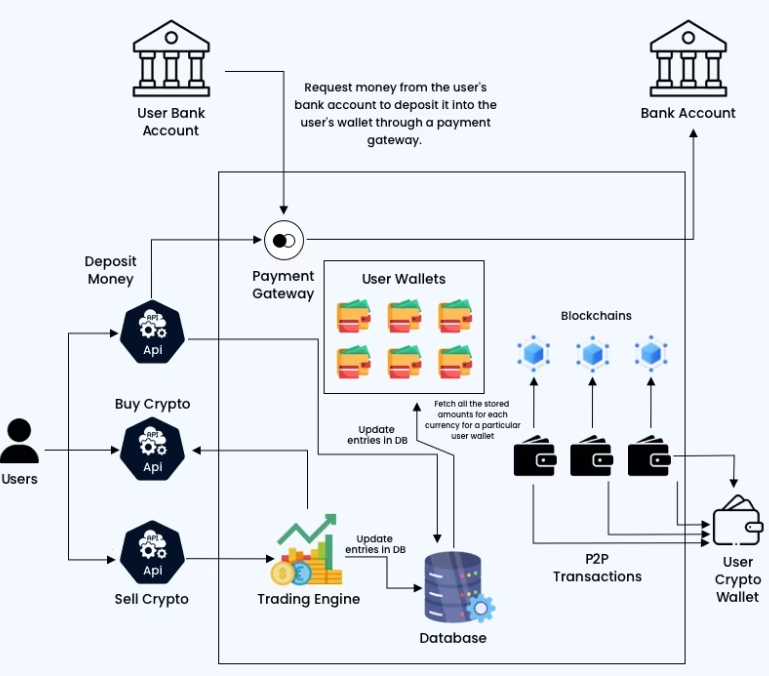
How blockchain lending works. | Credit: CCN.com
2. Single Point of Failure
Centralized oracles are fragile. If an exchange suffers downtime, an API outage, or a cyberattack, any protocol depending on its price feed can malfunction instantly.
For example, in March 2020’s “Black Thursday,” some DeFi platforms relying on single-source price feeds saw massive liquidation cascades when oracles temporarily froze. Users lost collateral worth millions, and protocols faced reputational damage.
If a centralized exchange acts as both source and oracle, the failure of that exchange doesn’t just halt trading; it reverberates through every smart contract depending on its data.
3. Market Isolation and Price Distortion
Exchanges can have idiosyncratic prices that differ from the broader market. Differences in liquidity, geography, or user behavior can cause spreads between exchanges to widen, especially during periods of volatility.
If a DeFi protocol depends on one exchange’s price, its logic might not reflect real market conditions. A stablecoin pegged to “Exchange X USD” instead of “market USD” could depeg simply because of local liquidity shocks.
These discrepancies become dangerous when leveraged systems, such as lending markets or perpetual futures, use those prices for collateral management. A slight deviation in price feed accuracy can trigger disproportionate losses.
4. Data Integrity and Transparency
Exchange-based oracles are opaque by design. The public rarely knows how the exchange calculates its “official” reference price, whether a volume-weighted average, a midpoint, or something else entirely.
Moreover, there’s often no public audit trail or cryptographic proof that prices are tamper-free. Without verifiable transparency, the market must trust the exchange, undermining the core DeFi ethos of trustless verification.
5. Regulatory and Jurisdictional Risks
When a centralized exchange acts as an oracle, it effectively becomes a data utility that influences other financial systems. Regulators may view that function as price discovery or even benchmark administration, roles with legal obligations in traditional finance.
In jurisdictions like the EU or UK, “benchmark administrators” are tightly regulated under laws such as the Benchmark Regulation (BMR). If crypto exchanges begin to serve this role at scale, they could face similar oversight or liability in the event of manipulation or inaccuracy.
Regulatory actions could disrupt operations overnight for protocols that depend on those feeds.
Examples of Failures from Centralized Exchange-Based Oracles
Centralized exchange-based oracles have repeatedly shown how fragile the link between on-chain systems and real-world data can be.
1. Crypto Market Crash (2025)
In mid-October 2025, the cryptocurrency market plunged as a cascade of liquidations wiped out over $19 billion in positions, the largest single-day event in crypto history.
Investigations suggest the trigger was an oracle failure on Binance, where internal price feeds were used instead of independent reference rates, exposing the system to manipulation and undermining collateral valuations.
2. Terra and the Oracle Collapse (2022)
Though not an exchange-based oracle case, Terra’s downfall illustrates how fragile price oracles can amplify systemic risk. When UST lost its peg, the on-chain oracle struggled to reflect actual market prices, leading to cascading liquidations quickly.
The divergence could have been even worse if a single exchange had supplied that data.
3. Binance’s Price Spike and Liquidations (2021)
In late 2021, a brief price spike on Binance’s BTC/USDT market, caused by a large market order, triggered mass liquidations on derivatives protocols that used Binance’s spot feed as their oracle. Even though the event lasted seconds, it wiped out millions in leveraged positions.
The incident revealed how local exchange noise can destabilize DeFi systems that treat any single exchange’s price as truth.
When Major DeFi Protocols Rely on Centralized Exchange Oracles
When major DeFi protocols rely on centralized exchange oracles, they effectively import the fragility of centralized finance back into supposedly decentralized systems.
If a large exchange, such as Binance, Coinbase, or OKX, suffered an outage, manipulation event, or regulatory freeze, the consequences would ripple through DeFi protocols that use its price data for collateral valuations, lending rates, or liquidation triggers.
The exchange becomes a meta-layer of risk: a single institution whose data integrity underpins entire “trustless” code ecosystems.
The Path Forward: Building Resilient Oracle Systems
The solution isn’t to abandon oracles; they’re indispensable. The challenge is to decentralize the data pipeline itself. Several emerging models point the way forward:
1. Decentralized Oracle Networks (DONs)
Projects like Chainlink, Pyth Network, and UMA’s Optimistic Oracle aggregate data from multiple independent sources. They use cryptographic signatures and consensus mechanisms to ensure no single party controls the feed.
Pyth, for example, sources prices directly from exchanges but aggregates them across multiple contributors, reducing reliance on any one platform’s feed.
2. On-Chain Data Verification
Protocols can implement cryptographic proofs that verify the origin and integrity of price data (e.g., proof-of-reserve or proof-of-data). This allows users to validate that prices reflect actual trades rather than opaque calculations.
3. Cross-Market Aggregation
Rather than relying on one exchange, oracles can use volume-weighted averages across multiple markets, smoothing out local anomalies and manipulation attempts.
4. Transparent Governance
Oracle systems should publish methodologies, data sources, and update intervals publicly. Community governance can oversee modifications via token holders or DAOs, reducing reliance on private entities.
A decentralized oracle network. | Credit: Horizen
Conclusion
Centralized oracles, mainly when operated by exchanges that stand to profit from the prices they publish, introduce systemic vulnerabilities that can undermine the entire DeFi ecosystem.
They concentrate power, create conflicts of interest, and expose protocols to downtime, manipulation, and regulatory uncertainty. As crypto continues to professionalize, ensuring data is decentralized will be as critical as decentralizing code and custody.
In the long run, the resilience of decentralized finance depends on one principle: the truth that powers it must be as decentralized as the networks it runs on.
An oracle is a data bridge between the blockchain and the external world. Since smart contracts cannot directly access off-chain information, oracles feed in data such as cryptocurrency prices, interest rates, or other market variables needed to execute contract logic.
Why are oracles important in DeFi?
DeFi protocols depend on accurate and timely market data to function correctly. Oracles provide this data for key functions like determining collateral values, triggering liquidations, pricing derivatives, and maintaining stablecoin pegs. Faulty or manipulated oracle data can lead to significant financial losses or protocol failures.
How can exchanges become centralized oracles?
Some crypto exchanges operate trading venues and publish their own market reference prices, which DeFi applications use as price feeds. When these exchanges serve as both the data source and verifier, they effectively become centralized oracles, controlling the “truth” that other systems rely on.
What are the technical risks of centralized oracles?
Centralized oracles are vulnerable to outages, cyberattacks, or latency issues. If a centralized exchange goes offline or its API fails, every DeFi protocol dependent on that feed could malfunction simultaneously, leading to liquidation cascades or frozen assets.
Disclaimer:
The information provided in this article is for informational purposes only. It is not intended to be, nor should it be construed as, financial advice. We do not make any warranties regarding the completeness, reliability, or accuracy of this information. All investments involve risk, and past performance does not guarantee future results. We recommend consulting a financial advisor before making any investment decisions.
Giuseppe Ciccomascolo began his career as an investigative journalist in Italy, where he contributed to both local and national newspapers, focusing on various financial sectors.
Upon relocating to London, he worked as an analyst for Fitch's CapitalStructure and later as a Senior Reporter for Alliance News. In 2017, Giuseppe transitioned to covering cryptocurrency-related news, producing documentaries and articles on Bitcoin and other emerging digital currencies. He also played a pivotal role in establishing the academy for a cryptocurrency exchange website. Crypto remained his primary area of interest throughout his tenure as a writer for ThirdFloor.


 Easy
Easy