How Perpetual DEXs Differ From Centralized Exchanges — and What Traders Should Know
Share
Key Takeaways
Perpetual futures are contracts with no expiry, letting traders speculate with leverage.
Perpetual DEXs use smart contracts to manage collateral, leverage, liquidations, and funding on-chain.
Hyperliquid demonstrates a high-performance, order-book style perpetual DEX.
Aster is a new challenger offering innovative features and rapid growth.
Decentralized exchanges (DEXs) started out simple: you could swap one token for another or provide liquidity. Fast forward to today, and DEXs are offering advanced financial products once only available on major centralized exchanges (CEXs) like Binance or Bybit.
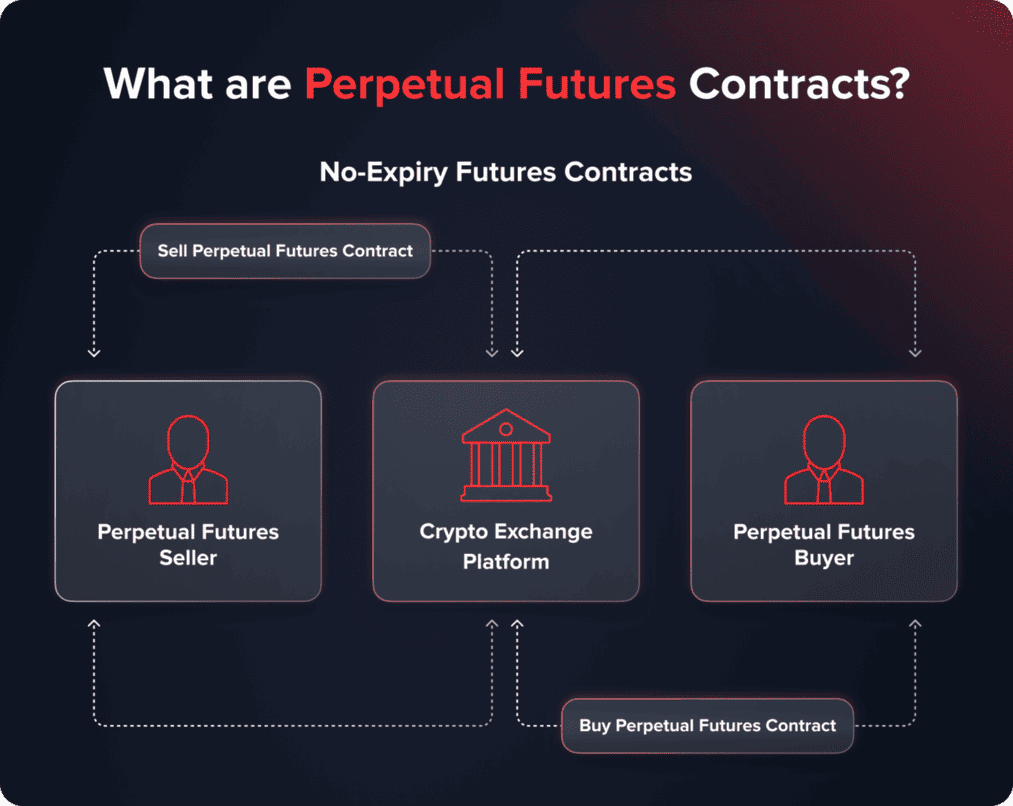
The most popular of these products are perpetual futures, often called perps. They let traders speculate on crypto prices with leverage, but without an expiry date.
What makes things exciting now is that you no longer have to trust a centralized platform to trade perps. Instead, you can do it directly on-chain through perpetual DEXs.
Let’s break down how they work, why they’re growing, and the key differences from centralized exchanges.
Try Our Recommended Crypto Exchanges
Sponsored
Disclosure
We sometimes use affiliate links in our content, when clicking on those we might receive a commission at no extra cost to you. By using this website you agree to our terms and conditions and privacy policy.
Perpetual futures are a type of derivative contract. Instead of buying the actual asset (like ETH or BTC), you trade a contract that mirrors its price.
No expiration date: Unlike traditional futures, perpetuals don’t expire. You can hold your position as long as your collateral supports it.
Funding rate mechanism: To keep the contract price close to the real market price, traders pay or receive a small funding fee. If the perp trades higher than spot, longs pay shorts. If it trades lower, shorts pay longs.
This simple structure makes perps flexible and very popular for both hedging and speculation.
On centralized platforms, everything, matching orders, managing balances, liquidations, is handled by the exchange itself. On a perpetual DEX, smart contracts do the work automatically.
Here’s how it works:
Collateral and margin: Traders deposit collateral (often stablecoins) into the DEX. This serves as security for their leveraged trades.
Leverage: With collateral in place, traders can open positions worth many times their deposit, for example 5×, 10×, or more.
Execution models: Some perpetual DEXs use AMMs (automated market makers), where liquidity pools set prices. Others use on-chain order books, which look more like traditional trading platforms.
Funding payments: Smart contracts automatically move funding payments between longs and shorts to keep prices aligned.
Liquidations: If your position falls below required margin, the contract liquidates it to protect the system.
Transparency: Everything is recorded on-chain, so anyone can audit trades and balances.
Perpetual DEXs vs. Centralized Exchanges
Perpetual DEXs and centralized exchanges differ in several key ways. With DEXs, users retain custody of their funds in personal wallets, whereas centralized exchanges require users to deposit assets that the exchange controls.
Transparency is another distinction: activity on DEXs is on-chain and verifiable, while centralized platforms operate more opaquely and rely on trust. Access is open and permissionless on DEXs for anyone with a wallet, but centralized exchanges typically enforce sign-ups, KYC checks, and regional restrictions.
Liquidity on DEXs is expanding but still fragmented compared to the deeper, more concentrated liquidity pools of centralized venues.
Finally, the main risks diverge—DEXs face challenges like smart contract vulnerabilities and thinner liquidity, while centralized exchanges are more exposed to hacks, insolvency, and potential misuse of customer funds.
Here’s a quick comparison to highlight the key differences:
Features
Perpetual DEXs
Centralized Exchanges
Custody
Users keep control of their funds in wallets
Exchange holds user deposits
Transparency
On-chain and verifiable
Opaque and trust-based
Access
Open to anyone with a wallet
Requires sign-up, KYC, restrictions
Liquidity
Growing, but fragmented
Deep, concentrated
Main Risks
Smart contract bugs, thin liquidity
Hacks, insolvency, misuse of funds
For many traders, DEXs offer freedom and transparency, while CEXs still provide smoother user experience and deeper liquidity.
Hyperliquid vs. Aster: Fueling the Next Wave of DEX Innovation
Two perpetual DEXs show how quickly this market is evolving:
Hyperliquid
Hyperliquid is built with performance in mind. It uses a custom blockchain designed for fast execution and has a fully on-chain order book. Traders pay no gas fees when opening or closing positions, and the system supports isolated and cross-margin trading. Its volumes have been growing rapidly, making it one of the most active perpetual DEXs today.
Aster
Aster is a newer perpetual DEX that has quickly gained attention. Its token launch saw massive trading activity, and in a short time it has already processed billions in daily volume. Aster offers both beginner-friendly and advanced trading modes, supports innovative features like hidden orders, and even allows yield-bearing assets to be used as margin. Many view it as a direct competitor to Hyperliquid, pushing the perpetual DEX space forward.
Features
Hyperliquid
Aster
Infrastructure
Custom layer-1 with sub-second finality
Proprietary setup with cross-chain support
Order book
Fully on-chain order book
On-chain with hidden orders
Leverage & margin
Isolated & cross-margin, up to 50×
Up to 1000× leverage, yield-bearing collateral
Fees
No gas on trades, low maker/taker fees
Low fees, hidden orders reduce slippage
Recent volumes
$280B in 30-day perp volume
$490B in 30-day perp volume, leading market share
Strengths
Optimized infra, CEX-like execution, mature user base
Sustainability of hype, risks from extreme leverage
Why Perpetual DEXs Are Growing
Several factors explain why more traders are turning to on-chain derivatives:
Self-custody matters: After the collapse of centralized platforms like FTX, many traders want to avoid counterparty risk. DEXs let users keep control of their funds.
DeFi composability: Perpetual DEXs connect with lending platforms, yield vaults, and other protocols. This allows creative strategies not possible on centralized platforms.
Global access: Anyone with internet and a wallet can trade perps on a DEX, no paperwork required.
Protocol innovation: Models like virtual AMMs, yield-bearing collateral, and cross-margin trading improve efficiency and flexibility.
Challenges of Perpetual DEXs
Perpetual DEXs are powerful, but they’re not without downsides:
Liquidity fragmentation: Liquidity is spread across multiple DEXs. This can cause slippage on large trades.
Smart contract risk: Bugs or exploits in code can put funds at risk. Even audited protocols face this danger.
High leverage dangers: Leverage magnifies both gains and losses. A volatile market can wipe out positions quickly.
Funding costs: Long-term positions may become expensive if funding payments stack up.
Regulatory uncertainty: Derivatives are heavily regulated, and the global nature of perpetual DEXs may attract scrutiny in the future.
The momentum behind perpetual DEXs is strong. As blockchain scaling improves, transaction fees drop, and liquidity deepens, they may rival centralized platforms in volume. Institutional traders are beginning to explore them too, drawn by transparency and programmable settlement.
Competition between platforms like Hyperliquid and Aster shows that this market is far from static. Expect new features, deeper liquidity, and stronger integrations with the broader DeFi ecosystem.
How are perpetual DEXs different from centralized exchanges?
Perpetual DEXs give traders control of their funds, transparency, and global access. Centralized exchanges usually have deeper liquidity and smoother user experience but require trust in the exchange.
Why are perpetual DEXs growing in popularity?
They’re growing because traders want self-custody, transparency, and access without restrictions. Innovation in DeFi is also making on-chain perps more efficient.
What are the risks of trading on perpetual DEXs?
Main risks include smart contract bugs, thin liquidity, funding costs, and the dangers of using high leverage in volatile markets.
Which perpetual DEXs are popular right now?
Hyperliquid and Aster are two leading examples, each with unique designs and features attracting significant trading activity.
Disclaimer:
The information provided in this article is for informational purposes only. It is not intended to be, nor should it be construed as, financial advice. We do not make any warranties regarding the completeness, reliability, or accuracy of this information. All investments involve risk, and past performance does not guarantee future results. We recommend consulting a financial advisor before making any investment decisions.
Onkar Singh has three years of experience as a digital finance content creator. Throughout his career, he has collaborated with various DeFi projects and crypto media outlets. In his leisure time, he enjoys fitness activities at the gym and watching movies across different genres. Balancing his professional and personal interests, Onkar continues to contribute to the digital finance landscape while pursuing his hobbies.


 Easy
Easy