A small $86.86 Ethereum transfer from Vitalik Buterin sparked outsized attention on-chain. Here’s what it reveals about crypto transparency. | Credit: CCN.com
Share
Key Takeaways
Vitalik Buterin sent $86.86 on-chain in a publicly visible Ethereum transaction.
The blockchain records facts, not intent, meaning observers can see the amount, sender, and recipient, but not the reason behind the transfer.
Ethereum’s public ledger treats all transactions equally, whether they involve millions of dollars or less than $100.
The viral attention reflects how unusual financial transparency still feels, especially compared to traditional banking systems, where small payments are private.
Not $80. Not $90. And not a clean, rounded number that would usually be associated with fees, payroll, or protocol activity. $86.86, sent on-chain from a wallet publicly associated with Ethereum’s co-founder.
But behind the humor sits something far more critical: a near-perfect real-world example of how blockchain transparency actually works, even when the sender is one of the most influential figures in crypto.
So who did Vitalik send $86.86 to? Why that amount? And why is a mundane transaction visible to the entire internet?
Vitalik Didn’t Send $80 or $90 — He Sent $86.86 and Made Blockchain Comedy History
Let’s start with the facts.
The transaction shows $86.86 worth of USDC moving from a wallet labeled as belonging to Vitalik Buterin to another Ethereum address.
There’s no public memo, no explanation embedded in the transaction, and no on-chain metadata that clarifies why the transfer occurred.
This is normal.
Vitalik Buterin transferred a small amount of USDC. | Credit: Etherscan
Ethereum transactions typically include:
A sender address.
A recipient address.
An amount.
A timestamp.
A transaction hash.
They do not include intent. The recipient wallet does not appear to be a major exchange or protocol contract. That means the transaction could represent anything from a reimbursement, test payment, donation, or private settlement, and the blockchain itself makes no judgment.
What makes it notable isn’t the destination. It’s the visibility.
Why Can Everyone See Vitalik’s $86.86 Transaction on Ethereum?
Tools like Etherscan, block explorers, and on-chain analytics platforms enable anyone to track funds from address to address in real-time.
There is no “private mode” for Ethereum’s base layer.
Once an address is publicly linked to a person, as Vitalik’s has been for years, every transaction from that address becomes observable, regardless of size.
There is no distinction between “important” and “mundane”.
This is decentralized transparency in its purest form. The blockchain doesn’t care who you are, how much you’re worth, or how trivial the transaction may seem. It records facts, not context.
Public Transparency Is a Design Trade-Off, Not a Bug
Does this mean Vitalik is careless with privacy?
Not necessarily. Public visibility is a trade-off, not a flaw. Vitalik has long chosen to use publicly known addresses, in part to:
But complete privacy on Ethereum’s base layer is intentionally limited. That’s a design choice, not an oversight.
What On-chain Evidence Reveals About Ethereum and Buterin
At face value, this is a funny moment: a billionaire-equivalent figure sending an oddly specific amount on-chain for the world to see. But the deeper lesson matters.
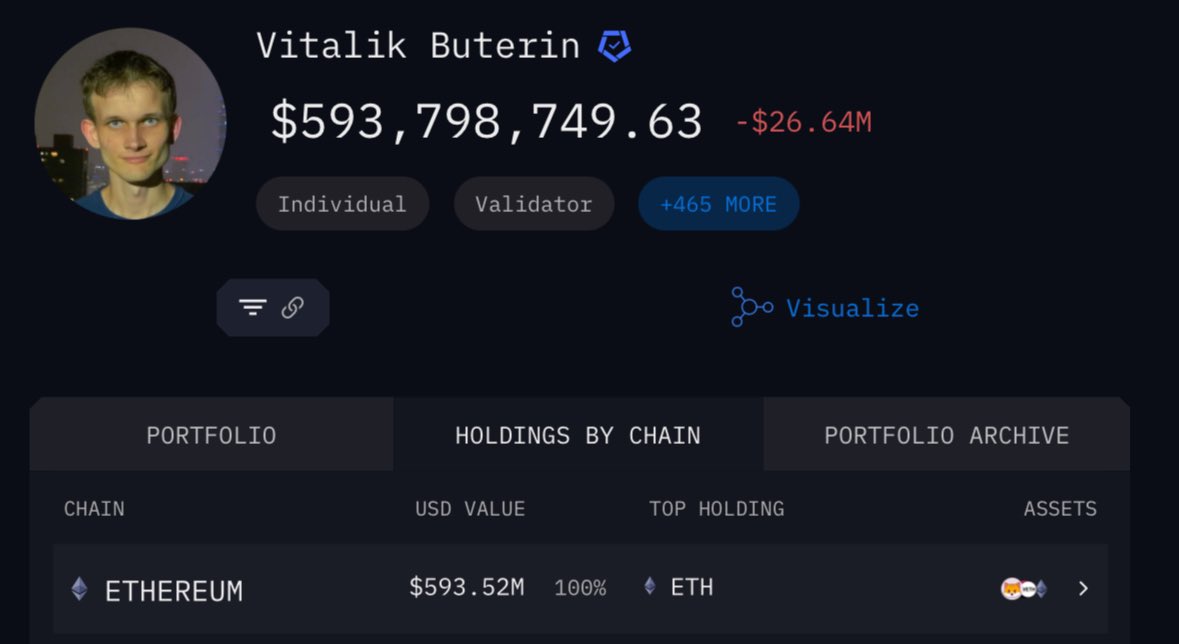
Vitalik Buterin’s ETH holding. | Credit: Etherscan
Privacy-focused blockchains, such as Monero (XMR) and Zcash (ZEC), were built specifically to address the problem that Vitalik’s $86.86 transaction highlights: publicly observable financial behavior.
On Monero, transactions obscure:
The sender’s address.
The recipient’s address.
The transaction amount.
This is achieved through technologies like ring signatures, stealth addresses, and confidential transactions, making it impossible for outside observers to trace payments or link wallets.
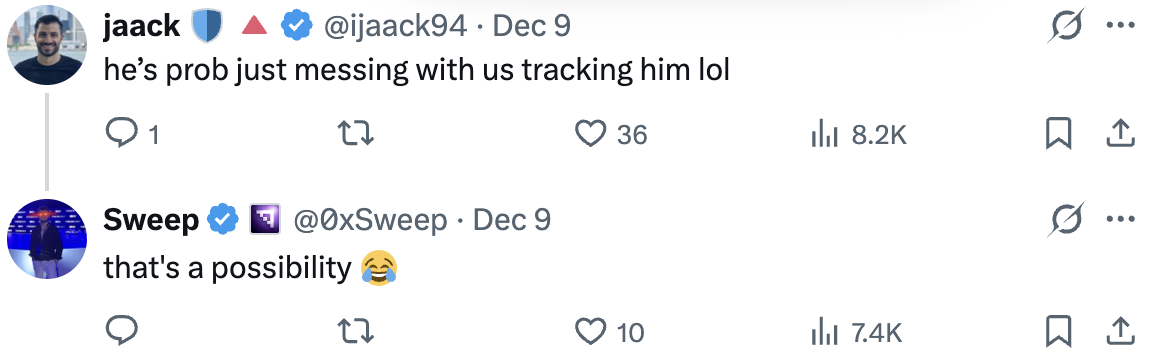
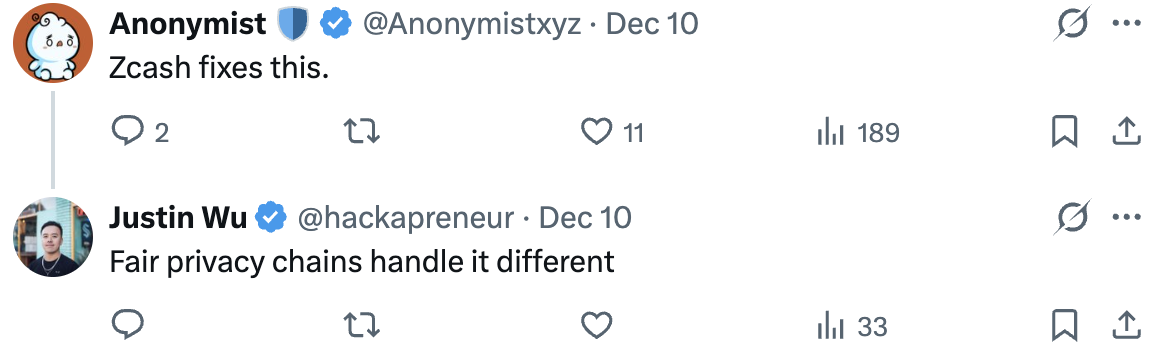
Further reactions to Buterin’s transfer. | Credit: X
Zcash takes a different approach. It offers optional privacy through shielded transactions powered by zero-knowledge proofs (zk-SNARKs). When users choose shielded addresses, transaction details, including sender, recipient, and amount, are hidden while remaining verifiable by the network.
In practical terms, if Vitalik had sent $86.86 on Monero, no one would have known it had happened at all. On Zcash, observers would only see it if he used a transparent address.
These networks illustrate an essential trade-off in crypto design:
Ethereum prioritizes transparency, composability, and auditability.
Privacy coins prioritize financial confidentiality and fungibility.
Neither approach is objectively “better.” They serve different use cases.
Why Public Blockchain Transparency Is Here to Stay
As blockchain adoption grows, moments like this will become increasingly common, not less so.
Public figures using public blockchains means:
Transactions become auditable by default.
Trust shifts from institutions to cryptography.
Transparency replaces opacity.
This doesn’t mean everyone will live on fully public ledgers forever. Privacy layers will improve. User practices will evolve.
However, the fundamental reality remains: blockchains make money observable in a way that legacy systems never did.
The recipient is an Ethereum wallet address that does not appear to belong to a major exchange or protocol. The blockchain does not reveal identities or intent, so it’s impossible to know who controls the wallet or why the payment was sent.
Why did Vitalik send exactly $86.86?
The blockchain does not record reasons or messages by default. The amount could represent a reimbursement, test transaction, donation, or private settlement. The unusual number stands out, but Ethereum only records the transaction details, not the motivation behind them.
Why can everyone see Vitalik Buterin’s transaction?
Ethereum is a public blockchain. All transactions are permanently recorded and publicly accessible. Since Vitalik’s wallet has been publicly associated with him for years, every transaction from that address is visible to anyone using a block explorer like Etherscan.
Why did this small transaction go viral?
The transaction went viral because it highlighted an unusual contrast: a globally known figure making a small, oddly specific payment that is fully visible to the public. It made blockchain transparency feel tangible and relatable.
Disclaimer:
The information provided in this article is for informational purposes only. It is not intended to be, nor should it be construed as, financial advice. We do not make any warranties regarding the completeness, reliability, or accuracy of this information. All investments involve risk, and past performance does not guarantee future results. We recommend consulting a financial advisor before making any investment decisions.
Giuseppe Ciccomascolo began his career as an investigative journalist in Italy, where he contributed to both local and national newspapers, focusing on various financial sectors.
Upon relocating to London, he worked as an analyst for Fitch's CapitalStructure and later as a Senior Reporter for Alliance News. In 2017, Giuseppe transitioned to covering cryptocurrency-related news, producing documentaries and articles on Bitcoin and other emerging digital currencies. He also played a pivotal role in establishing the academy for a cryptocurrency exchange website. Crypto remained his primary area of interest throughout his tenure as a writer for ThirdFloor.


 Easy
Easy