Key Takeaways
- While it is known as a privacy coin, the majority of Zcash transactions are unshielded.
- As of November, less than a quarter of all ZEC was in the shielded pool.
- Now, Arkham has successfully deanonymized 53% of Zcash transactions.
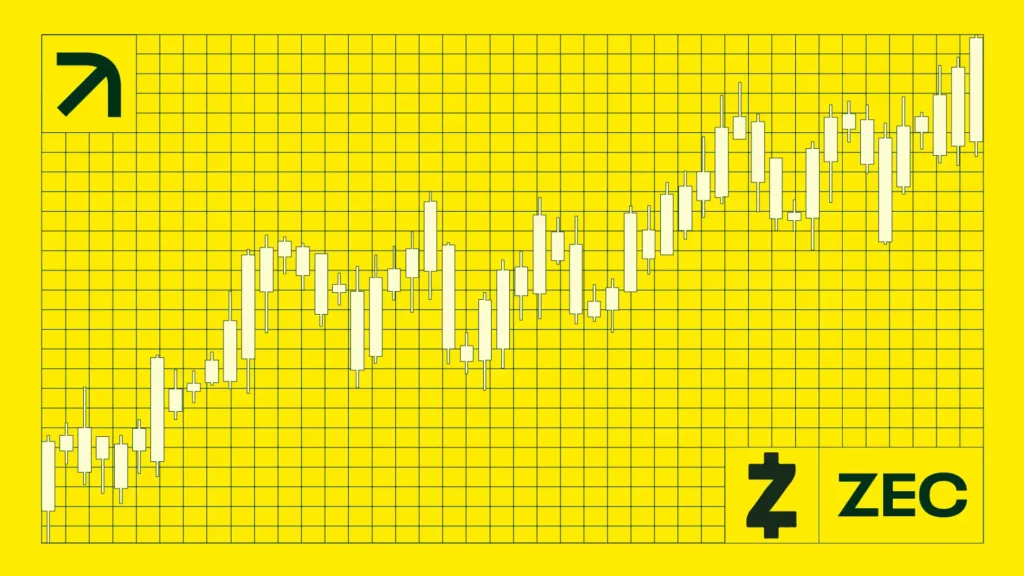
Zcash (ZEC) is meant to enable private cryptocurrency transfers, hiding information about who sends and receives ZEC from the public ledger.
But unlike some of its peers, the network doesn’t enforce privacy.
However, on Tuesday, Arkham unveiled a Zcash analytics platform that links over half of all transactions to known entities.
Deanonymizing Zcash Transactions
To its critics, ZEC’s opt-in privacy framework has always been a weakness.
Unlike Monero, which encrypts the sender, recipient, and value of every transaction by default, Zcash users can choose between standard, transparent transfers or shielded, private ones.
The important distinction is between transparent T-addresses and shielded Z-addresses. Only Z→Z transfers are fully private.
Because private transactions require more memory and processing, many wallets have never integrated the feature.
Moreover, some centralized exchanges don’t permit withdrawals or deposits tied to Z-addresses.
As a result, transparent addresses continue to account for the majority of Zcash activity, with less than a quarter of all ZEC in the shielded pool, despite recent improvements.
In turn, this makes it easier to deanonymize even shielded transactions by analyzing wallet balances.
By identifying major exchanges, which almost exclusively use T-addresses, and analyzing transfer patterns, Arkham has successfully labeled 53% of all ZEC transactions, attributing $420 billion of volume to specific entities.
The Privacy Crowd Effect
Privacy coins work best when there is sufficient activity to prevent analytics from deanonymizing transactions.
Cryptographers refer to the pool of users as an “anonymity set.”
The larger the anonymity set, the harder it is to link funds moving in and out of wallets.
As long as opt-in privacy remains the minority behavior, transparent Zcash data will continue to serve as a map for blockchain analysts.

James Morales is CCN’s blockchain and crypto policy reporter. He has been working in the news media since 2020, writing about topics such as payments, banking and financial technology. These days, he likes to explore the latest blockchain innovations and the evolving landscape of global crypto regulation.
With an educational background in social anthropology and media studies, James uses his platform as a journalist to explore how new technologies work, why they matter and how they might shape our future.