Key Takeaways
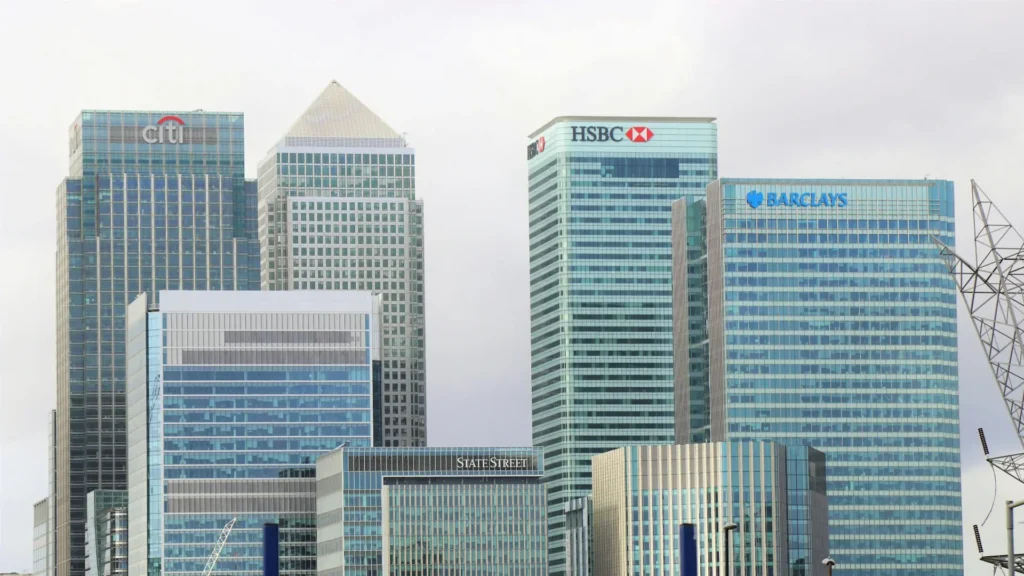
- Citi Ventures has announced a strategic investment in BVNK.
- The stablecoin infrastructure platform acts as a bridge between banks and blockchain networks.
- In theory, BVNK’s neutral infrastructure could support any stablecoin.
Around the world, major banks are weighing how to respond to the rise of stablecoins, including various proposals to issue their own.
However, Citi isn’t placing all its eggs in the self-issuance basket. Nor is it betting on a single coin dominating the market, as demonstrated by the bank’s latest investment in BVNK.
BVNK’s Neutral Platform
Since it was founded in 2017, BVNK has built a stablecoin-agnostic orchestration platform favored by major payment companies, including Worldpay and Flywire.
The startup’s target use case is cross-border payments, where it typically uses USDT or USDC as a settlement layer, with automated fiat on- and off-ramps at each end of the transaction.
However, the platform isn’t limited to two stablecoins. USDT and USDC are currently preferred because they are the most popular coins with the deepest liquidity. But BVNK’s innovation lies in its fiat infrastructure, which includes multi-currency virtual IBANs and e-money accounts. Different stablecoins can easily be swapped in and out.
Future of Stablecoins Remains Undecided
While Tether and Circle dominate today, with the overall stablecoin market projected to expand significantly in the coming years, there is still space for new entrants to take hold.
By Citi’s own forecast, the total stablecoin supply could reach $3.7 trillion by 2030—more than ten times its current level.
Against this backdrop, the bank is mulling issuing its own stablecoin, or partnering other Wall Street giants in a joint venture.
The consortium model, which is also being explored by banks in Europe and South Korea, would grant any resultant stablecoin significant institutional weight.
Around the world, banks process upward of $20 trillion in transactions each day. If even a small fraction of this were converted to stablecoins, USDT and USDC would pale in comparison.
Nevertheless, the business case for bank-issued stablecoins remains questionable.
Most banks favor tokenized deposits, which don’t restrict their ability to issue credit the way stablecoins do. But existing schemes lack interoperability, without which, tokenized deposits are less compelling than stablecoins as a general-purpose payment instrument.
Different Forms of Digital Money
With the future of digital money still undecided, BVNK’s agnostic infrastructure could help Citi hedge its bets.
In theory, BVNK’s platform could also integrate tokenized deposits.
As a licensed Electronic Money Institution (EMI) in the U.K. and EU, the startup can already hold client funds in safeguarded accounts at partner banks and issue e-money backed one-for-one by fiat balances.
If a bank issued tokenized deposits, those would still be commercial bank liabilities, and with the right partnerships in place, BVNK could treat them as settlement assets for the fiat leg of transactions.
This hypothetical model aligns with Citi’s vision for the Regulated Liability Network (RLN), which it first proposed in 2022.
The RLN is now being prototyped in the U.K. and the U.S., where more than a dozen banks have successfully piloted a shared infrastructure for tokenized commercial bank money.
BVNK’s platform is open enough to integrate with the RLN or equivalent interoperability frameworks like Fnality or JPMorgan’s Onyx.
No matter which one emerges as the dominant rail for interbank blockchain payments, BVNK could serve as the connective tissue linking bank’s tokenized liabilities with stablecoin and e-money ecosystems.
Visit Our Stablecoin Partners

James Morales is CCN’s blockchain and crypto policy reporter. He has been working in the news media since 2020, writing about topics such as payments, banking and financial technology. These days, he likes to explore the latest blockchain innovations and the evolving landscape of global crypto regulation.
With an educational background in social anthropology and media studies, James uses his platform as a journalist to explore how new technologies work, why they matter and how they might shape our future.