Bitcoin Will Eventually Go to Zero, World Gold Council CEO Warns — Here’s Why
Share
Key Takeaways
Bitcoin price is under pressure, down nearly 20% in February and close to 30% year-to-date, while gold has rallied sharply.
Major derivatives expiries are approaching, potentially increasing short-term volatility in Bitcoin options and CME futures.
Bitcoin is trading more like a risk asset than a safe haven, struggling to keep pace with gold’s performance during market turbulence.
Short-term risks are elevated, but long-term direction will likely depend on liquidity conditions and macro policy shifts.
Bitcoin’s recent price action has left investors uneasy. After months of optimism, the Bitcoin price has slipped sharply, trading around $66,400, down by nearly 20% in February alone and close to 30% year-to-date.
At the same time, traditional safe-haven assets are climbing. Gold is hovering above $4,970 an ounce, and oil is pushing toward $64 a barrel. The contrast has sparked debate online, with critics calling Bitcoin a “casino asset” while supporters argue its long-term thesis remains intact.
So what’s really happening?
Below are five major warning signals that could influence the Bitcoin price in the weeks ahead, and determine whether bulls regain control or face deeper losses.
1. Bitcoin Price Volatility Risk: March 28 Options Expiry Could Trigger Sharp Moves
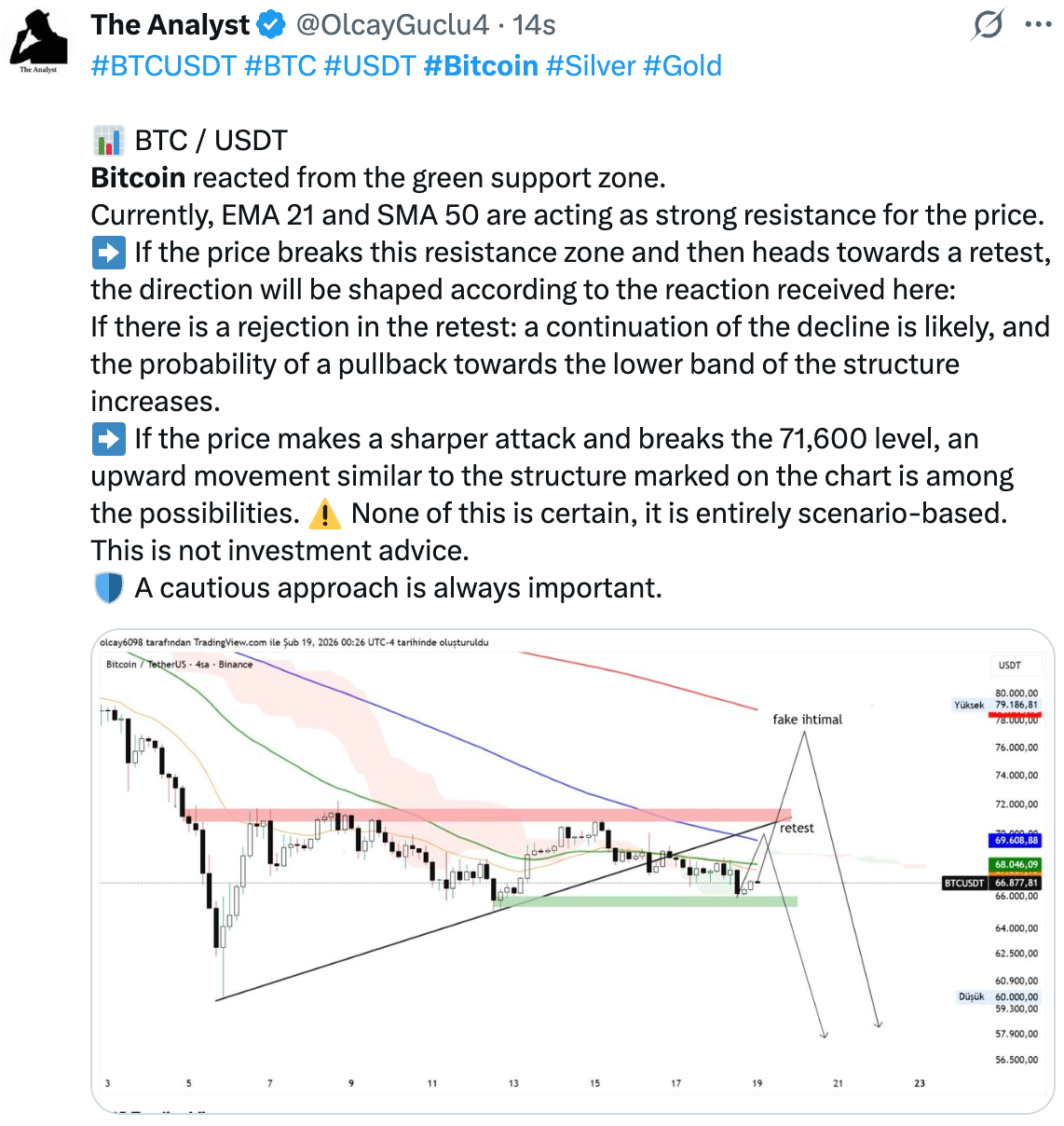
One of the biggest near-term catalysts is the Mar. 28, 2026, Bitcoin options expiry.
Billions of dollars in open interest are set to settle at key strike levels. When options expire, traders who wrote contracts (often market makers) may need to quickly adjust their hedges. This can amplify price swings.
Bitcoin/USDT technical analysis. | Credit: The Analyst X profile
If Bitcoin is trading near a large cluster of options strikes, volatility often increases as expiry approaches. Traders sometimes call this “pinning,” in which the price gravitates toward a strike with heavy open interest.
Why this matters:
Large expiries can spark sudden short-term price moves.
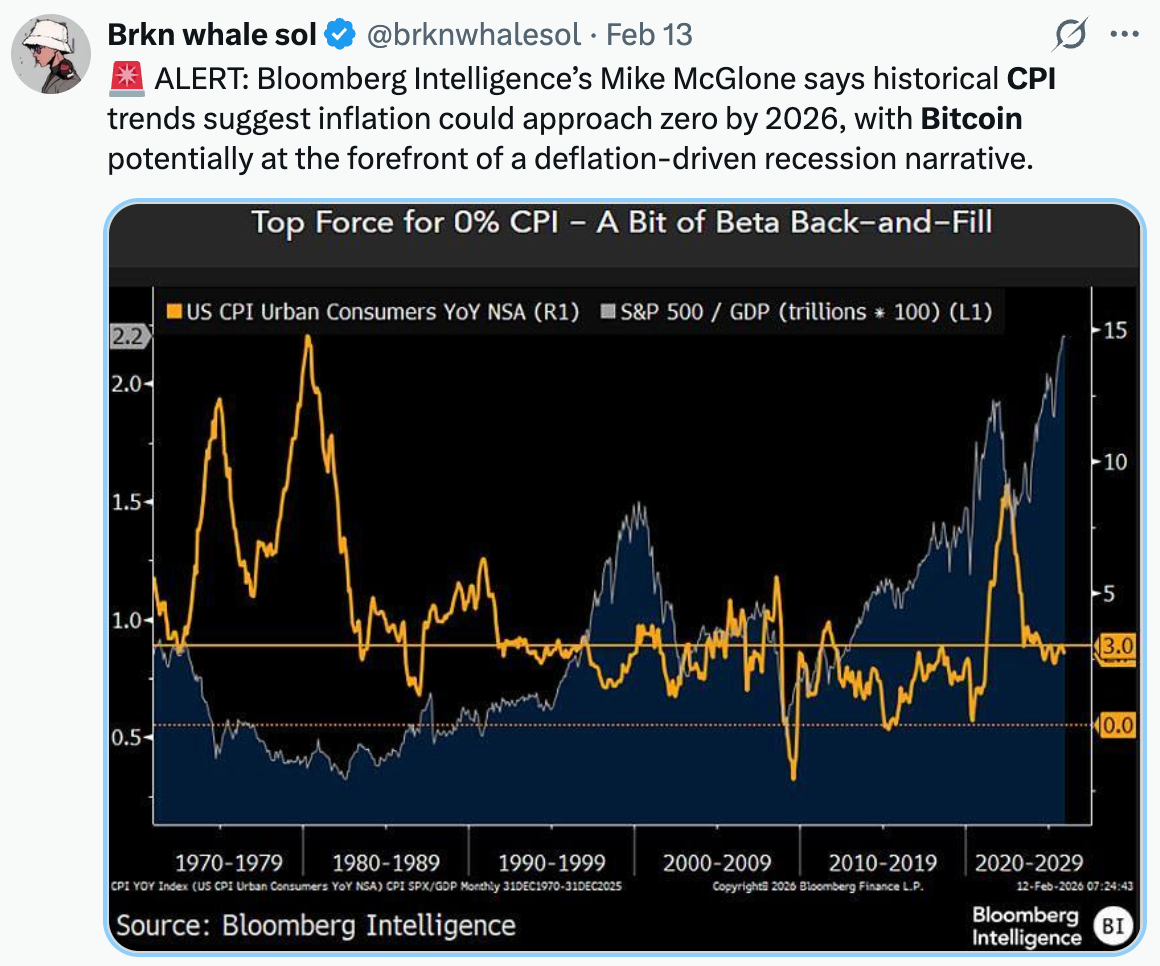
Inflation data heavily influences risk assets, including crypto. If inflation comes in hotter than expected, markets may price in fewer interest rate cuts, or even renewed tightening.
Bitcoin’s potential reaction to a zero-level inflation. | Credit: Brkn Whale SOL X profile
Bitcoin tends to struggle in “risk-off” environments where:
With gold rising sharply this year while Bitcoin declines, some investors are questioning whether BTC is losing its narrative as “digital gold.”
If inflation surprises to the upside, the Bitcoin price could face additional downside pressure.
3. Federal Reserve Rate Decision and Its Impact on Bitcoin Price
Just days after CPI, the Federal Reserve will announce its next interest rate decision on Mar. 18, 2026.
Crypto markets are highly sensitive to Fed tone. Even if rates remain unchanged, hawkish language, signaling concern about inflation, could spark a broader selloff across risk assets.
If institutional demand pauses while macro conditions remain tight, Bitcoin may struggle to regain upside traction.
Bitcoin Price vs Gold: A Growing Narrative Challenge
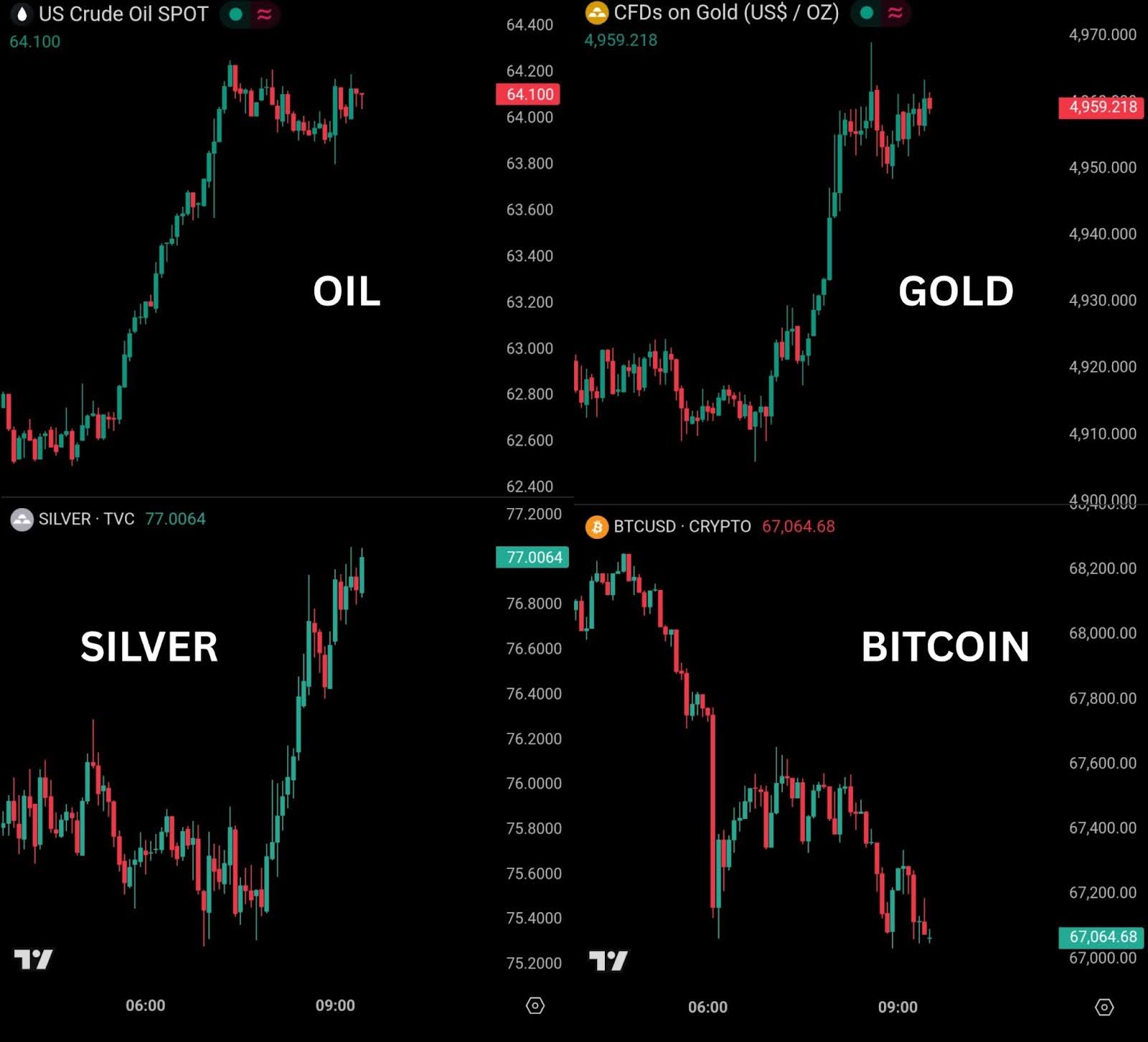
The contrast between Bitcoin and gold in 2026 is striking.
Gold has rallied strongly, reinforcing its role as a traditional hedge during economic turbulence. Bitcoin, by contrast, is down sharply.
Bitcoin vs. oil vs. gold vs. silver. | Credit: TradingView
Social media debates highlight this divergence. Critics argue Bitcoin lacks intrinsic stability, while supporters insist energy and network security ensure its resilience.
For now, markets appear to favor established safe havens.
Bitcoin is more than 10% below Saylor’s average price. | Credit: Arkham
After buying $54.52 billion worth of BTC at an average price of $76,027, the current price is roughly 12.4% lower. That leaves Saylor sitting on an unrealized loss of approximately $6.7 billion.
While unrealized losses do not necessarily imply forced selling, they do illustrate how far the Bitcoin price has fallen from recent highs.
Are Bitcoin Bulls in Trouble?
Short-term, the market faces:
Major options expiry.
CME futures rollover.
CPI inflation data.
Federal Reserve decision.
Slowing ETF inflows.
That’s a heavy concentration of risk events in a single month.
However, it’s important to separate short-term volatility from long-term fundamentals. Bitcoin remains a scarce digital asset with a fixed supply and global adoption trends that continue to evolve.
The key question is whether liquidity conditions improve in the coming quarters.
If inflation cools and the Fed turns more accommodative, risk assets, including Bitcoin, could recover quickly.
If not, bulls may need to be patient.
The current environment is testing confidence.
Bitcoin’s decline against rising gold prices challenges its hedge narrative. Derivatives expiries could intensify volatility. Macro data and Fed policy remain major catalysts. Institutional ETF demand appears to be cooling.
None of these signals guarantees a deeper correction.
But taken together, they form a cluster of warning signs that investors cannot ignore.
For now, the Bitcoin price sits at a crossroads, balancing macro headwinds, derivatives pressure, and shifting institutional flows.
Whether bulls are truly in trouble will likely be decided in the weeks ahead.
Bitcoin is facing several short-term pressures, including weaker ETF inflows, upcoming options and futures expiries, inflation uncertainty, and the Federal Reserve’s upcoming rate decision. Together, these factors are creating a risk-off environment for crypto.
What is Bitcoin options expiry and why does it matter?
Bitcoin options expiry happens when options contracts settle. If billions of dollars are tied to key price levels, traders may adjust positions rapidly, increasing volatility. Large expiries often lead to sharp short-term price swings.
How does CPI inflation affect the Bitcoin price?
Higher-than-expected inflation can reduce the likelihood of interest rate cuts. When rates stay high, liquidity tightens, and risk assets like Bitcoin tend to struggle. Cooler inflation data, on the other hand, can support crypto markets.
What is the impact of CME Bitcoin futures expiry?
CME futures expiry can increase volatility as institutional investors roll or close large positions. If institutions reduce exposure rather than roll forward, it can temporarily weigh on the Bitcoin price.
Disclaimer:
The information provided in this article is for informational purposes only. It is not intended to be, nor should it be construed as, financial advice. We do not make any warranties regarding the completeness, reliability, or accuracy of this information. All investments involve risk, and past performance does not guarantee future results. We recommend consulting a financial advisor before making any investment decisions.
Giuseppe Ciccomascolo began his career as an investigative journalist in Italy, where he contributed to both local and national newspapers, focusing on various financial sectors.
Upon relocating to London, he worked as an analyst for Fitch's CapitalStructure and later as a Senior Reporter for Alliance News. In 2017, Giuseppe transitioned to covering cryptocurrency-related news, producing documentaries and articles on Bitcoin and other emerging digital currencies. He also played a pivotal role in establishing the academy for a cryptocurrency exchange website. Crypto remained his primary area of interest throughout his tenure as a writer for ThirdFloor.


 Easy
Easy