Bitcoin’s price can fall even without heavy spot selling. Learn how derivatives, leverage, and liquidations now drive BTC price discovery. | Credit: CCN.com
Share
Key Takeaways
You’re not late to Bitcoin because “early” is measured in blocks, not years.
95% of all Bitcoin block subsidies have already been issued, yet less than a million subsidized blocks have been mined in a 6.93-million-block timeline.
As block rewards shrink, inelastic supply will collide with massive future adoption, potentially creating more new millionaires.
Miners in the next century may extract greater dollar-denominated value, even while receiving fewer BTC, due to intensified demand and limited issuance.
For years, people have repeated the same line: “I’m too late. I missed Bitcoin.”
But this belief rests on a fundamental misunderstanding of how Bitcoin works, and more importantly, how Bitcoin mints new supply.
Most investors think “being early” means buying Bitcoin in 2010, 2013, or maybe 2017. But timing Bitcoin adoption isn’t about calendar years. It’s about block height and the number of blocks with rewards remaining.
To understand why, it’s important to understand the block subsidy, how it works, and what it reveals about Bitcoin’s future.
Eventually, the subsidy reaches zero. When that happens, miners rely entirely on transaction fees.
But here’s the part most people misunderstand: each halving dramatically reduces supply long before the total number of blocks is anywhere near complete.
Yet 95% of all block subsidies have already been issued.
That leaves about 6 million blocks to distribute the remaining 5%.
This is the asymmetry almost everyone overlooks, and it’s why the final 5% of Bitcoin’s issuance could create more millionaires than the first 95%.
Why 95% of Bitcoin’s Supply Already Exists — And Why This Still Means You’re Early
Even though Bitcoin has only mined a small fraction of its lifetime block count, almost all the subsidy has already been issued. This is because the halving schedule is front-loaded.
Block subsidies drop fast:
The first million blocks minted tens of millions of BTC.
The next six million blocks will mint a tiny fraction of that amount.
This means we are early in terms of available supply, but early in terms of block timeline. Most people look at a chart and think, “Bitcoin is already expensive, so I’m late.”
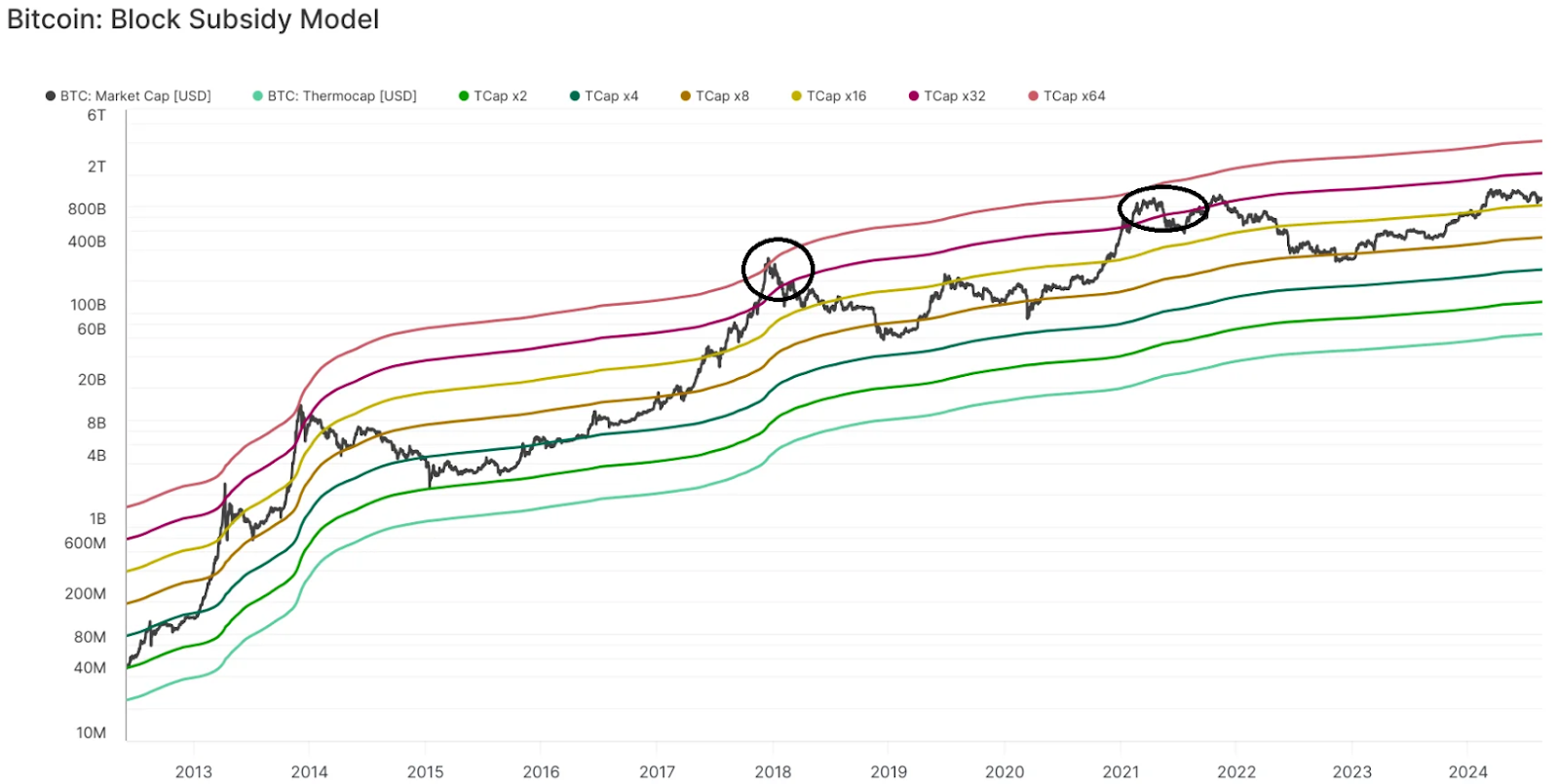
Discussion on Bitcoin scarcity. | Credit: Billy Boone X profile
However, a more accurate framing is that you’re early relative to the remaining 6 million blocks that still carry the last 5% of issuance.
That 5% will be distributed slowly, over more than a century, into a world where Bitcoin adoption will be exponentially higher.
How Bitcoin’s Final 5% Issuance Could Create More Millionaires Than the First 95%
This creates the most complex asset humans have ever seen.
2. Adoption Is on Track to Be Exponential
In the coming century, Bitcoin will collide with:
Institutional adoption
Sovereign reserves
Corporate treasuries
Tokenized financial markets
On-chain payments
Global remittances
A generation that grew up with crypto
When an asset with fixed supply meets exploding demand, the result is a monumental wealth transfer.
3. Late Subsidy Eras Create Extreme Asymmetry
Here’s the counterintuitive truth: Buying Bitcoin early isn’t about price; it’s about acquiring BTC while block rewards still exist.
When you buy now, you are still competing with miners who receive subsidies. When subsidies approach zero, your competition disappears.
This asymmetry is why people who think they’re “late” may actually be among the earliest participants.
Criticisms From Peter Schiff and Other Economists: Is Bitcoin’s Scarcity Story Overblown?
Not everyone agrees with the thesis that Bitcoin’s final 5% will generate outsized wealth. In fact, some of Bitcoin’s most vocal critics argue the opposite.
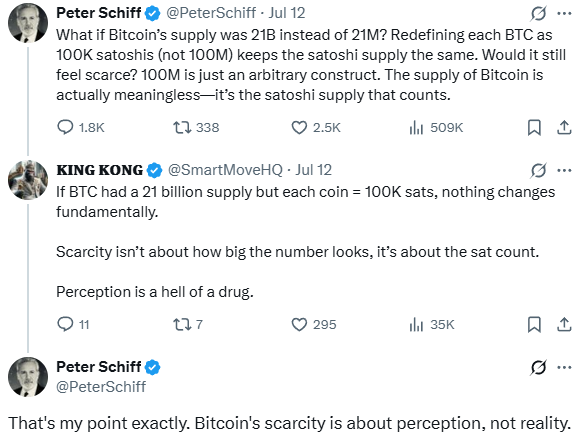
Peter Schiff on Bitcoin’s Scarcity: “BTC Supply Is Actually Meaningless”
“What if Bitcoin’s supply was 21B instead of 21M?” Schiff asked, suggesting this would be possible if “1 BTC was redefined as 100,000 satoshis instead of 1 million satoshis.”
He continued: “Would it still feel scarce? 100M is just an arbitrary construct. The supply of Bitcoin is actually meaningless. It’s the satoshi supply that counts.”
Schiff’s argument attempts to show that Bitcoin’s valuation stems from perceived scarcity rather than inherent economic properties.
Schiff criticized Bitcoin scarcity thesis. | Credit: Peter Schiff X profile
Bitcoin proponents quickly refuted the claim, comparing it to making a pizza bigger by slicing it smaller or redefining gold measurements. Value investor Mike Alfred summed up the reaction: “What if you were a giant purple dinosaur instead of a man? Absurdity invites more absurdity.”
The critique followed a week where Bitcoin surged while gold traded sideways. Schiff argued this wasn’t evidence of Bitcoin’s strength: “CNBC is once again touting Bitcoin’s recent outperformance of gold.… But Bitcoin is a risk asset — it rallied with tech stocks.… In that environment, gold — a safe haven — has traded sideways.” He also suggested silver has better potential, saying “while Bitcoin can easily crash, silver’s downside seems very limited.”
Schiff has long predicted Bitcoin’s downfall. In April, he warned a looming financial crisis could make “2025… the end of Bitcoin.”
Network dependency: Bitcoin’s long-term value hinges on continued adoption; if that slows, scarcity alone won’t save it.
Deflationary pressure: A shrinking supply issuance could discourage spending, reducing economic activity on the network.
Miner sustainability: As subsidies shrink, miners may struggle unless fee markets grow dramatically.
Regulatory uncertainty: Institutional adoption may clash with government control over monetary systems.
Technological risks: Competing digital monetary systems, CBDCs, or new cryptographic breakthroughs could impact Bitcoin’s dominance.
These criticisms don’t negate Bitcoin’s monetary design, but they add an important nuance: not everyone believes the block subsidy guarantees future wealth creation.
What the Next Halving Cycles Reveal About Bitcoin’s Long-Term Scarcity and Adoption
Let’s look at where we are:
Approximately 95% of the Bitcoin supply is in existence.
Less than 15 years have passed.
115 years of issuance remain.
This means the world will spend the next century fighting over the remaining 5%. And the final halving cycles are where things become interesting.
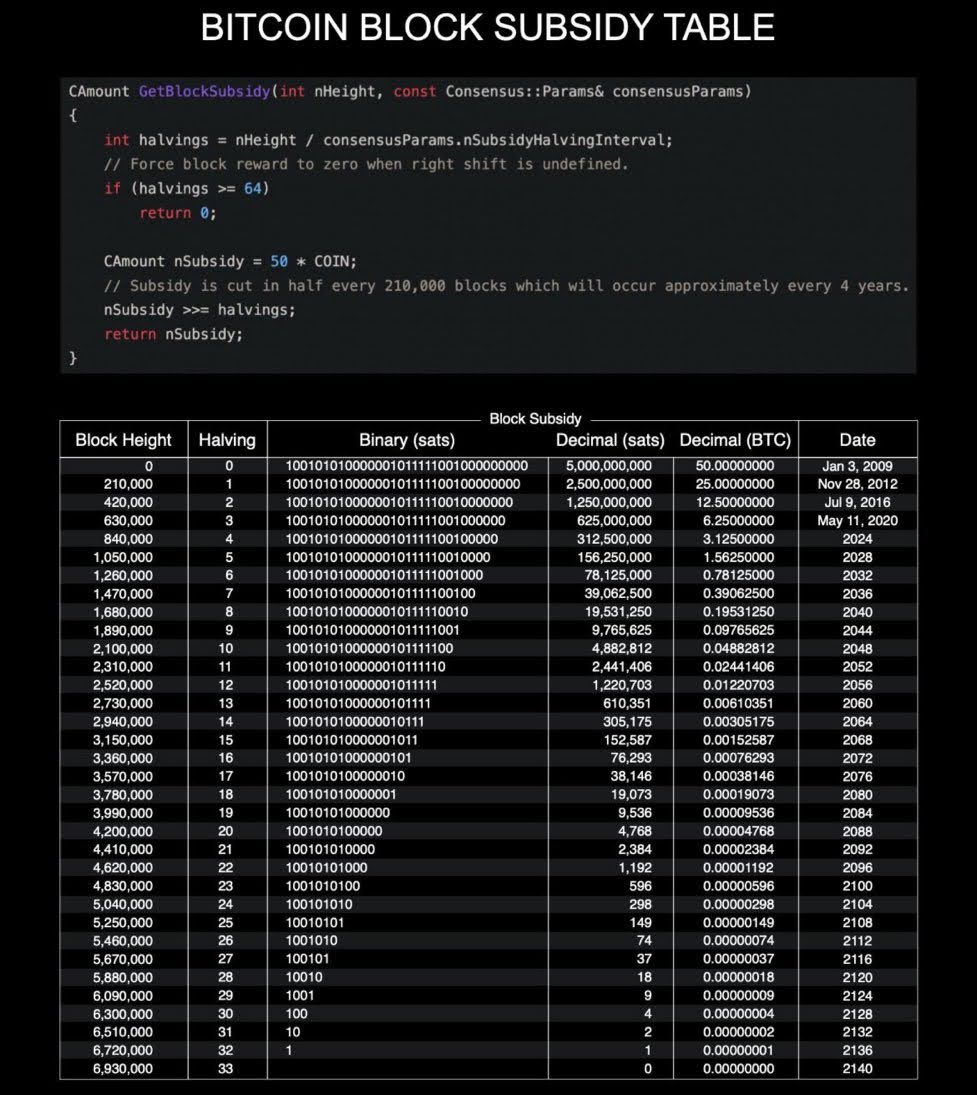
Bitcoin block subsidy table. | Credit: Glassnode
Here’s what block rewards look like from 2030 onward:
2032: 0.78125 BTC
2036: 0.390625 BTC
2040: 0.1953125 BTC
2052: 0.02441406 BTC
2100s: Sub-satoshi levels
By 2048-2060, the subsidy will become trivial. Yet Bitcoin adoption will be vastly higher. Imagine a world where:
Most people think “early” refers to buying Bitcoin many years ago. In reality, it’s about where we are in the block subsidy timeline. Even though Bitcoin has existed for over 15 years, we are still early in terms of remaining subsidized blocks, over 6 million of them.
What is the Bitcoin block subsidy?
The block subsidy is the number of new BTC created each time miners produce a block. It started at 50 BTC in 2009 and gets cut in half every 210,000 blocks (roughly four years), a process known as “halving.”
How much of the subsidy has been issued so far?
About 95% of all Bitcoin block subsidies have already been minted, even though fewer than 1 million subsidized blocks have been mined out of the planned 6.93 million.
If most BTC is already issued, how is Bitcoin still early?
We are early in block time, not supply time. Only a small fraction of total blocks have been mined. The next century will be dominated by slow issuance and massive adoption — a very different environment from Bitcoin’s early years.
Disclaimer:
The information provided in this article is for informational purposes only. It is not intended to be, nor should it be construed as, financial advice. We do not make any warranties regarding the completeness, reliability, or accuracy of this information. All investments involve risk, and past performance does not guarantee future results. We recommend consulting a financial advisor before making any investment decisions.
Giuseppe Ciccomascolo began his career as an investigative journalist in Italy, where he contributed to both local and national newspapers, focusing on various financial sectors.
Upon relocating to London, he worked as an analyst for Fitch's CapitalStructure and later as a Senior Reporter for Alliance News. In 2017, Giuseppe transitioned to covering cryptocurrency-related news, producing documentaries and articles on Bitcoin and other emerging digital currencies. He also played a pivotal role in establishing the academy for a cryptocurrency exchange website. Crypto remained his primary area of interest throughout his tenure as a writer for ThirdFloor.


 Easy
Easy