Key Takeaways
- HSBC UK, Barclays, and Lloyds are among seven institutions participating in a tokenized deposit initiative using Quant-built infrastructure.
- Gold analyst Jan Nieuwenhuijs went viral after predicting a potential $10,000 payoff from buying one QNT.
- The banking milestone does not establish how much demand the project will generate for Quant’s token.
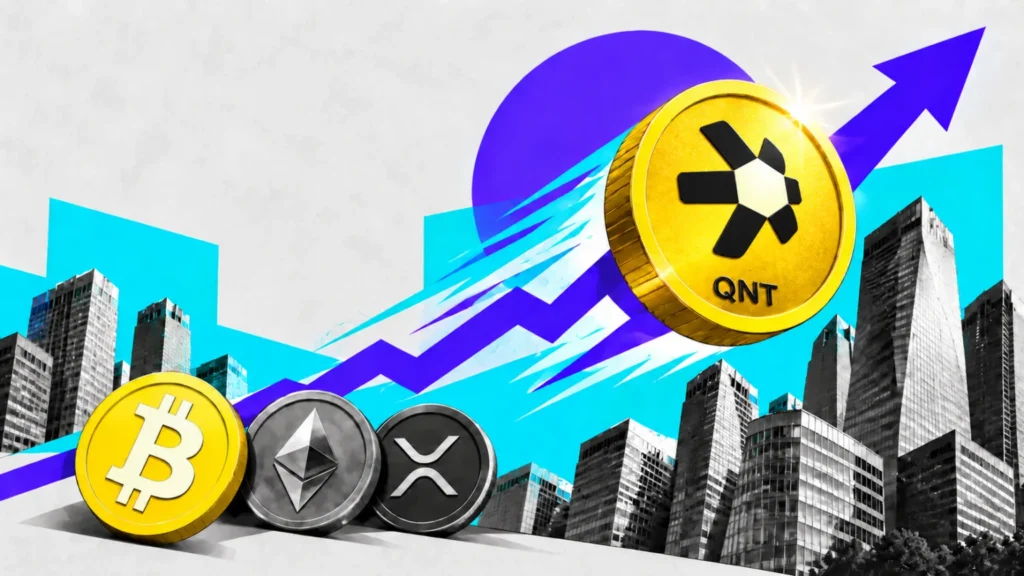
A viral $10,000 QNT call is drawing attention as HSBC UK, Barclays and Lloyds test Quant-built infrastructure for payments that automatically release when agreed conditions are met.
The banking milestone comes as gold analyst Jan Nieuwenhuijs champions QNT to $10,000, echoing his early Bitcoin bet — but adoption alone does not establish a path to his ambitious target.
HSBC, Barclays, and Lloyds Put Tokenized Deposits to Work
Some of Britain’s biggest banks have begun testing a way to move money that automatically releases payments when agreed conditions are met.
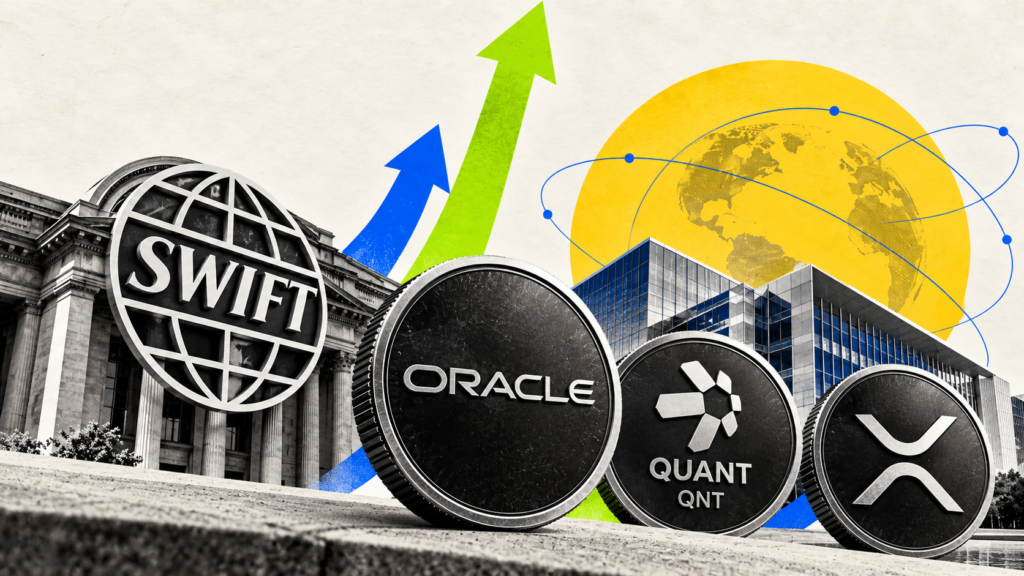
The trials use tokenized deposits — digital representations of money held in commercial bank accounts — on a shared platform built by Quant.
UK Finance announced the first customer transactions on Sept. 24 under its Great British Tokenised Deposit initiative.
Participants include Barclays, HSBC UK, Lloyds Banking Group, Monzo, Nationwide, NatWest and Santander.
The practical aim is to make payments depend on something happening, such as a property transaction completing or a buyer receiving an item.
According to Reuters, Lloyds, NatWest, and Barclays carried out two remortgage transactions in which funds were locked and automatically released at completion.
This could reduce the manual checks and delays involved in moving money between the parties.
A separate test involving HSBC simulated an online marketplace purchase.
Quant CEO Gilbert Verdian called the milestone “real money moving on UK infrastructure, not an experiment.”
The $10K QNT Call Echoes an Early Bitcoin Bet
Nieuwenhuijs’s Sept. 26 post urged followers to buy at least one QNT, presenting the opportunity as a possible $120 loss against the potential to earn $10,000.
The post echoed a Bitcoin recommendation he shared in 2013, which similarly compared a relatively small investment with a much larger possible payoff.
To reach $10,000, the token would need to rise 8,233% from the $120 entry level cited in his post.
At a current price of $253.67, QNT would need to rise approximately 39.4 times, or 3,842%, to reach $10,000.
This is an extreme upside, and would likely require Quant’s infrastructure to move beyond limited trials into services that banks use regularly and at scale.
The UK project’s planned digital bond transactions could offer another test of that commercial potential.
Quant Adoption Leaves a QNT Demand Question
Quant’s involvement places its technology inside a project backed by recognizable banking names, but translating that commercial progress into a token valuation requires more.
Quant’s public FAQ says customers can pay Overledger platform fees in US dollars or subscribe using QNT.
That establishes a platform for the token, but how these banking initiatives affect token purchases, holdings, or recurring demand remains unanswered.
The next milestone for holders will be broader deployment.
Reuters reported that the project plans to establish a company and governance framework, with participating banks targeting three digital bond issues in the first quarter of 2027 that could settle using tokenized deposits.
Top Trending Crypto Articles
The information provided in this article is for informational purposes only. It is not intended to be, nor should it be construed as, financial advice. We do not make any warranties regarding the completeness, reliability, or accuracy of this information. All investments involve risk, and past performance does not guarantee future results. We recommend consulting a financial advisor before making any investment decisions.

Kurt Robson is a London-based reporter at CCN, specialising in the fast-moving worlds of crypto and emerging technology. He began his career covering local news in Cornwall after graduating from Falmouth University with First Class Honours in Journalism. There, he cut his teeth on everything from council meetings to missing swans.
He quickly rose through the ranks to become a frontline journalist at several of the UK’s leading national newspapers. Over the years, he has interviewed musicians and celebrities, reported from courtrooms and crime scenes, and secured multiple front-page exclusives.
Following the upheaval of the COVID-19 pandemic, Kurt shifted his focus to technology journalism—just ahead of the AI boom. With a natural curiosity and a trained eye for emerging trends, he has found a new rhythm in reporting on innovation.
At CCN, Kurt's work focuses on the cutting edge of crypto, blockchain, AI, and the evolving digital world. Drawing on his background in people-first reporting and his deep interest in disruptive tech, Kurt delivers stories that are insightful, entertaining, and human-centric.