Key Takeaways
- DBS and Citi completed a live Singapore-to-US dollar payment on a Saturday using tokenized bank deposits and SWIFT’s blockchain-based Digital Ledger.
- The development places SWIFT more directly in the territory targeted by blockchain payment networks such as XRP Ledger and Stellar, although the systems use fundamentally different settlement models.
- At the same time, BRICS countries are exploring links between national payment systems and CBDCs, but claims of an imminent gold-backed BRICS currency remain ahead of official evidence.
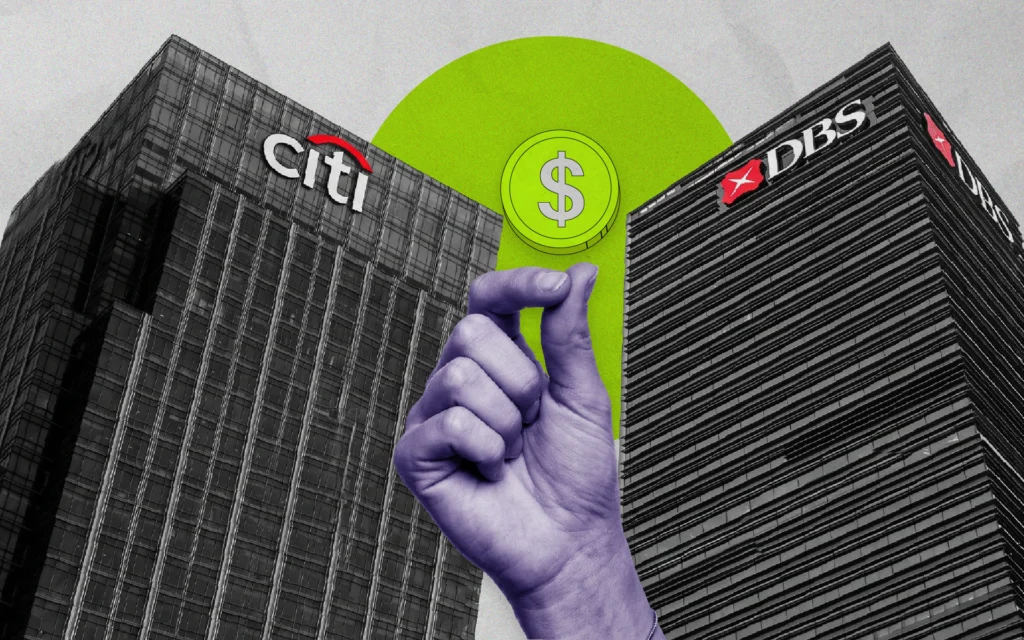
DBS and Citi have completed a cross-border US dollar payment in minutes on a Saturday, giving SWIFT its latest proof that the decades-old banking network can adapt to a financial system increasingly expected to operate 24/7.
The transaction between DBS in Singapore and Citi’s New York office took place on Sept. 5 using tokenized deposits through SWIFT’s Digital Ledger.
DBS said that conventional cross-border transfers, affected by time zones and weekends, can take up to two business days.
The significance is bigger than a one-weekend payment.
SWIFT has spent years facing comparisons with blockchain-based alternatives that promise near-instant settlement without banking-hour restrictions. Its answer is increasingly becoming blockchain itself, but without abandoning the regulated banking system already sitting behind SWIFT.
SWIFT Is Building Blockchain Around Banks, Not Replacing Them
SWIFT declared its blockchain ledger ready for initial use in July, with 17 banks across six continents preparing live pilots. Participants include Citi, DBS, HSBC, Standard Chartered, UBS, BNY, Wells Fargo, BNP Paribas, and MUFG.
The model differs from simply transferring a stablecoin on a public blockchain.
Banks issue tokenized representations of deposits on their own ledgers, while SWIFT’s shared ledger coordinates payment commitments. Final settlement can still occur through existing infrastructure such as real-time gross settlement systems.
That means banks gain some of blockchain’s biggest advantages, including programmability, round-the-clock availability and faster movement of value, without abandoning existing compliance, credit and settlement frameworks.
Citi has already processed live transactions with First Abu Dhabi Bank and OCBC. Its Token Services platform separately processes around $1 billion in transactions, while more than 300 bank clients use Citi’s 24/7 USD Clearing service.
For SWIFT, the stakes are enormous. Its infrastructure connects institutions across more than 200 markets and moves the equivalent of world GDP every two to three days.
Where Does This Leave XRP and XLM?
The development inevitably raises questions about XRP and XLM because both blockchain ecosystems have spent years targeting weaknesses in cross-border payments.
Ripple’s On-Demand Liquidity model can use XRP as a bridge asset between currencies, removing the need for institutions to pre-fund accounts in destination markets. Ripple says its ODL infrastructure operates 24/7/365. Its broader Ripple Payments business now also supports stablecoins, including RLUSD, USDC, and USDT, alongside fiat settlement.
Stellar attacks a similar problem differently. Its network supports 24/7 settlement of multiple assets and connects financial institutions and payment providers through regulated on- and off-ramps. Importantly, XLM is the network’s native token, but payments on Stellar do not necessarily have to use XLM as the asset being transferred.
SWIFT, therefore, isn’t simply becoming “another XRP.”
The competition is increasingly about architecture.
Ripple and Stellar demonstrate how value can move over public blockchain infrastructure. SWIFT is attempting to bring comparable always-on capabilities into the existing banking network using tokenized commercial bank money.
That could reduce one of crypto payment networks’ strongest historical advantages: the fact that blockchains do not close on Friday evening.
But it does not necessarily eliminate their other selling points, particularly around liquidity, public-network interoperability, and moving between currencies without traditional correspondent relationships.
BRICS Is Building Another Payments Path
There is also a geopolitical layer to the transformation.
BRICS countries have been exploring ways to connect their domestic fast-payment systems and central bank digital currencies to make cross-border transactions cheaper.
Reserve Bank of India Governor Sanjay Malhotra said in August that options, including CBDC connectivity and links between fast-payment systems, were being discussed, while India continues its efforts to expand local-currency settlement and the international use of the rupee.
Brazil is simultaneously exploring a possible connection between Pix and the European Central Bank’s TARGET Instant Payment Settlement system.
That is more concrete than the recurring idea of a single BRICS currency.
Claims that BRICS is preparing an imminent gold-backed common currency should be treated cautiously.
Current official developments are much more focused on connecting payment systems, CBDCs, and local currencies than on replacing national currencies with one gold-backed BRICS unit.
It is important because reducing dependence on dollar-based payment infrastructure does not automatically mean replacing the dollar itself.
Cross-Border Payments Race Has Changed
What is emerging is not simply a contest between SWIFT and crypto.
There are now several competing models developing simultaneously: tokenized commercial bank deposits running through SWIFT; stablecoins such as USDC and RLUSD; public blockchain infrastructure, including XRP Ledger and Stellar; and government-backed payment and CBDC networks being explored by BRICS countries.
Even banks are moving toward stablecoins. A coalition of 21 financial institutions, including Citi, Goldman Sachs, Bank of America, and Deutsche Bank, announced plans last week to create a company targeting a dollar-stablecoin launch in 2027.
The DBS-Citi transaction, therefore, says something larger about where payments are heading.
Blockchain is no longer merely about building an alternative to traditional finance. Traditional finance is increasingly absorbing blockchain’s strongest features.
For XRP, XLM, and other payment-focused networks, the question is shifting from whether blockchain can outperform legacy cross-border infrastructure to whether public blockchain networks can retain meaningful advantages once the legacy infrastructure itself becomes tokenized and always-on.
Top Trending Crypto Articles
The information provided in this article is for informational purposes only. It is not intended to be, nor should it be construed as, financial advice. We do not make any warranties regarding the completeness, reliability, or accuracy of this information. All investments involve risk, and past performance does not guarantee future results. We recommend consulting a financial advisor before making any investment decisions.

Dr. Guneet Kaur is a senior editor at CCN.com and a Science Fellow at Exponential Science. She is a fintech and blockchain expert with extensive experience in digital finance education, blockchain ecosystems, and cryptocurrency markets. She has worked with global media such as Cointelegraph, as well as education and blockchain platforms, to design and lead strategic content and learning initiatives. As an educator and assessor for top-tier executive programs, she bridges real-world fintech trends with academic insight.
Dr. Kaur is also a published researcher and peer reviewer across fintech and data science journals, including Financial Innovation Journal and International Journal of Big Data Intelligence and Applications. Her work spans data-driven analysis, Web3 innovation, and technical content development. With a strong foundation in both industry and academia, she translates complex financial technologies into practical applications, empowering learners, professionals, and institutions across the rapidly evolving digital finance landscape.