Structure, oversight and transparency all matter. | Image credit: Hameem Sarwar /CCN
Share
Key Takeaways
The SEC’s reported 2% haircut approach could reshape how broker-dealers treat stablecoins under capital rules.
Capital treatment does not equal approval, but it signals which stablecoins regulators view as manageable within existing risk frameworks.
ChatGPT’s analysis suggests that USDC and PYUSD may benefit from reserve transparency, regulatory oversight, audit frequency, governance standards, and compliance structures.
RLUSD’s positioning may depend on documentation quality, supervisory clarity, custody transparency, and institutional perception, while USDT could face higher friction under stricter U.S.-focused rules.
The U.S. Securities and Exchange Commission’s (SEC) reported “2% haircut” approach could reshape how broker-dealers treat stablecoins on their balance sheets.
Under capital rules, even small percentage adjustments matter. A 2% discount changes how much capital firms can count, how they manage risk, and which digital dollars look safest under regulatory scrutiny.
CCN asked ChatGPT to break down the mechanics behind the proposal and identify which stablecoins stand to benefit.
The model responded with a structured analysis focused on regulatory incentives, transparency, and capital efficiency.
What the SEC’s 2% Haircut Means for Stablecoins
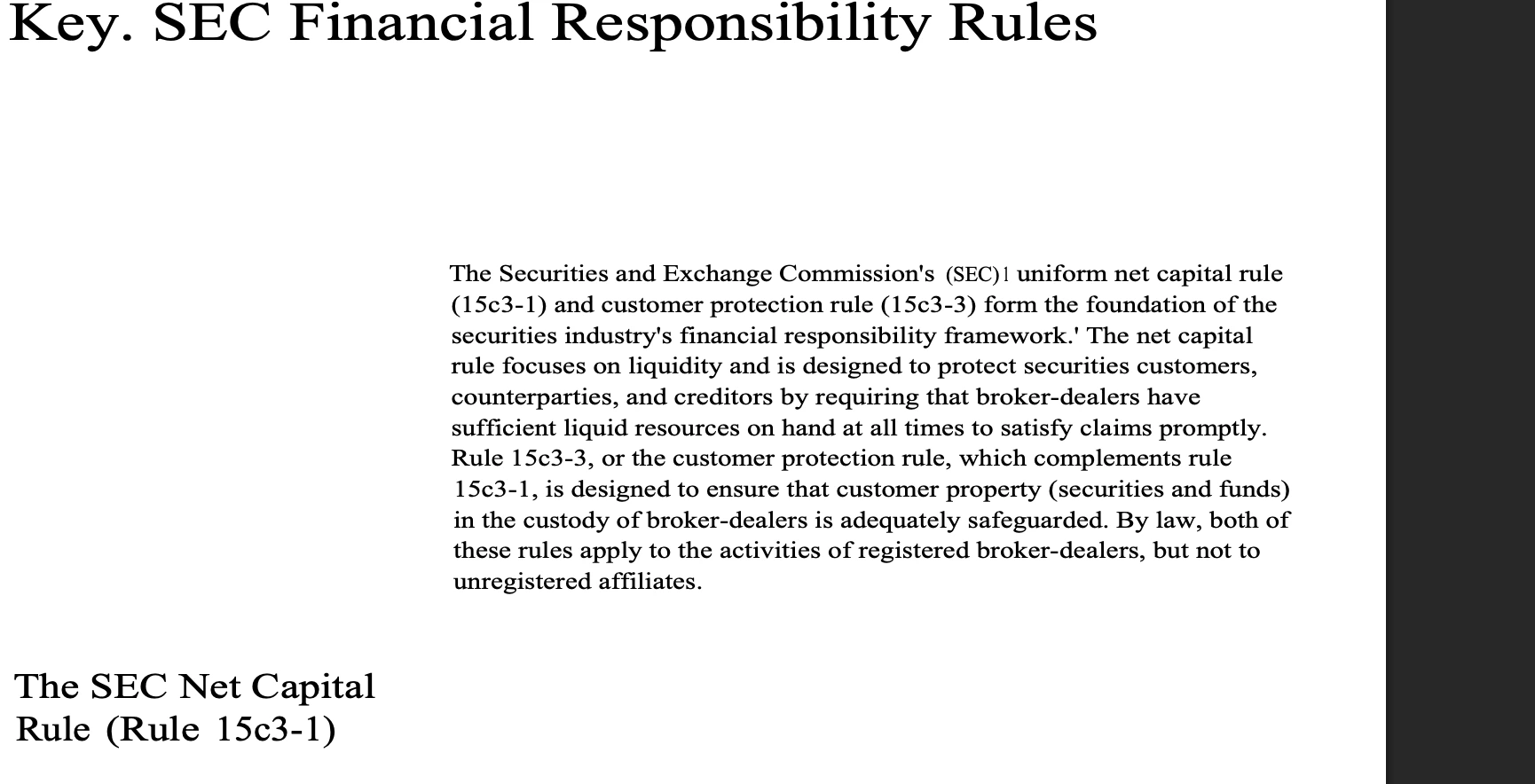
In simple terms, the 2% haircut is a small capital discount. Under the SEC’s Net Capital Rule (Rule 15c3-1), if a broker-dealer (a single registered firm that can act as both a broker and a dealer) like Goldman Sachs or Robinhood holds $100 in an approved stablecoin, regulators would treat it as worth $98 for capital rule purposes.
The SEC Net Capital Rule (Rule15c3-1)| Source: SEC
Firms must absorb that $2 difference when calculating how much capital they need to hold.
However, the rule does not mean the stablecoin lost 2% of its value. Instead, it acts as a safety buffer.
Regulators apply similar adjustments to many financial assets to account for operational risk, settlement delays, custody exposure, market stress, and redemption pressure.
It could be argued that the SEC treats certain stablecoins almost like cash, but not exactly. The 2% haircut recognizes small but real risks, while still allowing regulated, transparent stablecoins to sit on broker-dealer balance sheets with relatively limited capital penalties.
The update sparked immediate reaction online, with some observers pointing to a separate but related concern: bank liquidity.
Post on X by Laura Shin | X @laurashin
The comment highlights a key distinction. The SEC’s 2% haircut addresses broker-dealer capital treatment, not how banks handle liquidity requirements.
That difference matters. Capital rules determine balance sheet eligibility. Liquidity rules determine how deeply stablecoins integrate into the banking system.
Once regulators signal that structure, transparency, reserve quality, audit frequency, disclosure clarity, governance standards, and supervisory oversight matter, competitive positioning begins to separate issuers.
Why Regulated and Auditable Stablecoins Could Benefit
ChatGPT pointed to structure, oversight, and transparency as the main differentiators, “because capital rules reward clearly documented risk controls.” In other words, the regulatory framework favors measurable safeguards over informal assurances.
Regulated and auditable stablecoins may benefit from several reasons:
Frequent reserve attestations: Publish regular, third-party verified reports on reserves.
High-quality collateral: Hold short-duration U.S. Treasuries and cash equivalents with minimal credit and duration risk.
U.S. regulatory oversight: Operate under clear U.S. supervisory frameworks.
“Such issuers are structurally advantaged,” GPT added. “Under that lens, PayPal USD (PYUSD) and USD Coin (USDC) look well-positioned.”
The analysis centers on regulatory predictability. Broker-dealers operate in highly supervised environments. Assets that align with existing compliance expectations create less friction.
If capital rules differentiate based on audit frequency, reserve clarity, and regulatory supervision, issuers that emphasize those features may gain institutional traction.
The core question then shifted to why PayPal USD (PYUSD) and USD Coin (USDC) appear better positioned under that framework.
Why USDC and PYUSD Stand Out in a Regulated Stablecoin Framework
ChatGPT highlighted structural factors that position USDC and PYUSD favorably under stricter regulatory scrutiny.
USD Coin (USDC): Transparency and Treasury-Backed Reserves
Issued by Circle, USDC publishes monthly reserve attestations and provides detailed breakdowns of its holdings. Reserves consist largely of short-term U.S. Treasuries and cash equivalents. Circle actively engages with U.S. regulators and consistently frames USDC as a compliance-first digital dollar infrastructure.
That structure aligns with traditional broker-dealer risk models, which tend to reward:
Frequent third-party attestations: Regular verification of reserves.
High-quality collateral: Short-duration U.S. Treasuries and cash equivalents.
Regulatory engagement: Ongoing dialogue with U.S. supervisory bodies.
USDC’s Treasury-heavy reserve composition aligns with conventional capital and liquidity frameworks. For institutions subject to capital requirements, asset quality, audit frequency, disclosure standards, and supervisory alignment directly influence internal risk weighting.
PayPal USD (PYUSD): Regulatory Oversight and Institutional Branding
PayPal USD (PYUSD), issued by Paxos, operates under oversight from the New York Department of Financial Services (NYDFS). Paxos holds a trust company charter and maintains a history of regulatory engagement and structured compliance controls.
PYUSD’s association with PayPal, a publicly traded payments company, reinforces its institutional positioning. That combination of regulatory supervision, governance discipline, disclosure standards, operational controls, and established brand credibility can reduce perceived counterparty and operational risk.
From a broker-dealer capital perspective, trust company oversight under the NYDFS adds another layer of regulatory clarity.
When firms must justify capital treatment decisions to regulators, documented supervision, audit standards, clarity around redemption, and compliance infrastructure become central considerations.
ChatGPT summarized the broader incentive structure:
“If the SEC’s approach differentiates based on reserve transparency and regulatory supervision, both PYUSD and USDC naturally fall into the lower perceived risk category.”
In capital markets, perception, regulatory alignment, audit rigor, disclosure quality, and supervisory clarity often move together.
Stablecoins that already operate within established compliance frameworks may face less friction as regulatory standards tighten.
Where RLUSD Fits in the Regulated Stablecoin Landscape
Ripple USD (RLUSD) enters the market under different institutional dynamics. Ripple has faced a high-profile legal dispute with the SEC over XRP.
Even if RLUSD operates as a separate product, institutional perception may still influence capital treatment decisions, counterparty assessments, governance reviews, disclosure scrutiny, and internal risk committee evaluations.
ChatGPT framed RLUSD’s positioning around four core factors:
Regulatory structure: The supervisory framework under which RLUSD operates.
Reserve transparency: The frequency, depth, and independence of attestations.
Banking and custody relationships: The strength and credibility of financial partners.
Entity-level perception: Ongoing regulatory views of Ripple as a corporate issuer.
If RLUSD maintains strong third-party attestations, high-quality short-duration U.S. Treasuries and cash equivalents, clearly documented redemption rights, robust compliance controls, governance oversight, and transparent reserve reporting, it could compete directly with USDC and PYUSD in institutional markets.
Structural safeguards will likely weigh more heavily than brand positioning alone.
However, prior regulatory disputes involving Ripple may influence institutional risk committees, even if those disputes remain legally distinct from the stablecoin itself.
RLUSD’s competitive standing will therefore depend on documentation quality, reserve disclosures, audit frequency, custody transparency, regulatory clarity, operational safeguards, and supervisory alignment.
If those elements match or exceed peer standards, institutions may evaluate RLUSD under similar capital frameworks.
Where Tether (USDT) Fits Under a 2% Haircut Framework
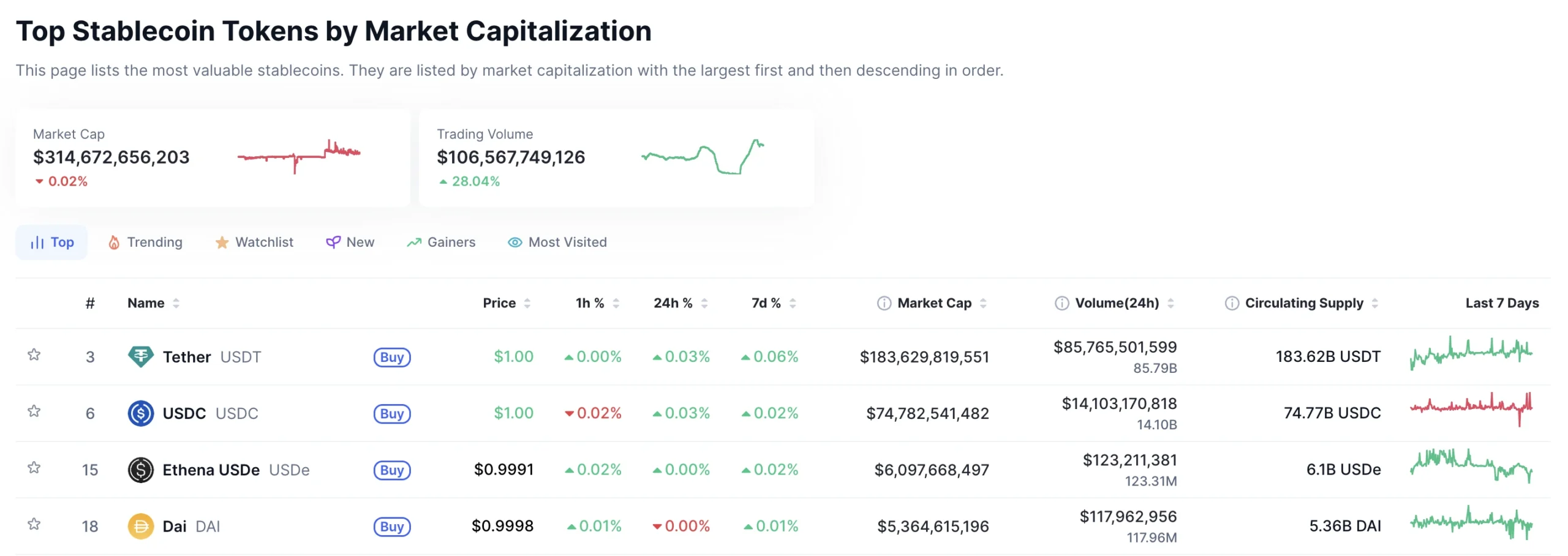
Tether (USDT) remains the largest stablecoin by market capitalization and trading volume. That scale gives it a dominant position in global crypto markets. However, the reported 2% haircut framework appears to focus specifically on U.S.-regulated “payment stablecoins,” which introduces a structural distinction.
USDT dominates liquidity across centralized exchanges (CEXs), offshore trading platforms, derivatives markets, and cross-border settlement corridors. Its market share reflects trading utility and global reach.
According to ChatGPT, institutional capital treatment, however, depends less on volume and more on regulatory supervision, reserve transparency, audit standards, governance structure, custody clarity, and compliance alignment.
According to ChatGPT, if regulators prioritize U.S. oversight, supervisory clarity, and structured compliance infrastructure, USDT could face higher capital friction inside broker-dealer balance sheets than U.S.-regulated competitors.
That does not imply USDT lacks liquidity or market relevance. It remains the most widely used stablecoin globally.
But under a rule that rewards regulatory alignment and documented supervision, offshore structures may weigh more heavily in institutional risk models.
What This Means for Stablecoins and Wall Street
ChatGPT’s analysis does not predict policy outcomes, but it outlines how capital rules could reshape competitive positioning.
If regulators reward transparency, reserve quality, audit frequency, governance standards, compliance controls, supervisory oversight, and documentation strength, certain stablecoins may gain structural advantages.
Under that lens, stablecoins built around regulatory clarity may integrate more easily into broker-dealer balance sheets, custody models, clearing systems, settlement flows, liquidity channels, and institutional trading infrastructure.
The broader takeaway is simple. Capital treatment does not equal approval, but it signals which assets regulators view as manageable within existing financial risk frameworks.
In that environment, as ChatGPT pointed out: structure, oversight and transparency all matter.
Disclaimer:
The information provided in this article is for informational purposes only. It is not intended to be, nor should it be construed as, financial advice. We do not make any warranties regarding the completeness, reliability, or accuracy of this information. All investments involve risk, and past performance does not guarantee future results. We recommend consulting a financial advisor before making any investment decisions.
Dr. Lorena Nessi is an award-winning journalist and media technology expert with 15 years of experience in digital culture and communication. Based in Oxfordshire, UK, she combines academic insight with hands-on media practice.
She holds a PhD in Communication, Sociology, and Digital Cultures, and an MA in Globalization, Identity, and Technology.
Lorena has taught at Fairleigh Dickinson University, Nottingham Trent University, and the University of Oxford. She is a former producer for the BBC in London, with additional experience creating television content in Mexico and Japan.
Her research focuses on digital cultures, social media, technology, capitalism, and the societal impact of blockchain innovation.
She has written extensively on digital media and emerging technologies, with her work featured in both academic and media platforms. Her Web3 expertise explores how blockchain technologies shape culture, economics, and decentralized systems.
Outside of work, Lorena enjoys reading science fiction, playing strategic board games, traveling, and chasing adventures that get her heart racing. A perfect day ends with a relaxing spa and a good family meal.


 Easy
Easy