Key Takeaways
- U.S. lawmakers introduced the DEATH BETS Act to ban prediction markets from allowing bets on wars, assassinations, terrorism, or individual deaths.
- The bill aims to close regulatory loopholes and prohibit contracts tied to conflict fatalities after wagers on U.S.-Iran strikes exceeded $500 million.
- War prediction markets have allowed bets on strike timing, regime change, leader removal, nuclear escalation, and territorial captures.
U.S. lawmakers are moving to shut down betting on war, assassination, and human death.
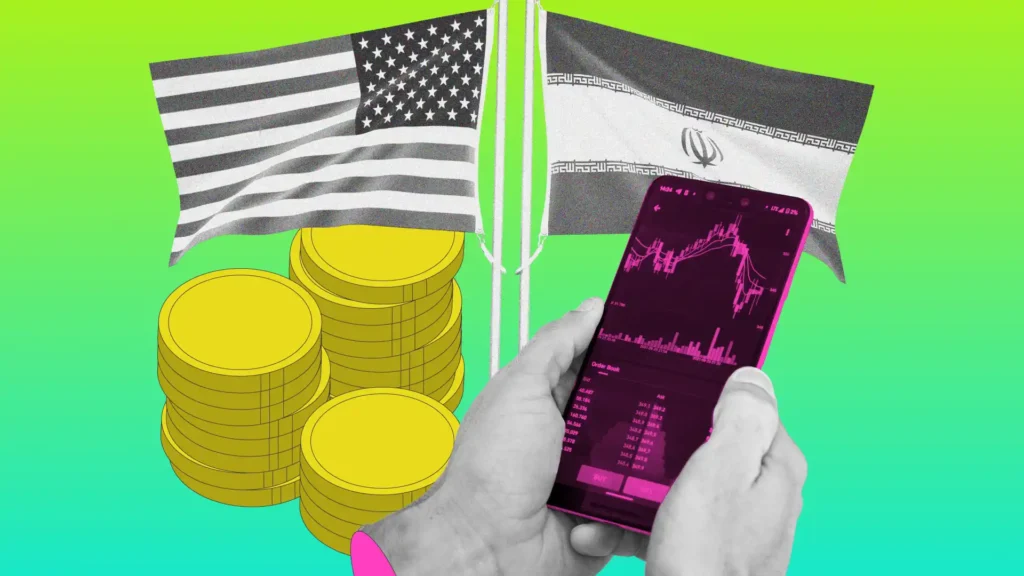
A new bipartisan proposal, the Discouraging Exploitative Assassination, Tragedy, and Harm Betting in Event Trading Systems Act, better known as the DEATH BETS Act, would explicitly ban prediction markets from listing contracts tied to wars, terrorism, assassinations, or any individual’s death.
Supporters say the legislation is necessary to prevent traders from profiting off tragedy while protecting national security from the risks of insider leaks and market manipulation.
What is the DEATH BETS Act
Introduced on March 10 by Rep. Mike Levin (D-CA) and Sen. Adam Schiff (D-CA), the legislation targets what lawmakers see as dangerous loopholes in existing financial regulations.
Under the current Commodity Exchange Act, the Commodity Futures Trading Commission (CFTC) already has the authority to block event contracts tied to terrorism, assassination, or war if they are deemed contrary to the public interest.
However, that authority is discretionary.
Lawmakers worry that recent discussions about expanding prediction market frameworks could allow controversial contracts to proliferate.
The DEATH BETS Act would remove that ambiguity by explicitly banning contracts linked to violent geopolitical events or individual deaths.
The bill would prohibit any CFTC-registered exchange from listing contracts that “involve, relate to, or reference” war, terrorism, assassination, or the death of an individual, including contracts that closely correlate with fatality outcomes.
Why the DEATH BETS Act Matters
Prediction market platforms such as Kalshi and Polymarket have surged in popularity in recent years, allowing users to trade contracts tied to real-world events ranging from elections to economic indicators.
But recent controversies involving wagers on military conflict have thrust the industry into the political spotlight.
Rep. Levin summarized the concern bluntly:
“Betting on war and death should be illegal. … Over half a billion dollars was wagered on the timing of U.S. military strikes on Iran alone. That is unacceptable, and this legislation puts a stop to it.”
Sen. Schiff echoed those national security concerns:
“Betting on war and death creates an environment in which insiders can profit off of classified information, our national security is jeopardized, and violence is encouraged. There is no justification for gambling on lives.”
The bill arrives just days after massive trading volumes tied to escalating U.S.-Iran tensions, raising alarm among lawmakers that sensitive geopolitical developments could be exploited in speculative markets.
Earlier this year, Schiff and several senators urged the CFTC to enforce existing restrictions, warning that prediction markets could incentivize leaks of classified military information.
Additional legislation is also emerging around the issue.
Separate proposals from Sens. Jeff Merkley and Amy Klobuchar would target elected officials trading on these platforms, while a bipartisan House bill from Reps. Blake Moore and Salud Carbajal seeks to strengthen CFTC enforcement more broadly.
Still, the DEATH BETS Act stands out for its narrow focus on banning contracts tied directly to war and death.
Betting on Tragedy: The Rise of War Prediction Markets
Recent activity on prediction markets illustrates why lawmakers believe stronger restrictions are needed.
Platforms have offered contracts allowing traders to speculate on highly granular wartime scenarios—from the timing of military strikes to the fate of world leaders.
During the recent U.S.-Israel strikes on Iran, traders poured money into prediction markets betting on when attacks would occur.
Polymarket hosted a multi-outcome contract predicting the timing of the strikes, drawing more than $500 million in wagers.
Traders could purchase “yes” or “no” shares for specific dates or time windows and profit if the event occurred within that period.
Reports later suggested that six suspected insider accounts earned more than $1.2 million in combined profits from these and related leadership-related bets.
Leadership and regime-change markets have also drawn significant interest.
Iran
Kalshi previously hosted a contract asking whether Iranian Supreme Leader Ali Khamenei would be “out as Supreme Leader” by a specific date.
The contract generated about $54 million in trading volume before it was halted following his death in the strikes.
The platform ultimately issued refunds, citing rules against direct death markets—but only after traders had already capitalized on dramatic price swings.
Similar markets have appeared across other geopolitical flashpoints.
Venezuela
Contracts have speculated on whether the U.S. would remove Venezuelan President Nicolás Maduro from power.
One trader reportedly profiting more than $400,000, and whether Russian forces would capture specific Ukrainian territories.
In some cases, markets pushed even further.
Nuclear Attacks
Polymarket briefly hosted a contract predicting whether a nuclear weapon would be detonated by a certain date.
The pool drew hundreds of thousands of dollars in wagers before public backlash forced its removal.
Other contracts have speculated on everything from spacecraft explosions during wartime to the capture of specific territories—effectively turning live geopolitical developments into tradable assets.
The Debate Over Prediction Markets
Prediction markets function similarly to binary options or futures contracts.
Traders purchase shares representing the likelihood of an event—say, buying a “yes” contract at $0.4, implying a 40% probability.
If the event occurs, the contract settles at $1, generating a profit.
Supporters argue these markets provide valuable crowdsourced forecasting, potentially offering insights into complex geopolitical developments.
Critics counter that betting on violence and death crosses an ethical line and may create incentives for insider trading, information leaks, or even the escalation of conflict.
As prediction markets continue expanding globally, lawmakers say drawing firm boundaries around war and death may be necessary to prevent speculation from turning real-world tragedy into a financial game.
Top Trending Crypto Articles

Prashant Jha is a seasoned crypto journalist based in Delhi, India, with a Bachelor’s Degree in Computer Science Engineering. Passionate about the evolving world of blockchain and cryptocurrencies, he has been a dedicated voice in the industry since 2018. Prashant’s expertise lies in regulatory reporting, where he unravels complex legal and financial developments with clarity and precision. Before joining CCN in 2024, he honed his craft at Cointelegraph, establishing himself as a trusted name in crypto journalism.
His coverage spans major industry events, including the high-profile collapses of FTX, Three Arrows Capital (3AC), and LUNA, offering readers insightful analyses of their regulatory and market implications. Prashant’s technical background enables him to bridge the gap between intricate blockchain technology and its real-world applications, making his work accessible to novices and experts.
Beyond his professional pursuits, Prashant is an avid music enthusiast, often exploring diverse genres to unwind. A sports lover, he has a particular passion for cricket and frequently engages in discussions about the game. His multifaceted interests and sharp journalistic instincts make him a valuable contributor to CCN, where he continues shaping the crypto landscape's narrative.