Key Takeaways
- Tenev said Robinhood’s prediction markets could reach “trillions” in annual volume.
- Robinhood reported over 12 billion contracts traded in 2025 and over four billion so far in 2026.
- The CFTC withdrew its 2024 event-contract proposal and plans new rulemaking.
- Robinhood is building Rothera with Susquehanna to expand its event contracts.
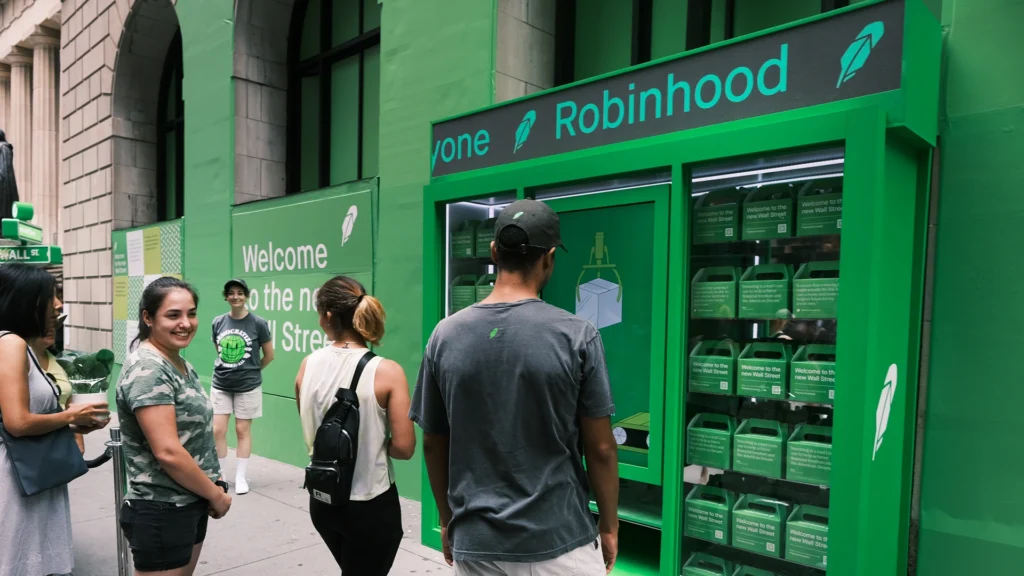
Robinhood CEO Vlad Tenev said prediction markets are the company’s fastest-growing business and could “drive trillions in annual volume over time,” according to its latest earnings call on Feb. 10.
The comments come as the Commodity Futures Trading Commission (CFTC) has withdrawn its 2024 proposed rulemaking on event contracts and said it will pursue a new rulemaking approach.
Robinhood has been expanding event contracts in its app and building market infrastructure through Rothera, a joint venture with Susquehanna intended to operate a CFTC-licensed exchange and clearinghouse.
What Tenev Told Investors
Tenev said Robinhood is seeing rapid adoption in prediction markets and expects major global events to support demand.
He said more than 12 billion prediction market contracts were traded on Robinhood in 2025, which he described as the product’s first full year, and that more than 4 billion had traded so far in 2026.
Robinhood also said activity has extended beyond U.S. football, citing examples in other sports and non-sports categories.
The Regulatory Shift Robinhood Is Pointing To
On Feb. 4, the CFTC announced it had withdrawn the proposed rules on event contracts that were published in June 2024.
It said it does not intend to issue final rules based on that proposal. The Federal Register notice states the withdrawal was effective as of Feb. 4, 2026.
CFTC also said staff withdrew a sports-related event contracts advisory and that the agency plans to advance a new rulemaking.
Rothera and the Push for Market Infrastructure
Robinhood has tied prediction markets to a broader build-out.
On its newsroom site, the company said it is extending prediction markets through a new joint venture and partnership with Susquehanna to operate a CFTC-licensed exchange and clearinghouse.
Tenev referenced Rothera as part of Robinhood’s roadmap, describing the venture as coming online.
Control of execution and clearing can shape pricing, compliance requirements, and how quickly products can expand.
Related News
Prediction markets have also shown signs of scaling beyond niche audiences.
Kalshi said it hit $1 billion in daily trading volume on Super Bowl Sunday, as platforms compete to list more event contracts while U.S. regulators revisit the rulebook.
A New Trend in Crypto: Attention Markets
While Robinhood is building within the regulated U.S. framework, crypto-native prediction markets are expanding into new formats.
Polymarket said it plans to offer “attention markets” in partnership with Kaito AI, according to a Feb. 10 report.
The product would create markets tied to social media mindshare and sentiment, using data across major platforms.
The concept pushes prediction markets beyond discrete outcomes and toward metrics that depend on measurement choices, data coverage, and spam resistance.
What Could Still Derail the ‘Supercycle’ Narrative
Two issues could decide how far event contracts scale in U.S. retail apps.
First is jurisdiction. The CFTC withdrawal notice referenced state actions and litigation context around event contracts and “gaming,” disputes that can constrain distribution.
Second is market integrity. As platforms expand beyond clean outcomes into fuzzier metrics, contract definitions and settlement sources become more important.
What To Watch Next
Three near-term signals matter:
- The timing and content of the CFTC’s new event-contract rulemaking.
- Robinhood’s rollout milestones for Rothera and any expansion in listed contract categories.
- Whether growth holds outside seasonal sports cycles, which Robinhood emphasized on the call.
If the regulatory framework stabilizes and products scale beyond a narrow set of outcomes, prediction markets could become a mainstream retail trading feature.
If not, growth may remain constrained to the safest categories.
Visit Our Secure Partners

PhD, researcher and writer exploring AI, blockchain, and the philosophy of tech, with a focus on DeScAI, governance, and trust.