Coinbase Global plans to launch its own prediction market contracts for retail and institutional customers in the US in the first half of 2027, Bloomberg reported, citing people familiar with the matter.
The cryptocurrency exchange currently offers event contracts through a partnership with Kalshi.
Issuing its own contracts would give Coinbase more control over which markets it lists and when they open. It could also keep a larger share of the trading fees.
The plans come after Coinbase’s prediction market business surpassed a $200 million annualized revenue run rate in the third quarter of 2026, while it was still using Kalshi’s contracts.
Coinbase Seeks More Control Over Contract Listings
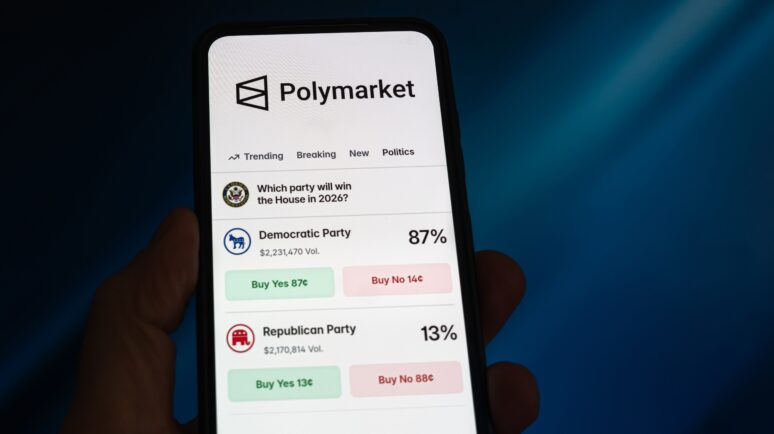
Event contracts allow traders to take positions on the outcome of a specific event. In a typical yes-or-no market, the price reflects what traders are willing to pay for a position that settles according to the outcome.
Interest in these markets surged during the 2024 US presidential race, drawing retail traders to contracts tied to political events.
With its own listings, Coinbase could decide which events to cover, how to define the outcomes and when to open trading. That would give it more flexibility to respond to customer demand and to develop contracts for institutional users alongside its retail offering.
Bloomberg’s report gave a first-half launch window, with the initial lineup of contracts still unclear.
The economics of the move depend in part on whether Coinbase can attract enough buyers and sellers to its own listings. Active markets generally make it easier for traders to enter and exit positions at competitive prices.
That matters for institutional customers placing larger orders, particularly if similar contracts are already available on rival exchanges.
Acquisition and CFTC Approval Lay the Groundwork
Coinbase announced an agreement to acquire prediction market startup The Clearing Company in December 2025. The company already operates a regulated derivatives platform and received approval from the Commodity Futures Trading Commission in September 2026 to run its own clearinghouse.
A clearinghouse manages obligations between trading parties and helps ensure that trades settle.
The acquisition and regulatory approval give Coinbase infrastructure to support its expansion into proprietary contracts. Chief Financial Officer Alesia Haas confirmed in October that Coinbase intended to issue its own event contracts.
The rollout would come amid scrutiny from state regulators over whether some event contracts fall under gambling laws.
The dispute adds uncertainty around which products exchanges can offer in different jurisdictions and makes Coinbase’s choice of initial listings a consequential part of the launch.
Prediction Markets Broaden Coinbase’s Revenue Base
Haas described prediction markets on an October earnings call as one of Coinbase’s fastest-growing new revenue streams.
The business exceeded a $200 million annualized revenue run rate during the third quarter. The figure expresses the business’s revenue pace on a yearly basis. It differs from the revenue Coinbase booked during the quarter.
Event contracts give Coinbase another source of trading fees at a time when activity in its core crypto business can swing sharply with token prices and investor sentiment.
Customers can trade contracts tied to events outside crypto, giving them a reason to use the platform even during quieter periods for Bitcoin and other digital assets.
Bringing contract listings in-house could improve the amount Coinbase earns from each trade. The launch will test whether the company can turn the demand it has seen through Kalshi into sustained trading volume on contracts it lists itself.
That will determine how much the move contributes to revenue growth and how far Coinbase can diversify beyond crypto trading.











 $1,000 and $1M XRP Calls Return as Bulls Eye Ripple at SWIFT Banking Summit