Bitcoin topped $85K after smaller wallet counts fell by nearly 69,500. A $648M crypto short squeeze fueled gains as FOMO surged. | Credit: CCN.com
Share
Key Takeaways
Nearly 69,500 wallets disappeared from smaller BTC-holding brackets before the rally, though that does not prove that an equal number of investors sold.
Bitcoin broke above $85,000 as roughly $648 million in bearish crypto positions were liquidated.
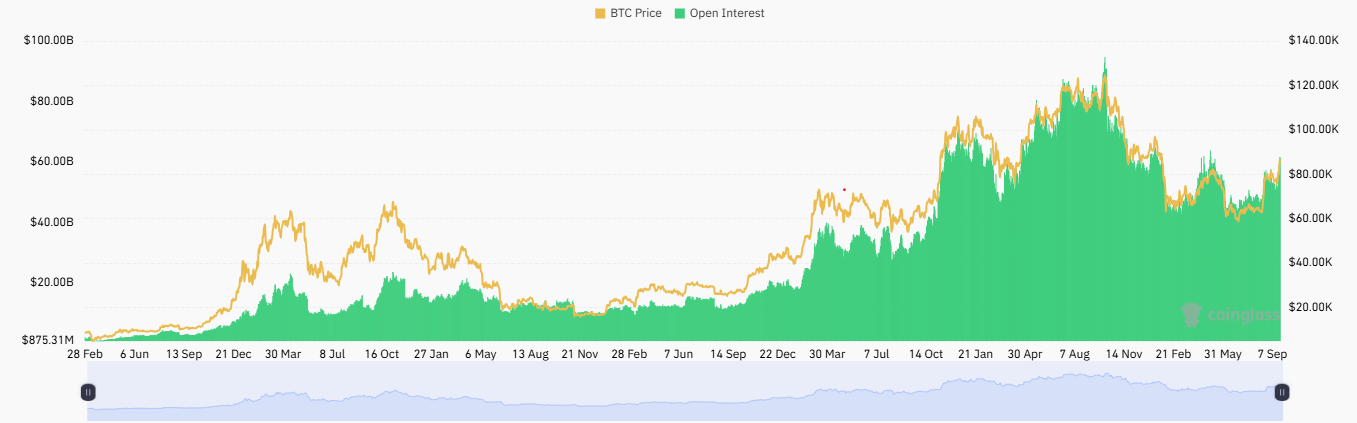
Santiment reported Bitcoin FOMO at its highest since 2024, while rising open interest pointed to renewed leverage risks.
Bitcoin’s rebound above $85,000 came after tens of thousands of smaller wallets disappeared from key holding brackets, according to Santiment data, highlighting how quickly crypto markets can turn against fearful sellers.
The data shows a combined decline of 69,494 addresses holding between 0.1 and 10 BTC during the July-August shakeout, before Bitcoin reclaimed $80,000 and extended its recovery.
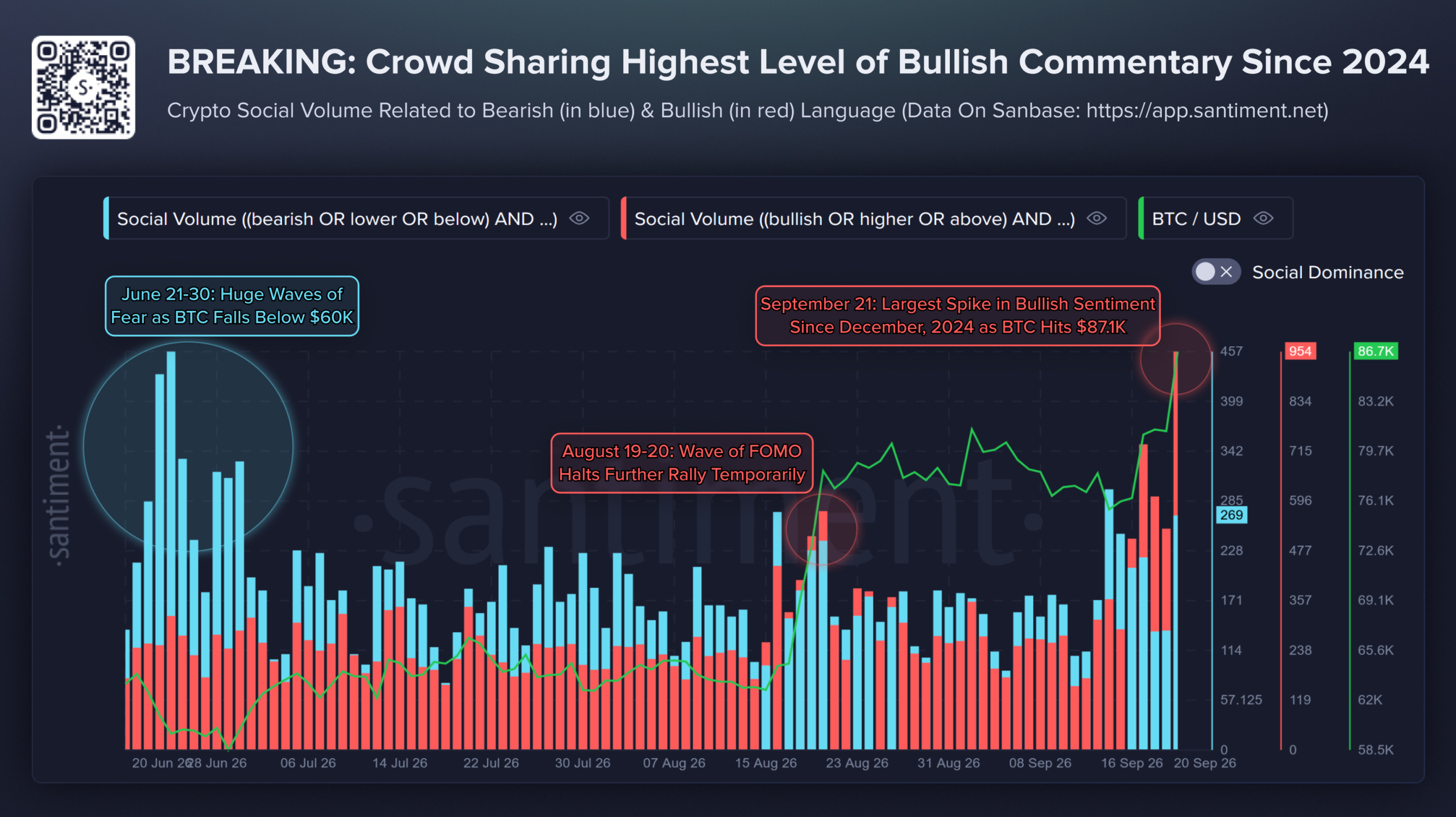
Now, with BTC pushing toward $87,000, the mood has reversed. Santiment’s accompanying commentary describes Bitcoin-related fear of missing out as its strongest since 2024, raising questions about whether traders chasing the breakout are replacing one crowded trade with another.
New Trending Crypto Wallet Offers
Sponsored
Disclosure
We sometimes use affiliate links in our content, when clicking on those we might receive a commission at no extra cost to you. By using this website you agree to our terms and conditions and privacy policy.
Smaller Bitcoin Wallets Shrunk Before the Breakout
The supplied figures show that the number of wallets holding between 0.1 and 1 BTC fell by 62,335. Addresses holding between 1 and 10 BTC declined by another 7,159.
Santiment interprets the contraction as evidence that smaller holders lost conviction during the downturn, leading them to reduce their exposure before prices recovered.
🧐 Data Shows That Fearful Bitcoin Holders Sold Before $85K Rally
🧊 Smaller Bitcoin holders cracked before the breakout. This chart shows 62,335 wallets holding 0.1-1 BTC and 7,159 holding 1-10 BTC disappearing during the July-August shakeout, just before $BTC reclaimed $80K.… pic.twitter.com/4kohSMy8uC
However, wallet counts do not map directly to individual investors. One person can control multiple addresses, while transfers, consolidation, and movements between balance brackets can change the totals without representing an outright sale.
The figures therefore support a narrower conclusion than the headline suggests: these two wallet cohorts contracted sharply. They do not independently establish that exactly 69,494 people panic-sold their Bitcoin.
Even with that qualification, the timing illustrates a familiar market pattern. Investors who reduce exposure during prolonged uncertainty can find themselves watching from the sidelines when momentum suddenly returns.
A $648 Million Short Squeeze Accelerated the Rally
Bitcoin subsequently broke above $85,000 for the first time since January, according to the supplied commentary, as a wave of liquidations amplified the advance.
Roughly $648 million in bearish cryptocurrency positions were liquidated over 24 hours. That figure covers crypto positions broadly, rather than Bitcoin alone.
Short sellers bet on falling prices. When the market rises sufficiently, exchanges can forcibly close leveraged positions, creating buying pressure that pushes prices higher and threatens other shorts.
🚨 BREAKING: Bitcoin FOMO Hits Highest Level Since 2024!
🚀 Crypto’s mood has flipped hard into celebration. Talk of Bitcoin and crypto expected to go even “higher” or staying bullish has surged far above bearish language as $BTC pushed toward $87K, helped by a massive short… pic.twitter.com/8lt1zw3yfm
That feedback loop can turn an initial recovery into a much faster rally.
The commentary also points to falling oil prices as a supportive influence on risk appetite, while total cryptocurrency trading volume reportedly increased by 39%.
However, forced buying does not necessarily establish durable demand. Once the liquidation wave fades, continued gains depend more heavily on buyers willing to enter at higher prices.
Bitcoin FOMO Replaces Fear
The rally has also changed the language traders use online.
According to Santiment, discussion anticipating “higher” prices and expressing bullish expectations surged relative to bearish language as Bitcoin approached $87,000.
Bitcoin FOMO hits its highest level since 2024. | Credit: Santiment
Such enthusiasm can accompany genuine momentum. It can also signal that traders increasingly expect the same outcome, leaving prices vulnerable if the market fails to deliver further gains.
Sentiment alone cannot identify a top. Bullish conditions can persist, and a crowded market can continue rising before it reverses.
Nevertheless, the contrast is striking: smaller wallet cohorts shrank during the shakeout, while optimism surged after Bitcoin had already recovered substantially.
Open interest measures outstanding derivative contracts. An increase alongside heavy liquidations suggests that traders continued to add positions as existing bets closed.
It does not, by itself, reveal whether those new positions were predominantly bullish or bearish.
The combination nevertheless matters. Rising leverage can leave the market more sensitive to abrupt price changes, particularly when sentiment becomes increasingly one-sided.
Santiment’s broader argument is that capitulation can reduce immediately available selling pressure when coins move toward holders less inclined to sell. If demand subsequently strengthens, thinner available supply can magnify the price response.
But the wallet figures alone cannot prove who absorbed those coins or how long they intend to hold them.
Bitcoin’s latest move demonstrates the cost of getting caught on the wrong side of a rapid sentiment reversal. Whether the recovery continues will depend on sustained demand after the squeeze and on how aggressively traders rebuild leveraged exposure.
For now, the same market that punished fear is testing whether renewed confidence has become excessive, too.
Disclaimer:
The information provided in this article is for informational purposes only. It is not intended to be, nor should it be construed as, financial advice. We do not make any warranties regarding the completeness, reliability, or accuracy of this information. All investments involve risk, and past performance does not guarantee future results. We recommend consulting a financial advisor before making any investment decisions.
Giuseppe Ciccomascolo began his career as an investigative journalist in Italy, where he contributed to both local and national newspapers, focusing on various financial sectors.
Upon relocating to London, he worked as an analyst for Fitch's CapitalStructure and later as a Senior Reporter for Alliance News. In 2017, Giuseppe transitioned to covering cryptocurrency-related news, producing documentaries and articles on Bitcoin and other emerging digital currencies. He also played a pivotal role in establishing the academy for a cryptocurrency exchange website. Crypto remained his primary area of interest throughout his tenure as a writer for ThirdFloor.