Meet the Top 101 in Crypto

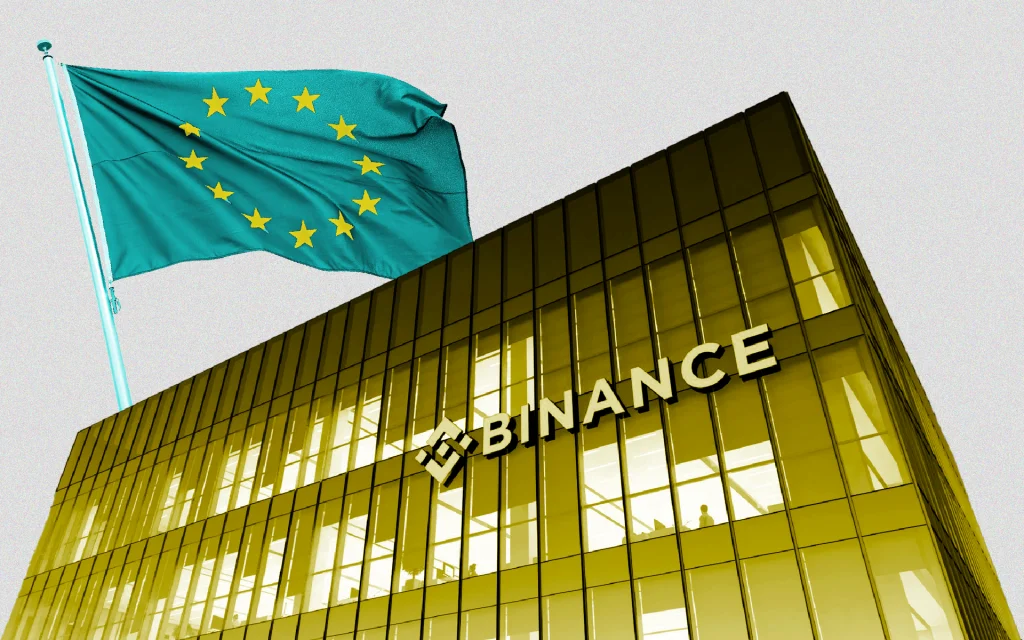
Binance Halts Crypto Trading in France and Parts of Europe After Missing MiCA License

Published 06 July 2026
Giuseppe Ciccomascolo
Authors

Key Takeaways

  • Binance has suspended crypto trading services in France and several other European countries after missing the EU’s MiCA licensing deadline.
  • Around 2 million users in France can still withdraw their assets but can no longer access spot, margin, or other trading services.
  • Licensed rivals such as Coinbase and OKX are seeking to attract affected Binance users, leveraging their regulatory approval to expand market share.

Binance has suspended crypto trading services in France and several other European countries after failing to secure authorization under the European Union’s Markets in Crypto-Assets (MiCA) regulation before the July 1 deadline.

The move marks one of the highest-profile consequences of the bloc’s new crypto framework, leaving millions of users unable to access spot, margin, and other trading services while highlighting the growing importance of regulatory compliance in Europe’s digital asset market.

Although customers can still withdraw their assets, the restrictions affect an estimated 2 million Binance users in France alone and come as licensed rivals such as Coinbase and OKX seek to attract traders looking for uninterrupted access to the EU market.

Try Our Recommended Crypto Exchanges
Sponsored
Disclosure
Opened in 2018
Promotions
Deposit $100, Get an Extra $300 in GOLD!
Coins
Shiba Inu Bitcoin PAX Gold Ampleforth Ethereum +70
Promotions
Receive up to $100,000 worth of exclusive gifts for newcomers upon registration.
Coins
Bitcoin Ethereum Tether USD Coin Solana +76
Opened in 2017
Promotions
Experience a 1-minute swap on a non-custodial platform.
Coins
Bitcoin Ethereum Tether Build'N'Build USD Coin +217
Show More

Binance Loses Trading Access as MiCA Rules Take Effect

The trading suspension follows the full implementation of MiCA, the European Union’s landmark crypto regulation that establishes a single licensing framework for crypto-asset service providers across the bloc.

From July 1, Binance users in France and several other European countries, including Italy, Poland, and Spain, lost access to spot trading, margin trading, and other covered services because the exchange had not obtained the required MiCA authorization.

Binance confirmed that customer funds remain safe and that withdrawals remain available. However, users wishing to continue trading must either wait for Binance to secure a license or transfer their assets to another regulated platform.

The exchange had previously pursued a MiCA license through Greece, hoping to use the regulation’s passporting mechanism to serve customers throughout the European Union.

However, Binance later withdrew its application and announced plans to seek authorization through another EU member state, leaving it without an approved license when the deadline arrived.

The case illustrates the strict implementation of MiCA, which now prevents unlicensed exchanges from offering regulated crypto trading services across the European Union.

According to industry data, only 244 MiCA licenses had been granted by late June, despite roughly 3,000 applications, underscoring the rigorous approval process crypto firms face.

Around 2 Million French Users Affected as Competitors Move In

France represents one of Binance’s largest European markets, with the exchange estimating it serves around 2 million local users.

Those customers can still access their accounts and withdraw digital assets, but they can no longer execute new trades or use leveraged products.

Some traders reportedly moved their funds before the July 1 deadline, while others were forced to seek alternative exchanges after the restrictions took effect.

The disruption has created an opportunity for competitors that completed MiCA licensing earlier.

Coinbase and OKX both launched campaigns targeting European users ahead of the deadline, promoting their regulated status and uninterrupted access to crypto trading services.

Under MiCA, exchanges holding authorization in one member state can passport their services across much of the European Economic Area, giving compliant firms a significant competitive advantage.

The episode also demonstrates how regulation is reshaping competition within Europe’s crypto industry. Rather than competing solely on fees or liquidity, exchanges are increasingly differentiating themselves based on regulatory certainty and legal access to customers.

Binance Sees Outflows but Remains the World’s Largest Exchange

The licensing setback comes as on-chain data points to increased capital leaving Binance.

According to figures cited by Wu Blockchain, the exchange recorded approximately $1.6 billion in net outflows over the past month.

Despite those withdrawals, Binance continues to manage roughly $114 billion in crypto assets, maintaining its position as the world’s largest cryptocurrency exchange by assets under management.

The MiCA rollout has also affected other segments of the crypto market beyond exchanges. Stablecoin issuer Tether has seen USDT removed from regulated EU trading venues after opting not to pursue MiCA authorization, illustrating the broad scope of the new regulatory framework.

Binance has said it intends to return to affected European markets once it secures the appropriate license, but it has not provided a timeline for when trading services may resume.

For now, the exchange’s suspension serves as one of the clearest demonstrations of MiCA’s impact. Europe’s fragmented national crypto rules have been replaced by a unified licensing regime, and even the industry’s largest player has been unable to continue offering full services without regulatory approval.

Giuseppe Ciccomascolo

Giuseppe Ciccomascolo began his career as an investigative journalist in Italy, where he contributed to both local and national newspapers, focusing on various financial sectors.

Upon relocating to London, he worked as an analyst for Fitch's CapitalStructure and later as a Senior Reporter for Alliance News. In 2017, Giuseppe transitioned to covering cryptocurrency-related news, producing documentaries and articles on Bitcoin and other emerging digital currencies. He also played a pivotal role in establishing the academy for a cryptocurrency exchange website. Crypto remained his primary area of interest throughout his tenure as a writer for ThirdFloor.

Related

Survey Icon
Help us improve
1 of 4
Is this your first time here?
What brought you here today?
What are you most interested in?
Would you be interested in:
Thank you icon
Thank you for your feedback!
DMCA.com Protection Status