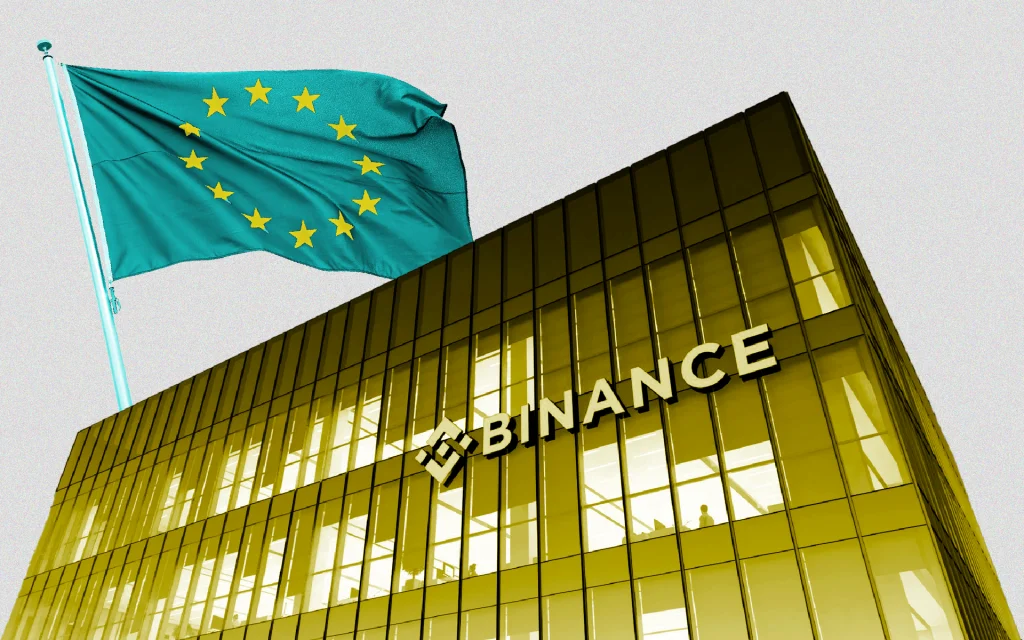
Europe’s landmark crypto regulation is about to face its biggest test yet, and Binance may be its highest-profile casualty.
Binance, the world’s largest cryptocurrency exchange by trading volume, is reportedly set to lose its ability to serve customers across the European Union after Greek regulators move toward rejecting its application for authorization under the Markets in Crypto-Assets (MiCA) framework.
According to a Reuters report citing sources familiar with the matter, the Hellenic Capital Market Commission (HCMC) is preparing to deny Binance’s license request, potentially forcing the exchange to halt services for EU clients from July 1.
The development comes as the EU’s MiCA transition period expires at the end of June, requiring all crypto-asset service providers (CASPs) operating in the bloc to obtain authorization from a national regulator.
Firms that secure approval in one member state can “passport” their services across all 27 EU countries. Those that fail to do so risk losing access to one of the world’s largest regulated crypto markets.
MiCA Deadline Creates Regulatory Crunch for Crypto Firms
The looming Binance decision arrives amid a broader shake-up of Europe’s crypto sector. MiCA was introduced to create a unified regulatory framework governing exchanges, custodians, brokers, and stablecoin issuers throughout the European Economic Area.
However, licensing progress has been slower than many industry participants expected. Data from the European Securities and Markets Authority (ESMA) shows that only around 223 crypto-asset service providers have received authorization under MiCA so far.
This figure represents a fraction of the more than 3,000 crypto companies that previously operated under national registration regimes before the new rules came into force.
Industry observers estimate that as many as 75% of firms that were active in Europe before MiCA may be unable to continue serving customers after the June 30 deadline.
Companies that fail to secure authorization must stop accepting new deposits and facilitate customer withdrawals or transfers to licensed providers.
Several major exchanges, including Coinbase, Kraken, and Bitstamp, have already obtained MiCA licenses, positioning them to continue operating seamlessly across the bloc.
Binance Faces Uncertain Future in Europe
Binance’s application was submitted through Greece, which the exchange had identified as a potential regulatory hub for its European operations.
Binance co-CEO Richard Teng previously praised Greece’s workforce and security capabilities, suggesting the country offered advantages over larger financial centers.
According to Reuters, a rejection by Greek regulators would effectively prevent Binance from obtaining the authorization necessary to continue serving EU customers.
While the company reportedly believes it has met all MiCA requirements and has worked closely with regulators for more than 18 months, the final decision appears increasingly uncertain.
In response to the reports, Binance stated that it remains committed to an “orderly process” and minimizing disruption for users. The exchange added that it would provide a further update before June 30.
The HCMC has declined to comment publicly on the application, citing confidentiality requirements. If the rejection proceeds, millions of European users could face account migrations, service restrictions, or the need to transfer assets to licensed alternatives.
Binance Reaffirms EU Commitment Amid Ongoing MiCA Licensing Review
Binance has reiterated its commitment to securing a MiCA license in Europe, emphasizing that it remains ready to operate under a fair and harmonized regulatory framework across the European Union.
In an update to users, the exchange said it had worked closely with Greece’s Hellenic Capital Market Commission (HCMC) throughout the licensing process and understands that its application is compliant with MiCA requirements.
The company highlighted significant investments in compliance over the past two years, including expanding its compliance team to more than 1,500 professionals and implementing enhanced controls and monitoring systems.
While Binance did not provide specific details on the status of its application, it said its priority is to minimize disruption for users.
Europe remains a key market for Binance, which argues that a clear, consistent regulatory framework can foster competition, liquidity, and innovation across the digital asset sector. The exchange said it continues to support MiCA’s objectives and remains committed to operating within the framework once licensed.
Binance added that it will continue to engage constructively with regulators and keep users informed as the process progresses.
Top Trending Crypto Articles