Key Takeaways
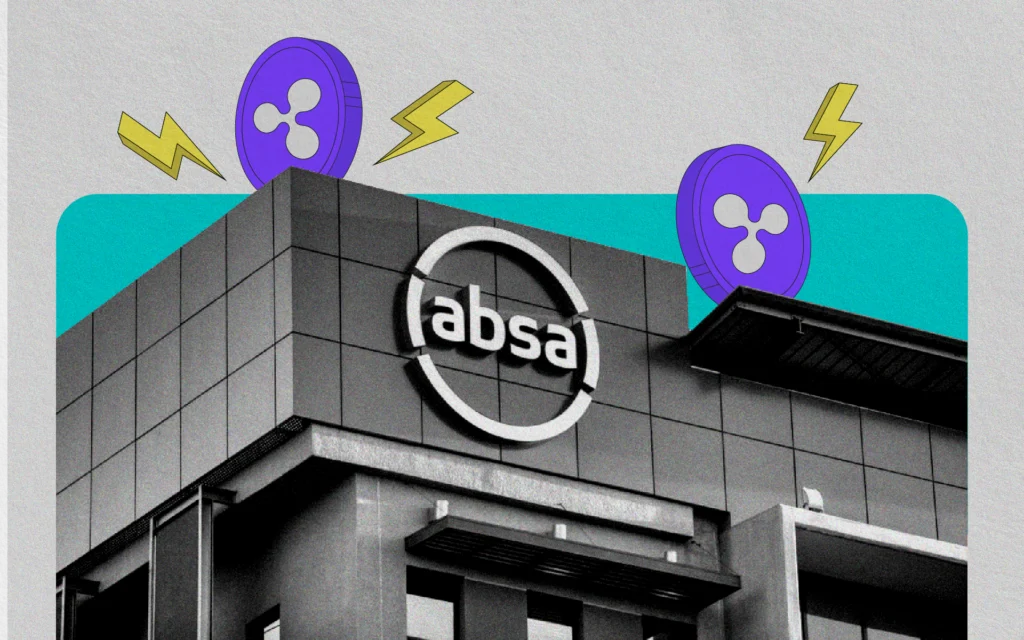
- Absa says it is becoming the first African bank to offer digital asset custody to corporate and investment banking clients, using Ripple’s custody infrastructure.
- The global digital asset custody market surpassed $683 billion in 2024 and is projected to reach at least $4.3 trillion by 2033.
- Ripple is supplying the custody technology, but Absa’s announcement does not say customers must use XRP or that assets will be held on the XRP Ledger.
Ripple is pushing deeper into traditional banking as South Africa’s Absa prepares to bring institutional digital asset custody to its corporate and investment banking clients.
Absa says its service, built with Ripple Custody, will make it the first bank in Africa to offer this type of digital-asset custody to corporate and investment-banking customers.
The bank plans to use Ripple’s infrastructure to securely manage the private keys controlling clients’ digital assets.
The launch puts Ripple inside a market Absa says is heading toward $4.3 trillion.
Targeting $4.3T Market: Absa Taps Ripple Technology for Bank-Grade Digital Asset Custody
Citing Grand View Research, Absa said the global digital asset custody market exceeded $683 billion in 2024 and is projected to reach at least $4.3 trillion by 2033.
Institutional demand is helping drive that expansion as banks move beyond simply giving clients access to crypto trading.
Custody provides the infrastructure needed to securely control private keys while applying the governance, transaction policies, and compliance processes expected inside regulated financial institutions.
Ripple’s 2026 survey of more than 1,000 finance leaders found that 89% of banks and asset managers evaluating tokenization partners consider digital asset storage and custody a top priority.
Absa’s Robyn Lawson said the bank chose Ripple because it was looking for technology capable of meeting institutional security and operational requirements.
The relationship was originally announced in October 2025, when Absa became Ripple’s first major custody partner in Africa.
Ripple Builds Beyond Payments
Ripple spent years being known primarily for cross-border payments, but custody has become another major part of its institutional strategy.
Ripple Custody is designed to connect to existing banking systems via APIs while supporting digital assets ranging from cryptocurrencies to tokenized securities.
The company has continued adding capabilities in 2026. In February, Ripple announced integrations with Securosys for hardware security modules and Figment for institutional staking. That followed its acquisition of wallet infrastructure company Palisade and an integration with Chainalysis for transaction screening and compliance controls.
Absa, therefore, isn’t simply buying a crypto wallet. Ripple is trying to provide the infrastructure through which regulated banks can eventually offer custody, tokenization, and other blockchain-based financial products.
Does Absa’s Move Mean More XRP Adoption?
For XRP holders, there is an important limitation.
Neither Absa nor Ripple has said that XRP is required to use the custody service. The partnership covers custody infrastructure for tokenized assets, including cryptocurrencies, rather than an XRP-specific product.
Ripple uses XRP and RLUSD across parts of its broader product suite, but Ripple Custody can support assets on multiple blockchain networks.
The Absa deal, therefore, shouldn’t be read as evidence that the bank is buying XRP or moving customer assets onto the XRP Ledger.
What it does give Ripple is something potentially broader: a position inside the infrastructure of a major African bank as institutional custody expands.
With the custody market projected to grow from $683 billion to at least $4.3 trillion by 2033, the bigger story may be less about which token Absa holds and more about who supplies the technology banks use to hold digital assets at all.
fo
Top Trending Crypto Articles
The information provided in this article is for informational purposes only. It is not intended to be, nor should it be construed as, financial advice. We do not make any warranties regarding the completeness, reliability, or accuracy of this information. All investments involve risk, and past performance does not guarantee future results. We recommend consulting a financial advisor before making any investment decisions.

Dr. Guneet Kaur is a senior editor at CCN.com and a Science Fellow at Exponential Science. She is a fintech and blockchain expert with extensive experience in digital finance education, blockchain ecosystems, and cryptocurrency markets. She has worked with global media such as Cointelegraph, as well as education and blockchain platforms, to design and lead strategic content and learning initiatives. As an educator and assessor for top-tier executive programs, she bridges real-world fintech trends with academic insight.
Dr. Kaur is also a published researcher and peer reviewer across fintech and data science journals, including Financial Innovation Journal and International Journal of Big Data Intelligence and Applications. Her work spans data-driven analysis, Web3 innovation, and technical content development. With a strong foundation in both industry and academia, she translates complex financial technologies into practical applications, empowering learners, professionals, and institutions across the rapidly evolving digital finance landscape.