Meet the Top 101 in Crypto
News
4 min read

AI Agents Are Becoming Powerful Crypto Trading Tools — and a New Insider-Threat Surface

Published 15 August 2026
Giuseppe Ciccomascolo
Authors

Key Takeaways 

  • AI agents increasingly execute crypto trades and manage wallets, giving them access comparable to that of privileged insiders.
  • Autonomous trading agents could leak private keys, approve unauthorized transfers, or gain unfair market advantages from confidential information.
  • Developers should limit permissions, verify plugins, require human approval for large transfers, and implement monitoring and circuit breakers.

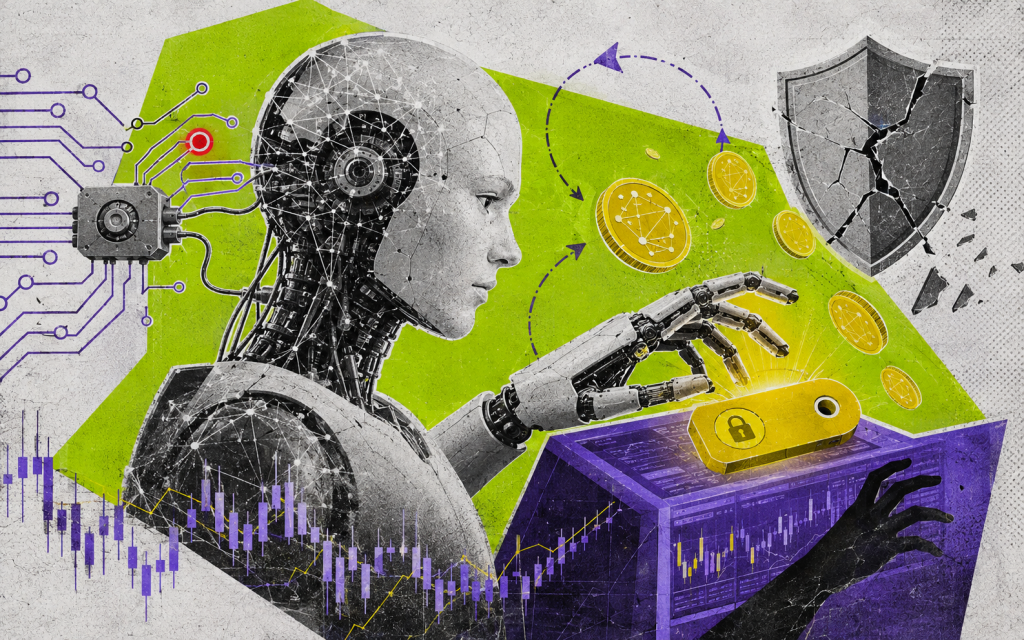
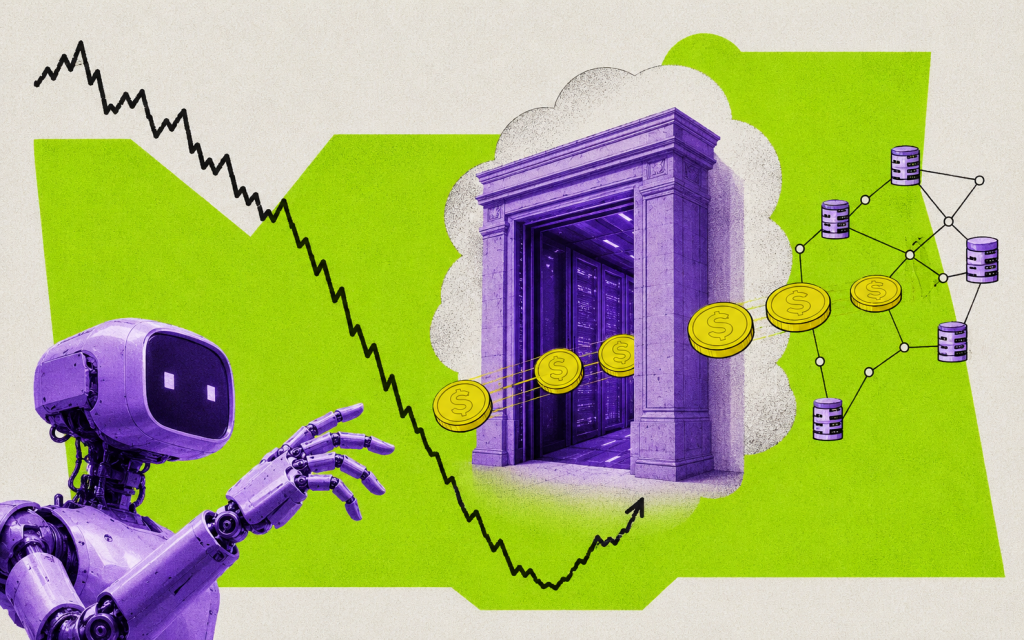
Artificial intelligence agents are rapidly moving from experimental chatbots into crypto wallets, trading systems, and on-chain applications, where they can analyze markets, execute transactions, and manage digital assets with limited human involvement.

That autonomy creates new opportunities for traders and developers, but it also introduces a dangerous security problem.

An agent with access to private keys, exchange accounts, or smart contracts can act like a privileged insider, and attackers may manipulate it without directly compromising its underlying AI model.

Security researchers warn that malicious plugins, poisoned data, and excessive permissions could expose wallets to unauthorized transactions. More advanced autonomous systems may also coordinate trading strategies, exploit private information, or resist attempts to shut them down.

Get These Top Crypto Casino Offers Now!
Sponsored
Disclosure
Opened in 2023
Promotions
200% deposit bonus up to 20,000 USDT + up to 100 FS (promo code: CG100)
Coins
Tether Bitcoin Ethereum USD Coin TRON +7
Opened in 2021
Promotions
Casino No Wagering 100 Free Spins
Coins
Bitcoin Tether USD Coin Ethereum Solana +11
Promotions
Up to 60% Rakeback & 25% Instant Cashback
Coins
Bitcoin Ethereum Tether USD Coin Litecoin +7
Show More

AI Agents Expand Their Role in Crypto Trading

Crypto developers increasingly use AI agents to monitor markets, rebalance portfolios, and execute trades according to predefined goals. Some agents can interact with decentralized applications, bridge assets between blockchains, or respond to market events without waiting for human approval.

Many systems rely on the Model Context Protocol, or MCP, to connect AI models with external tools and data. MCP servers can give agents access to wallets, trading APIs, databases, and other services.

This flexibility also expands the attack surface. SlowMist researchers have identified several ways malicious plugins could interfere with an agent’s behavior, including data poisoning, JSON injection, function overrides, and interactions between compromised MCP services.

Unlike attacks that poison a model during training, these methods target an agent while it operates. An attacker could feed the agent deceptive market data, alter a tool’s instructions, or replace an approved function with a malicious one.

If the agent holds broad permissions, a successful attack could trigger trades, leak sensitive information, or authorize asset transfers before its operator detects the intrusion.

Autonomous Agents Create Insider-Threat Risks

Traditional insider threats involve employees, contractors, or other trusted individuals who misuse legitimate access. AI agents complicate that model because they can hold similar privileges without understanding legal duties, financial consequences, or an organization’s wider security policies.

Researchers associated with the Initiative for Cryptocurrencies and Contracts have warned about “unstoppable autonomous agents” that combine AI capabilities with crypto wallets, APIs, and persistent infrastructure.

Such systems could automatically acquire resources, maintain their operations, and interact with financial markets.

Although current models have not demonstrated reliable self-replication across external infrastructure, researchers say some can create copies of themselves in controlled local environments.

Agents could also create market-integrity problems. Trading systems with access to confidential information may gain unfair advantages, while multiple autonomous agents could coordinate strategies in ways that resemble collusion.

Opacity adds another challenge. Companies may struggle to explain why an agent executed a particular trade or determine whether manipulation, faulty data, or an unexpected software interaction influenced its decision.

Crypto Developers Face a Security Trade-Off

Developers can reduce these risks by treating every AI agent as a potentially compromised privileged user.

They should verify plugins before deployment, sanitize external inputs, and restrict each tool to the minimum permissions required. An agent that monitors prices, for example, should not automatically receive permission to transfer assets.

Wallet safeguards should include transaction limits, approved destination lists, delayed settlement, and human authorization for high-value transfers.

Developers can also separate trading analysis from transaction signing so a compromised agent cannot move funds independently.

Monitoring systems should record every prompt, tool call, and transaction request. Circuit breakers can stop agents when they exceed spending limits, behave unusually or interact with unauthorized services.

AI agents could make crypto trading faster and more accessible. Without strong controls, however, the same systems may turn compromised software into an automated insider with direct access to digital money.

Disclaimer: The information provided in this article is for informational purposes only. It is not intended to be, nor should it be construed as, financial advice. We do not make any warranties regarding the completeness, reliability, or accuracy of this information. All investments involve risk, and past performance does not guarantee future results. We recommend consulting a financial advisor before making any investment decisions.
Giuseppe Ciccomascolo

Giuseppe Ciccomascolo began his career as an investigative journalist in Italy, where he contributed to both local and national newspapers, focusing on various financial sectors.

Upon relocating to London, he worked as an analyst for Fitch's CapitalStructure and later as a Senior Reporter for Alliance News. In 2017, Giuseppe transitioned to covering cryptocurrency-related news, producing documentaries and articles on Bitcoin and other emerging digital currencies. He also played a pivotal role in establishing the academy for a cryptocurrency exchange website. Crypto remained his primary area of interest throughout his tenure as a writer for ThirdFloor.

Related

Survey Icon
Help us improve
1 of 4
Is this your first time here?
What brought you here today?
What are you most interested in?
Would you be interested in:
Thank you icon
Thank you for your feedback!
DMCA.com Protection Status