XRP is evolving beyond remittances, with loyalty programs, credit cards, and travel integrations making it a true consumer asset in 2025.
Whales are consolidating while retail wallets surge, with Coinbase’s XRP supply down 90% and active wallets jumping from 5.3 million to nearly 7 million this year.
Gemini’s XRP credit card and Air China’s PhoenixMiles program highlight how XRP is gaining traction in mainstream rewards ecosystems.
XRP rewards carry real risks, from volatility to platform failure, but they also position the token as a bridge between crypto speculation and everyday spending.
Ripple’s XRP has evolved into more than just a remittance token. Since its inception in 2012, XRP has grown into a consumer asset. A digital currency you can swipe at your grocery checkout, to book your vacation with, or even earn back through loyalty programs.
Speaking to CCN, Vilius Barbaravicius, content lead at crypto payment processing platform CoinGate, noted that XRP is its ninth most popular payment option, with 2025 “on track to process the highest number of XRP orders overall.”
This shift represents Ripple’s long-term vision: to build a faster, cheaper digital payments system than Bitcoin. In 2025, it appears to be delivering on this promise.
Try Our Recommended Crypto Exchanges
Sponsored
Disclosure
We sometimes use affiliate links in our content, when clicking on those we might receive a commission at no extra cost to you. By using this website you agree to our terms and conditions and privacy policy.
XRP Adoption and Wallet Trends: What the Data Says
XRP’s market cap is $185 billion as of September 18, 2025, making it the third-largest cryptocurrency in terms of market cap behind Bitcoin and Ethereum. Not bad for a cheap alternative to legacy international banking systems.
Meanwhile, adoption is on its way upward.
There are close to 7 million active XRP wallets, up from 5.3 million in March 2025. It’s worth noting that the number of whales (wallets with over 1 million XRP) has grown by 14% year-over-year, which could suggest consolidation.
Still, the increase in active wallets suggests that retail participation is increasing enough to counterbalance the whales.
Even more significant, however, is Coinbase’s XRP supply dropping 90% as those same whales move tokens elsewhere.
Typically, this means that whales are looking to hold assets for a more extended period rather than keep them liquid for trading, suggesting they believe in XRP’s future price. Such movements came shortly after Ripple CEO Brad Garlinghouse claimed that XRP exchange-traded funds (ETFs) would launch this year.
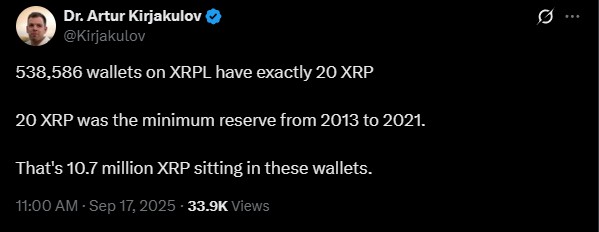
Combine this with the fact that 10.7 million of XRP’s 59.77 billion circulating supply is sitting idle in 538,586 wallets, and you have a recipe for buy orders. Whales holding tight, retail wallets increasing, and millions of tokens effectively locked away add up to a buyer’s market, should demand for XRP keep rising.
And rise, it has.
Millions of XRP are stored in inactive wallets. | Source: @Kirjakulov on X
Businesses That Accept XRP
Various businesses have come to accept XRP over the years, including the money transfer network MoneyGram and international payments processor Mercury FX. Here are some specific examples:
The story of XRP in 2025 is far from simply charts and whales. It’s about consumer use cases. Where people are actually spending XRP and how they’re earning it back through rewards.
Gemini’s XRP Credit Card
Gemini’s XRP-edition credit card is a standout use case. Think of Gemini’s card as the Chase Sapphire Reserve for crypto users, except instead of generating points, you’re stacking XRP.
Some card highlights:
4% XRP back on Gas, EV, and transit
3% XRP back on dining
2% XRP back on Groceries
1% XRP back on everything else
This isn’t to mention partner promotions providing as high as 10% back in XRP, and unlike legacy cashback cards, you’re not waiting weeks for your reward. It lands instantly in your Gemini account thanks to the power of the XRP Ledger (XRPL).
That’s XRP’s pitch in a nutshell: stop hoarding XRP like gold bars in a vault and start earning it every time you swipe.
Travala and Air China Travel
Travala allows you to book over 2 million hotels, more than 600 flights, and at least 410,000 activities via XRP. The platform rewards you with its AVA token in return.
Air China’s PhoenixMiles Program, with over 60 million members, recently added XRP as a payment option for overseas services as well.
When it comes to travel, think of XRP rewards as the open road compared to the closed-off loop of airline miles. Miles are stuck with the airline you bought them from, while you can use XRP rewards anywhere that accepts the asset.
Retail and Everyday Spending
For daily purchases, XRP is quickly becoming a valid option:
BitPay offers XRP-to-gift card conversions for major brands like Uber and Home Depot.
Cryptwerk offers a comprehensive list of companies that accept XRP as a form of payment.
XRP is like using a debit card in the early 2000s. While not every shop will take it, the footprint is growing every year.
Earn XRP Without Spending
Spending isn’t the only way to earn XRP as cashback. Crypto exchanges and platforms have turned XRP into a form of loyalty token:
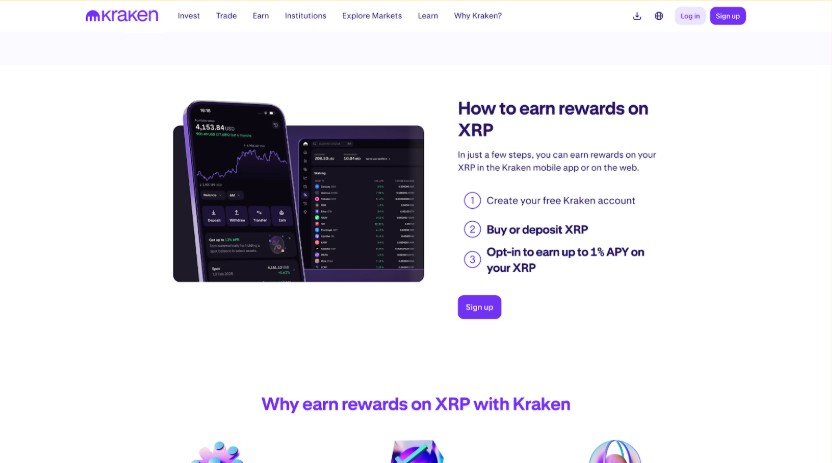
Kraken offers 1% annual percentage yield on your XRP. While this isn’t a massive percentage, especially compared to stablecoin yields, it’s a passive way to earn without spending or staking your funds.
Kraken offers a flexible rewards rate on XRP. | Source: Kraken
SBI Group in Japanjust launched a rewards program that pays out XRP in return for engagement with its platform, which can include consuming educational content or opening accounts with the brand.
AirChina launched an XRP-powered rewards program alongside its support for XRP payments for overseas services.
Why XRP Cashback Isn’t Free Money?
Of course, XRP rewards aren’t magic money. As is the case with any investment, there’s always a risk:
Volatility:XRP is currently trading above $3.00, but just as news can shoot its price upward, the asset’s value can drop at any point, rendering your rewards useless. Imagine earning 4% back on a $100 dinner, only for that reward to drop 20% before you’ve even left a tip.
Liquidity and acceptance: Airline miles are locked into the airline, but at least you know how to spend them. Outside of platforms like BitPay, you may need to convert XRP rewards back to fiat, losing value to exchange fees and spreads.
Platform risk: Leaving XRP in exchange “earn” programs exposes you to the platform’s overall health. While unlikely, Gemini can go the route of Celsius or a number of other failed exchanges, taking your funds with it.
These examples make XRP rewards feel like airline miles on steroids. They’re powerful when used wisely, but punishing if you don’t understand the risk.
If Bitcoin and Ethereum are the cryptocurrencies of choice for Wall Street via ETFs, XRP is the answer for the everyday investor.
With whales consolidating, retail wallets multiplying, and exchange supply shrinking, XRP is positioned for spending. Add in consumer-facing perks like the Gemini card, Travala bookings, and airline loyalty integrations, and XRP is no longer just a new railway for international banking. It’s evolving into a currency you can actually live on.
Building on that vision, Ripple’s new stablecoin RLUSD is also gaining traction. Securitize now enables redemption into RLUSD for BlackRock’s BUIDL and VanEck’s VBILL tokenized funds, unlocking 24/7 liquidity and new on-chain utility.
For XRP believers, these movements are a chance to turn everyday spending into long-term holdings. For skeptics, it’s proof that XRP’s future lies not just in cross-border payments, but in loyalty regards and our daily lives.
Can I convert XRP rewards into other cryptocurrencies like Bitcoin or Ethereum?
Yes. Most platforms that pay rewards in XRP also allow you to trade or swap it for Bitcoin, Ethereum, or stablecoins. The ease of conversion depends on the exchange or wallet you’re using.
Do XRP cashback rewards create a taxable event?
In many jurisdictions, yes. Earning XRP as cashback or loyalty rewards can be treated as taxable income at the market value when you receive it.
How do XRP rewards compare to stablecoin rewards in terms of risk?
Stablecoins offer predictability since their value is pegged to the dollar, but XRP rewards carry volatility risk. However, if XRP appreciates, the upside can be greater than with stablecoin payouts.
Can XRP rewards be used immediately for payments?
Usually, yes. Services like Gemini’s card deposit rewards instantly. But liquidity depends on merchant acceptance.
Disclaimer:
The information provided in this article is for informational purposes only. It is not intended to be, nor should it be construed as, financial advice. We do not make any warranties regarding the completeness, reliability, or accuracy of this information. All investments involve risk, and past performance does not guarantee future results. We recommend consulting a financial advisor before making any investment decisions.
Max Moeller is a Chicago‑based writer and video editor passionate about games, tech, and crypto. Whether it’s crafting clear, insightful articles or piecing together engaging video retrospectives, he’s driven by curiosity and takes pride in keeping things human. Since 2017, Max has been published in a variety of notable crypto magazines.


 Easy
Easy