Key Takeaways
- Ripple’s victory and settlement with the SEC removed years of uncertainty, paving the way for growth.
- Strategic moves into Asia, the Middle East, and Europe positioned Ripple as a cross-border payments leader.
- From RippleNet and ODL to RLUSD and tokenized real estate, Ripple has diversified far beyond payments.
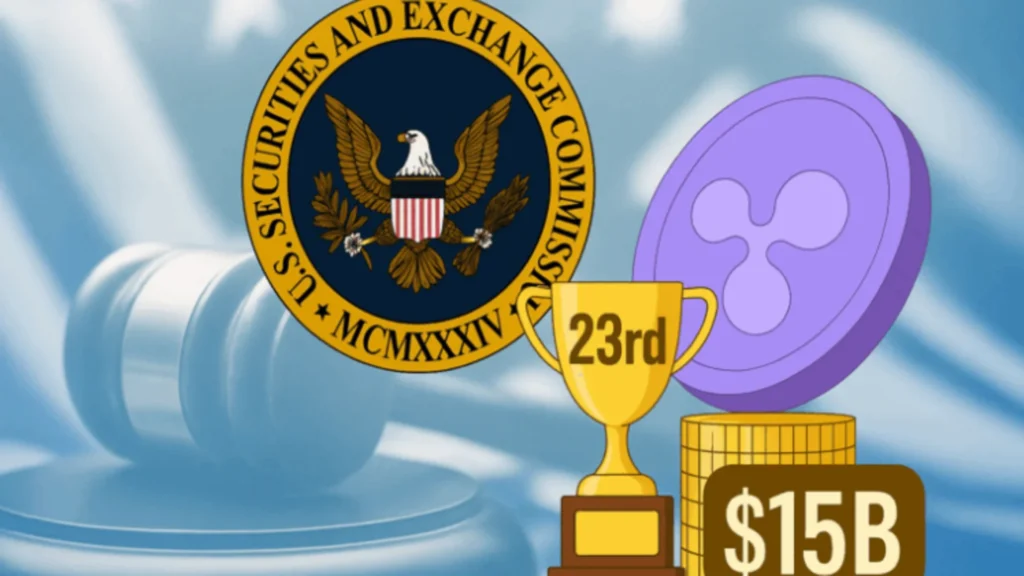
- With a $15B valuation, Ripple now ranks among the top 25 private companies worldwide, outpacing fintech and tech heavyweights.
Not long ago, Ripple’s name was synonymous with a high-stakes legal battle that cast doubt over its future.
Today, this fintech innovator has quietly surged to a $15 billion valuation, earning a spot among the world’s 25 most valuable private companies.
The blockchain startup behind the XRP cryptocurrency is now ranked 23rd globally, ahead of fintech darlings like Klarna and even defense-tech firm Anduril.
For a company that spent years locked in a courtroom showdown with U.S. regulators, this achievement marks a stunning turnaround, a shift from regulatory target to private fintech powerhouse with global influence.
Legal Battle Defining XRP’s Regulatory Status
Ripple’s ascent was far from smooth. In December 2020, the U.S. Securities and Exchange Commission (SEC) filed a lawsuit accusing Ripple of conducting a $1.3 billion unregistered securities offering by selling XRP tokens.
The move sent shockwaves through the crypto industry:
- Major exchanges delisted XRP.
- Investors feared the token’s value would collapse.
- Critics predicted Ripple’s demise.
Ripple fought back, insisting XRP was a currency, not a security, and therefore outside the SEC’s jurisdiction.
After years of courtroom twists, July 2023 brought a pivotal moment: a federal judge ruled that institutional sales of XRP violated securities laws, but programmatic sales to retail buyers on exchanges did not. This nuanced decision meant XRP was not universally a security, a landmark precedent for the crypto industry.
By 2025, Ripple and the SEC reached a settlement, closing the nearly five-year saga. The company accepted a $125 million penalty, but emerged with the regulatory cloud lifted and freedom to scale its vision.
Leveraging Global Licensing to Drive XRP Adoption
So, how did Ripple thrive under regulatory siege? The answer lies in geographic diversification and proactive compliance.
While U.S. regulators scrutinized its operations, Ripple expanded in friendlier jurisdictions. CEO Brad Garlinghouse frequently highlighted that clear “rules of the road” abroad, especially in Europe, Asia, and the Middle East, allowed Ripple to keep investing and growing.
Key moves included:
- Japan: Partnering with SBI Holdings to expand XRP-powered remittances.
- Middle East: Establishing a regional HQ in Dubai and signing deals with Zand Bank and Mamo for instant cross-border payments.
- Europe: Seeking licensing under the EU’s MiCA regulation to ensure pan-EU compliance.
Ripple also applied to the U.S. Office of the Comptroller of the Currency to create a limited-purpose national trust bank, laying the groundwork for asset custody and future stablecoin products.
By the time the SEC battle ended, Ripple had built a global infrastructure ready to scale.
Expanding Ripple’s Reach Through Enterprise Collaboration
From its founding, Ripple’s goal has been to bridge blockchain and traditional finance — and that meant winning over major institutions.
Even during the lawsuit, Ripple inked and maintained partnerships with giants such as:
- American Express: Using RippleNet for instant cross-border transactions.
- Bank of America: Testing Ripple’s blockchain solutions to modernize payment rails.
- Santander & Standard Chartered: Integrating RippleNet into their cross-border payment services.
By 2025, over 300 financial institutions in 70+ countries were using RippleNet, with some estimates putting total adoption above 1,000 institutions worldwide.
Ripple’s On-Demand Liquidity (ODL) product, which uses XRP as a bridge currency, eliminated the need for pre-funded nostro accounts, saving banks both time and money.
This enterprise adoption loop, where each new partner increased the network’s value, became a key growth driver.
Expanding the Ripple Ecosystem: From Payments to Tokenization
Ripple’s transformation from startup to powerhouse also stems from its relentless product expansion. The company did not confine itself to one trick (cross-border payments); it continuously evolved its offerings, often leveraging the XRP Ledger (XRPL) in new ways.
What began as a simple blockchain remittance tool has grown into a broad platform for enterprise crypto services and tokenized value.
ODL Growth
At the core of Ripple’s ecosystem is RippleNet, the payments network that uses blockchain tech to move money globally in seconds. RippleNet initially offered solutions like xCurrent (a messaging and settlement system) and later ODL, which uses XRP as a bridge currency to facilitate instant forex liquidity.
- The impact has been significant – by eliminating the need for pre-funded nostro accounts, ODL saves institutions time and capital. By late 2024, Ripple’s ODL was moving billions: it handled $2.5 billion in volume in just Q3 2024 alone, with partners such as SBI Remit (Japan) and Tranglo (Asia) using it to power remittances.
- This real usage of XRP gave the token genuine utility beyond speculation, fueling what Ripple’s team calls “XRP momentum” as adoption increased.
But Ripple didn’t stop at payments.
Real World Assets (RWAs) Tokenization
Recognizing that the tokenization of assets is the next frontier, Ripple expanded into that realm as well.
- In 2023, the company made its first major acquisition, spending $250 million to buy Metaco, a Swiss firm specializing in crypto custody and tokenization technology. This move broadened Ripple’s enterprise suite to include secure custody for tokenized assets, positioning Ripple to help clients tokenize everything from stocks to real estate.
- In fact, by mid-2025, Ripple was directly involved in a groundbreaking project in the UAE: a partnership with Dubai’s Land Department and fintech firm Ctrl Alt to tokenize real estate on the XRP Ledger. Through this initiative, property title deeds in Dubai are being converted into digital tokens on XRPL, enabling fractional real estate investments and faster property transactions.
It’s the Middle East’s first government-backed real estate tokenization using a public blockchain, and Ripple is supplying the custody and infrastructure to make it possible. This foray into real-world asset tokenization underscores how far Ripple’s platform has grown beyond just payments.
CBDCs and NFTs
Ripple has also embraced new use cases on the XRP Ledger itself. The XRPL is an open, decentralized blockchain that Ripple and its community maintain, and Ripple has been actively enhancing it.
The company’s developer arm (formerly RippleX) has pushed efforts to support NFTs, central bank digital currencies (CBDCs), sidechains, and interoperability bridges on the ledger. For example, Ripple worked with the Royal Monetary Authority of Bhutan and the Republic of Palau on pilot CBDC projects using the XRP Ledger.
In late 2022, XRPL introduced NFT capabilities, allowing creators to mint and trade non-fungible tokens with XRP’s low fees. Each of these expansions opens new markets for Ripple: from art and collectibles (NFTs) to government currency projects (CBDCs) and beyond.
One of Ripple’s latest ventures is its own stablecoin.
RLUSD’s Growth
Ripple’s USD-pegged stablecoin, (RLUSD), officially launched in December 2024 across both the XRP Ledger and Ethereum, backed 1:1 by U.S. dollar reserves, cash equivalents, and short-term treasuries, anchored by NYDFS-regulated trust standards for transparency and reliability.
RLUSD had gained traction on major exchanges like Uphold, Bitso, MoonPay, Archax, CoinMENA, and decentralized venues including Bullish and Sologenic, with the latter showing notable liquidity and trade volume.
Today, RLUSD is a stable fixture in the market, holding firm at $1.00, with daily volume exceeding $170 million and a market cap north of $600 million. Recently, it even surpassed Zcash, earning a spot just shy of the top 100 crypto assets, signaling growing investor preference for stability over volatility.
To further solidify its infrastructure, Ripple announced the $200 million acquisition of Rail, a stablecoin payments platform. Scheduled to close in Q4 2025, this move paves the way for seamless RLUSD pay-ins and pay-outs, including virtual accounts and automated settlements, without needing crypto balances on corporate books.
Ripple’s Strategic Investments and Resilience
Ripple’s path to a $15B valuation was also shaped by bold financial moves:
- $200M series C buyback: In 2022, Ripple repurchased shares from early investors, boosting its valuation to $15B and ending a dispute with investor Tetragon.
- Fortress Trust acquisition: Expanding regulated custody capabilities.
- Tranglo investment: Strengthening its position in the Asian remittance market.
CEO Garlinghouse summed up Ripple’s survival strategy: focus on real-world utility to avoid the “gyrations of crypto winters.”
A $15B Unicorn Among Fintech’s Elite
According to CB Insights, Ripple’s $15 billion valuation firmly cements it as the 23rd most valuable private company in the world. For perspective, this puts Ripple ahead of some of the most celebrated names in global tech and finance:
- Klarna: $14.5 billion valuation
- Anduril Industries: $14 billion valuation
These aren’t small players — Klarna is one of the world’s largest buy-now-pay-later platforms, and Anduril is a defense technology innovator backed by Silicon Valley heavyweights. That Ripple, a blockchain company, now outranks both is a testament to its rapid evolution from niche crypto startup to global fintech powerhouse.
What’s particularly remarkable is that few blockchain companies in history have broken into this valuation tier. Ripple’s ascent represents not just a personal victory for its leadership and community but a milestone for the entire crypto industry.
For years, blockchain startups have struggled to gain mainstream credibility in the eyes of institutional investors. Ripple’s inclusion in the global top 25 private companies signals that crypto-powered financial infrastructure is no longer fringe, it’s foundational.
Ripple now stands shoulder to shoulder with fintech giants like Stripe and tech titans such as SpaceX and ByteDance, companies that have reshaped their respective industries. This elite company isn’t just symbolic, it also grants Ripple a strategic advantage in attracting partnerships, capital, and top-tier talent.
Moreover, this valuation isn’t just tied to speculative hype around cryptocurrency prices. Unlike many crypto-native firms whose valuations swing wildly with market sentiment, Ripple’s $15B status is underpinned by real-world adoption.
Its RippleNet and ODL services generate tangible utility, moving billions of dollars in cross-border transactions, servicing over 300 financial institutions in more than 70 countries. This combination of enterprise-grade solutions, regulatory resilience, and diversified products is exactly what investors prize in a long-term growth story.
It’s also worth noting that Ripple achieved this milestone while remaining a private company. In an era when many unicorns rush to IPO for funding, Ripple has resisted the pressure, signaling that it’s financially self-sufficient. This independence allows Ripple to grow strategically without the short-term demands of public markets, keeping its focus on expanding utility and adoption rather than chasing quarterly earnings targets.
In short, Ripple’s $15B valuation is more than a number; it’s a marker of legitimacy for the blockchain industry, a testament to what’s possible when crypto companies build for real-world use, and a warning shot to traditional financial incumbents that the next generation of payment infrastructure is already here.
From Courtroom Struggles to Ripple’s Fintech Stardom
Ripple’s transformation is a case study in resilience. From defending itself in one of crypto’s most public legal battles to expanding globally, building infrastructure, and driving enterprise adoption, Ripple has redefined what a blockchain company can be.
It has achieved its $15B status without hype-driven speculation, instead relying on product-market fit, regulatory adaptability, and strategic expansion.
Whether Ripple eventually pursues an IPO remains to be seen, but one thing is clear: it has already secured its place among the global fintech elite.
What XRP Should Watch For the Rest of 2025
For the rest of 2025, XRP holders should keep an eye on a few concrete developments that Ripple has already set in motion.
- The company’s Ripple USD (RLUSD) stablecoin is gaining traction, and its spread across more exchanges and payment networks will be an important gauge of market adoption.
- Ripple’s On-Demand Liquidity service, already moving billions in cross-border payments, could see new regional deployments that deepen XRP’s role as a settlement bridge.
- The live Dubai real estate tokenization project is a first for the Middle East; any expansion of this model to other asset types will further showcase the XRP Ledger’s versatility.
- Meanwhile, progress in Ripple’s CBDC collaborations with Bhutan and Palau will indicate how national-scale projects might integrate with XRP-powered infrastructure.
- Finally, additional regulatory licenses, similar to those secured in Dubai and New York, could open entirely new corridors for compliant global operations.
Conclusion
Ripple’s journey from the brink of regulatory struggles to a $15 billion valuation is more than a comeback story, it’s proof that strategic vision, regulatory adaptability, and relentless innovation can propel a blockchain company into the global fintech elite.
By building real-world payment solutions, expanding into asset tokenization, and launching compliant digital currencies, Ripple has moved beyond the crypto niche to become a core player in the future of global finance.
The company’s next chapter will be defined by deepening its institutional footprint, leading CBDC and tokenization projects, and potentially taking its success to public markets.
One thing is certain: Ripple is no longer just surviving, it’s setting the pace for the industry.
FAQs
The pivotal moment came in July 2023, when a judge ruled that XRP sales to retail buyers on exchanges were not securities transactions, setting a key precedent for crypto regulation.
RippleNet offers near-instant cross-border settlements with lower fees, using blockchain technology and, in some cases, XRP for liquidity, eliminating the need for pre-funded nostro accounts.
RLUSD is Ripple’s USD-pegged stablecoin, live on both the XRP Ledger and Ethereum, designed for fast, compliant transactions in global payment and DeFi markets.
While Ripple has the financial strength to remain private, it’s reportedly preparing for IPO readiness, focusing on compliance, governance, and global market positioning.
The information provided in this article is for informational purposes only. It is not intended to be, nor should it be construed as, financial advice. We do not make any warranties regarding the completeness, reliability, or accuracy of this information. All investments involve risk, and past performance does not guarantee future results. We recommend consulting a financial advisor before making any investment decisions.

CCN Editorial delivers comprehensive coverage of cryptocurrencies, blockchain breakthroughs, decentralized finance, and emerging fintech trends. From Bitcoin and Ethereum to stablecoins, NFTs, and global market innovation, our team provides timely news, in-depth analysis, and expert commentary. In addition to market insights, CCN Editorial is dedicated to educating readers, offering accessible guides, explainers, and learning resources to help everyone, from beginners to professionals, navigate the rapidly evolving world of digital finance and the future of money.


 Easy
Easy