Key Takeaways
- Patrick Gerhart says most US community banks need regulated stablecoin infrastructure rather than building digital asset capabilities from scratch.
- He argues the next phase of stablecoin adoption depends on integrating blockchain with traditional banking, not replacing banks altogether.
- Telcoin Digital Asset Bank plans to expand its regulated onchain banking platform with new payment capabilities and digital banking services through 2026.
The prospect of new US crypto legislation has renewed interest in bringing digital assets into the traditional banking system. While much of the industry’s attention has focused on Wall Street, Telcoin Digital Asset Bank is pursuing a different strategy: bringing regulated stablecoin services to community banks that have largely remained on the sidelines.
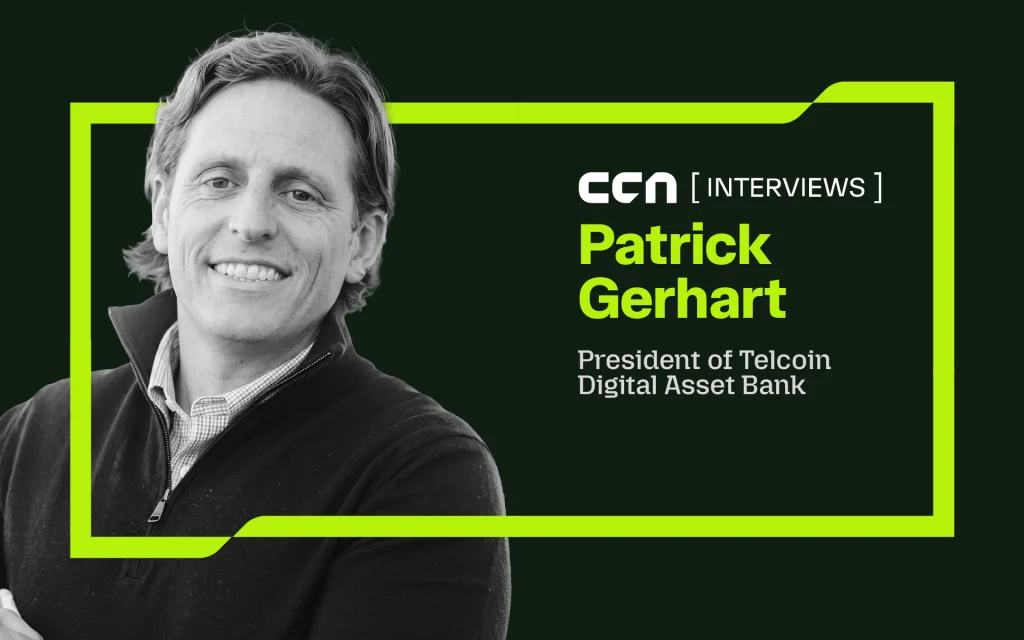
Speaking to CCN, Patrick Gerhart, President of Telcoin Digital Asset Bank, said the institution’s long-term goal is not to replace banks with blockchain, but to integrate digital assets into the traditional banking system through regulated infrastructure.
Building a Blockchain Bank From the Ground Up
Unlike traditional financial institutions that adapt to existing regulations, Telcoin Digital Asset Bank helped shape the regulatory framework governing its own business.
“We were not just drafting a business plan, we were helping build regulation from scratch at the state level for a new asset class,” Gerhart told CCN.
Drawing on his background in community banking and government policy, Gerhart said the company understood from the outset that developing regulation for an entirely new asset class would take years.
“Our goal for Telcoin Digital Asset Bank is to operate like a traditional bank, but with digital asset services, and with the recent launch of onchain bank accounts in the US, we are one step closer to realizing this vision, with more milestones ahead of us.”
Targeting the 95% of Banks Left Behind
Gerhart believes most US banks currently lack the resources to build digital asset capabilities internally.
“Bringing stablecoin services to community banks and the businesses and people they serve is one of our long-term goals,” he said.
He argues that today’s leading stablecoins were designed largely outside the regulated banking system, creating trust and compliance concerns for smaller financial institutions.
“Right now, most stablecoins on the market are operated by a non-bank and designed to function outside of the banking industry. That brings a lot of trust and security issues for local and regional banks, which is why we need a stablecoin that is built for banking.”
Gerhart said the company’s eUSD stablecoin is intended to fill that gap, with the ambition for Telcoin Digital Asset Bank to become “the leading stablecoin bank.”
Competing Through Regulation, Not Scale
Rather than competing directly with issuers such as Circle or Tether on size, Gerhart believes that regulation and banking relationships provide Telcoin Digital Asset Bank with a competitive advantage.
“About one in five Americans owns digital assets today,” he said. “Telcoin Digital Asset Bank is uniquely positioned to bring the rest of the country onboard, from community banks to local businesses and everyday users.”
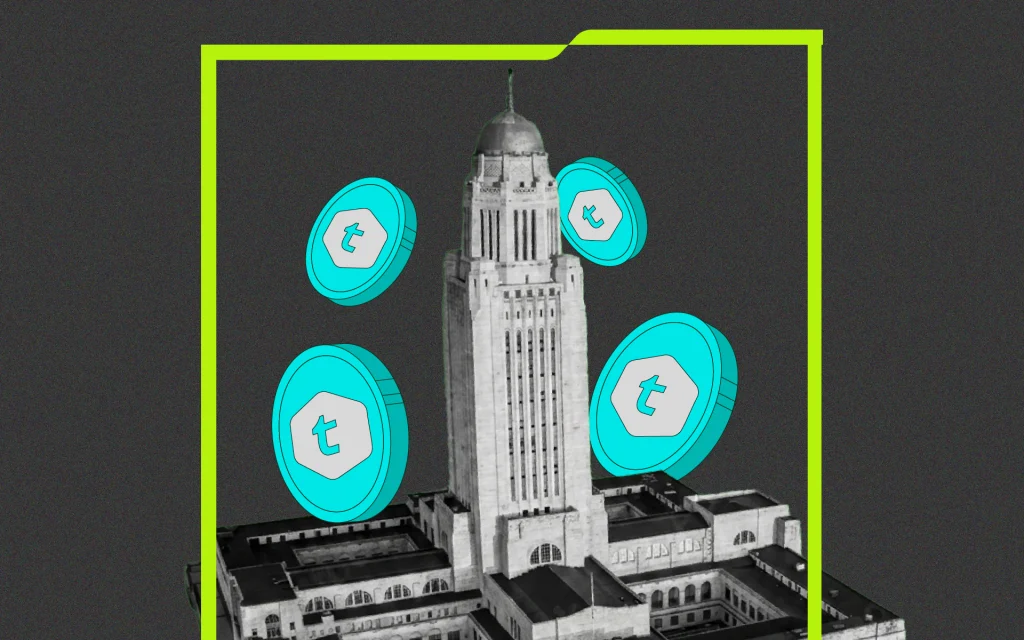
He noted that the Nebraska Innovation Act, passed in 2021 after years of collaboration with policymakers, positioned the company well as US regulatory clarity continues to improve.
Bringing DeFi Into Banking
As the first institution operating under a Digital Asset Depository charter, Telcoin Digital Asset Bank also has a unique position connecting regulated banking with decentralized finance.
For Gerhart, however, participation in DeFi begins with compliance rather than protocol selection.
“Safety and compliance are a core aspect of our business model that sets us apart in the industry,” he said.
“As a regulated digital asset bank, we are required to perform KYC and AML and account compliance practices as part of our banking operations. We work diligently alongside our partner Battle Creek State Bank to meet these standards.”
[Y-M-L]
Why Banks and Crypto Need Each Other
Gerhart believes both industries have spent years underestimating one another.
“I think both sides have underestimated each other,” he told CCN. “Traditional banks used to view crypto as something operating outside the financial system, while the crypto industry has often treated banks as incumbents to be bypassed.”
He argues that neither approach represents the future.
“The reality is that neither approach is sustainable. The fix isn’t fighting stablecoins; it’s building stablecoins that are designed for banking. That’s where I think the industry is heading: combining the innovation of blockchain with the trust and regulation that banks already provide.”
What’s Next for Telcoin Digital Asset Bank
Following the launch of its onchain bank accounts, Gerhart said the company will continue expanding regulated digital banking services throughout the remainder of 2026.
“The launch of our onchain bank accounts was an important first step, as it established the regulated banking foundation we’ve been working towards for several years,” he said.
“Our vision has always been to build a stablecoin bank that is fully integrated with the traditional banking system, rather than just operating alongside it.”
Gerhart added that Telcoin Digital Asset Bank plans to roll out additional payment capabilities and new banking features in 2026 as it continues to build regulated infrastructure that bridges traditional finance and blockchain technology.
Top Trending Crypto Articles
The information provided in this article is for informational purposes only. It is not intended to be, nor should it be construed as, financial advice. We do not make any warranties regarding the completeness, reliability, or accuracy of this information. All investments involve risk, and past performance does not guarantee future results. We recommend consulting a financial advisor before making any investment decisions.

Dr. Guneet Kaur is a senior editor at CCN.com and a Science Fellow at Exponential Science. She is a fintech and blockchain expert with extensive experience in digital finance education, blockchain ecosystems, and cryptocurrency markets. She has worked with global media such as Cointelegraph, as well as education and blockchain platforms, to design and lead strategic content and learning initiatives. As an educator and assessor for top-tier executive programs, she bridges real-world fintech trends with academic insight.
Dr. Kaur is also a published researcher and peer reviewer across fintech and data science journals, including Financial Innovation Journal and International Journal of Big Data Intelligence and Applications. Her work spans data-driven analysis, Web3 innovation, and technical content development. With a strong foundation in both industry and academia, she translates complex financial technologies into practical applications, empowering learners, professionals, and institutions across the rapidly evolving digital finance landscape.


 Easy
Easy