Discover how MoneyGram and Stellar are using USDC stablecoins to power faster, low-cost remittances across Latin America, expanding financial inclusion and cross-border payments. | Credit: CCN.com
Share
Key Takeaways
MoneyGram and Stellar have transformed stablecoins from a crypto use case into a practical cross-border payments rail used by millions.
Countries like Colombia and El Salvador are leading adoption due to high remittance flows, cash reliance, and demand for USD stability.
By combining Stellar’s blockchain with MoneyGram’s global cash network, users can seamlessly move between digital dollars and physical cash.
Dollar-backed stablecoins offer near-instant settlement and lower fees than traditional remittance channels.
For decades, remittances have been a financial lifeline across Latin America. Millions of families depend on money sent from abroad to cover essentials like food, housing, and education.
Yet the traditional remittance system, dominated by intermediaries, high fees, and slow settlement times, has long been inefficient and costly for the people who rely on it most.
In the past five years, a partnership between MoneyGram and the Stellar Development Foundation (SDF) has quietly reshaped this landscape. What began as an experiment in blockchain-based payments has evolved into one of the most tangible real-world applications of stablecoins: a functioning remittance rail that bridges digital assets and physical cash across Latin America (LATAM).
From Crypto to Payments: How Stablecoins Became a Real-World Remittance Tool
Stablecoins, digital assets pegged to fiat currencies like the US dollar, have often been discussed as tools for trading or decentralized finance. But their promise as a payments mechanism has remained largely theoretical. That changed when MoneyGram and Stellar began collaborating in 2021.
Their core idea was simple but powerful: combine Stellar’s fast, low-cost blockchain infrastructure with MoneyGram’s global cash network. The result was a system that allows users to seamlessly move between cash and digital dollars.
Over time, the partnership delivered several key innovations:
A global cash on/off-ramp for digital assets
The MoneyGram Ramps API enables developers to integrate this infrastructure
A stablecoin wallet balance within the MoneyGram app
This combination effectively transformed stablecoins into a practical remittance solution.
Why Latin America Is Leading Stablecoin Adoption for Remittances
Latin America proved to be the ideal region to deploy this model. The region faces persistent challenges that make remittance innovation particularly impactful:
High reliance on cross-border payments
Large unbanked and underbanked populations
Currency volatility in several markets
Strong dependence on cash-based transactions
By launching stablecoin-backed services in countries like Colombia, and more recently, El Salvador, MoneyGram and Stellar targeted markets where faster, cheaper remittances deliver immediate value.
In Colombia, early adoption showed strong engagement. Users could receive funds instantly into a USD-denominated balance, hold those funds digitally, and cash out at local MoneyGram locations when needed.
How MoneyGram and Stellar’s Stablecoin Remittance System Works
At a high level, the MoneyGram-Stellar remittance rail operates through three interconnected layers:
Blockchain Payments Infrastructure (Stellar Network): Stellar enables near-instant, low-cost cross-border payments, with transactions settling in seconds.
Stablecoin Layer (USDC Digital Dollar): Circle’s USDC acts as the primary digital currency, maintaining a stable value tied to the US dollar.
Global Cash Network (MoneyGram Locations): MoneyGram connects digital assets to the real world through nearly 500,000 locations worldwide.
Together, these layers create a hybrid financial system that allows users to seamlessly move between cash and crypto.
Financial Inclusion Through Stablecoins: Real Benefits for LATAM Users
Much of the conversation around blockchain and financial inclusion has historically been theoretical. The MoneyGram-Stellar partnership demonstrates real-world impact.
Five years of turning stablecoin potential into real-world utility — and we’re extending the partnership.@MoneyGram’s stablecoin balance on Stellar: live in Colombia, now launching in El Salvador, more Latin American markets to follow.
— José Fernández da Ponte (@JoseFDaPonte) April 22, 2026
Importantly, users do not need deep knowledge of crypto. The system works through familiar tools like mobile apps and physical locations.
The latest phase of the partnership, announced in April 2026, signals a broader rollout strategy. After success in Colombia, the service has expanded to El Salvador, with more Latin American markets expected soon.
This marks a transition from pilot programs to scalable financial infrastructure. The goal is to create a global payments network that seamlessly integrates fiat currencies and stablecoins.
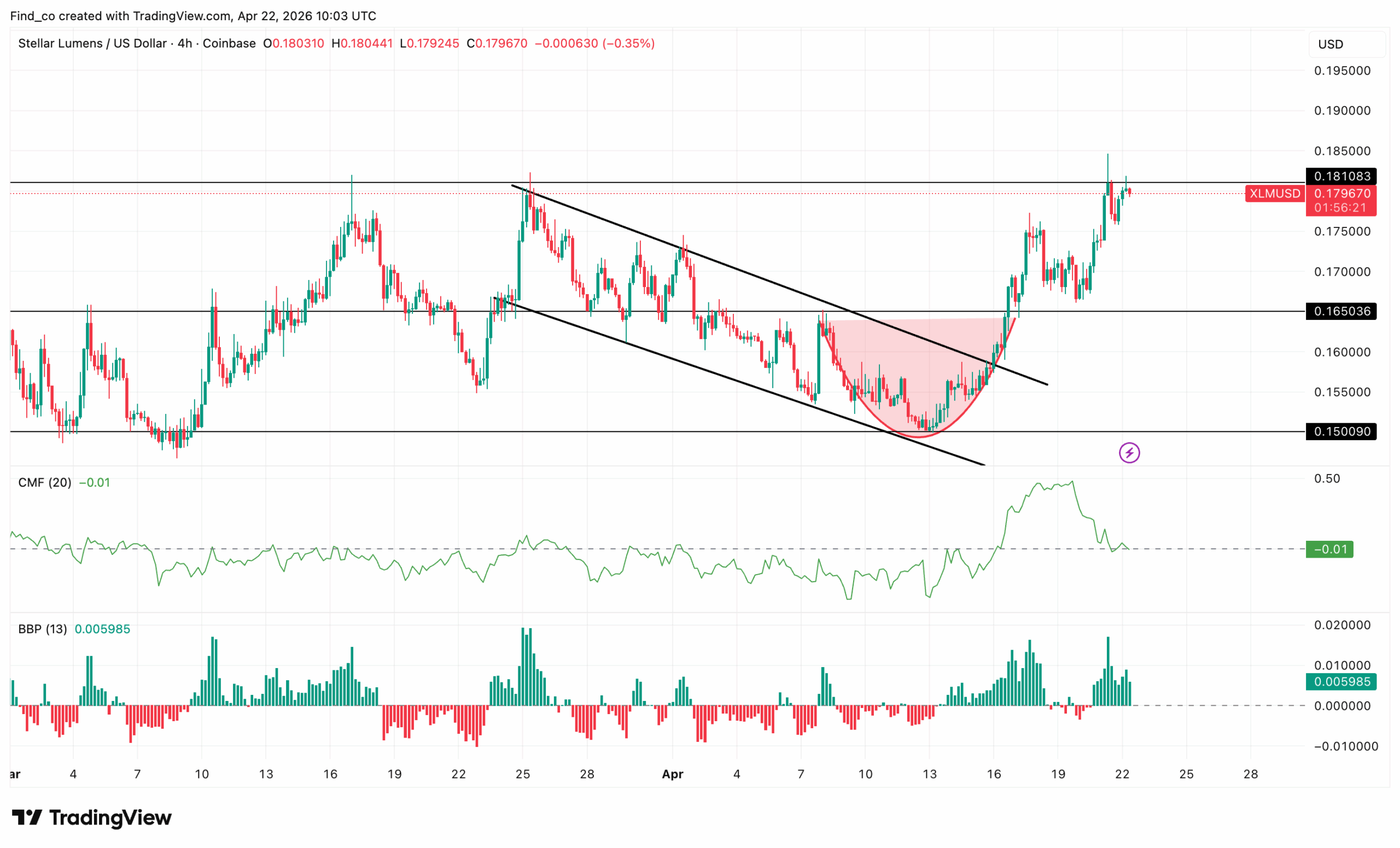
Stellar (XLM) Price Growth and Market Momentum Explained
The growing adoption of Stellar’s network is also reflected in market activity around its native token, XLM.
Indicators such as the Relative Strength Index (RSI) and the MACD suggest increasing buying pressure, while capital inflows remain positive. Although price performance is separate from remittance usage, it often signals broader confidence in the ecosystem.
Bridging Cash and Crypto: The Hybrid Financial Model Explained
One of the most important innovations in this partnership is the ability to connect digital finance with cash-based economies.
In many parts of Latin America, cash remains dominant. By integrating physical cash access with blockchain payments, MoneyGram and Stellar have created a hybrid financial model that meets users where they are.
This approach removes a major barrier to adoption and makes stablecoins usable in everyday life.
Despite strong progress, challenges remain:
Regulatory uncertainty across different countries
Need for user education and trust
Integration with local financial systems
Successfully scaling across LATAM will require navigating diverse legal and economic environments.
Future of Stablecoin Remittances and Global Payments
The partnership between MoneyGram and Stellar represents a major step forward for stablecoin adoption. By combining blockchain infrastructure with a global cash network, they have built a practical, scalable remittance system.
In Latin America, this model is already improving how money moves across borders, making transactions faster, cheaper, and more accessible.
The partnership between MoneyGram and the Stellar Development Foundation is a collaboration to use blockchain technology and stablecoins to improve cross-border payments. It combines Stellar’s fast, low-cost blockchain with MoneyGram’s global cash network to enable seamless money transfers between digital and physical formats.
How do stablecoins improve remittances in Latin America?
Stablecoins reduce remittance costs and settlement times by removing intermediaries. They allow near-instant transfers, provide access to US dollar-denominated value, and give users flexibility to hold or cash out funds when needed.
What stablecoin is used in the MoneyGram-Stellar system?
The system primarily uses USDC, a US dollar-backed stablecoin issued by Circle. USDC maintains a stable value, making it suitable for payments and remittances.
How does the MoneyGram stablecoin service work?
Users can receive funds digitally in USDC through the MoneyGram app, hold the balance as digital dollars, or withdraw cash at participating MoneyGram locations. The system uses Stellar’s blockchain for fast settlement behind the scenes.
Disclaimer:
The information provided in this article is for informational purposes only. It is not intended to be, nor should it be construed as, financial advice. We do not make any warranties regarding the completeness, reliability, or accuracy of this information. All investments involve risk, and past performance does not guarantee future results. We recommend consulting a financial advisor before making any investment decisions.
Giuseppe Ciccomascolo began his career as an investigative journalist in Italy, where he contributed to both local and national newspapers, focusing on various financial sectors.
Upon relocating to London, he worked as an analyst for Fitch's CapitalStructure and later as a Senior Reporter for Alliance News. In 2017, Giuseppe transitioned to covering cryptocurrency-related news, producing documentaries and articles on Bitcoin and other emerging digital currencies. He also played a pivotal role in establishing the academy for a cryptocurrency exchange website. Crypto remained his primary area of interest throughout his tenure as a writer for ThirdFloor.


 Easy
Easy