Charles Edwards says institutional investors are dumping Bitcoin again as spot ETF outflows hit $1.5 billion amid inflation fears and geopolitical uncertainty. | Credit: CCN.com
Share
Key Takeaways
Bitcoin does not use proof-of-stake (PoS) so BTC cannot be staked natively like Ethereum.
BTC “staking” in 2025 usually means locking Bitcoin in DeFi, centralized platforms or wrapped BTC protocols to earn yield.
The main risks involve custody, counterparty exposure and smart contract vulnerabilities, which are generally higher than simply holding BTC in a personal wallet.
New layer-2 and staking-like innovations are emerging, but they’re still not the same as securing the Bitcoin network directly.
Bitcoin has outlived countless headlines declaring its death. It’s been a currency, a commodity, a store of value and for many, a personal rebellion against traditional finance.
But in 2025, a new question has crept into the Bitcoin conversation: “Can I stake it?”
It’s an odd question if you know Bitcoin’s DNA. Ethereum’s move to proof-of-stake (PoS) made staking part of the crypto mainstream.
Suddenly, earning yield on idle coins feels less like a DeFi stunt and more like a baseline expectation.
But let’s be clear: you cannot stake Bitcoin (BTC) in the same way you stake Ether (ETH). Bitcoin’s consensus has always been proof-of-work, where miners add blocks, full nodes who enforce the rules and ultimately hodlers give Bitcoin economic security by deciding which version of the chain has value. There’s no “lock up your BTC, secure the network, and collect rewards” mechanism built into the protocol.
In 2025, the term ‘Bitcoin staking’ is being mentioned more often, so it’s worth exploring what people mean by it and whether Bitcoin can truly be staked at all.
What ‘Staking’ Bitcoin Really Means
Here’s where marketing and reality diverge.
Top Crypto Mining Sites
Sponsored
Disclosure
We sometimes use affiliate links in our content, when clicking on those we might receive a commission at no extra cost to you. By using this website you agree to our terms and conditions and privacy policy.
When platforms mention ‘staking’ BTC, they’re really borrowing language from proof-of-stake networks. In practice, these products usually involve lending, wrapping or locking up Bitcoin so it can be used in other ways.
In 2025, these fall into three broad categories:
Wrapped Bitcoin on other chains: Here (e.g., wBTC, tBTC) BTC is tokenized and deployed into DeFi protocols for yield.
Centralized yield programs: An individual’s BTC may be lent out or used to generate returns on exchanges or custodial platforms.
Layer-2 and sidechain systems:Layer-2 and sidechain systems, like Stacks or Rootstock, offer a system whereby BTC is locked into contracts to participate in alternative consensus mechanisms or financial activities.
Wrapped Bitcoin on Other Chains (e.g., wBTC, tBTC)
Wrapped Bitcoin takes BTC, locks it in a secure custodian or smart contract and issues a tokenized version (like wBTC on Ethereum or tBTC on Bitcoin-adjacent networks). This “wrapped” token can move freely on other blockchains, giving one access to DeFi opportunities like lending, liquidity pools and yield farming.
While it opens the door to potentially higher returns, wBTC also introduces bridge risk (if the system holding your original BTC is hacked) and smart contract vulnerabilities.
In 2025, wrapped BTC remains one of the most popular ways to earn yield without selling Bitcoin, but wBTC becomes best suited for those comfortable navigating decentralized platforms.
Centralized Yield Programs on Exchanges or Custodial Platforms
Big-name exchanges and custodial platforms now offer Bitcoin earn programs that pay you interest on your deposits. Your BTC is lent out to institutional borrowers, used for margin trading, or deployed in other yield-generating activities.
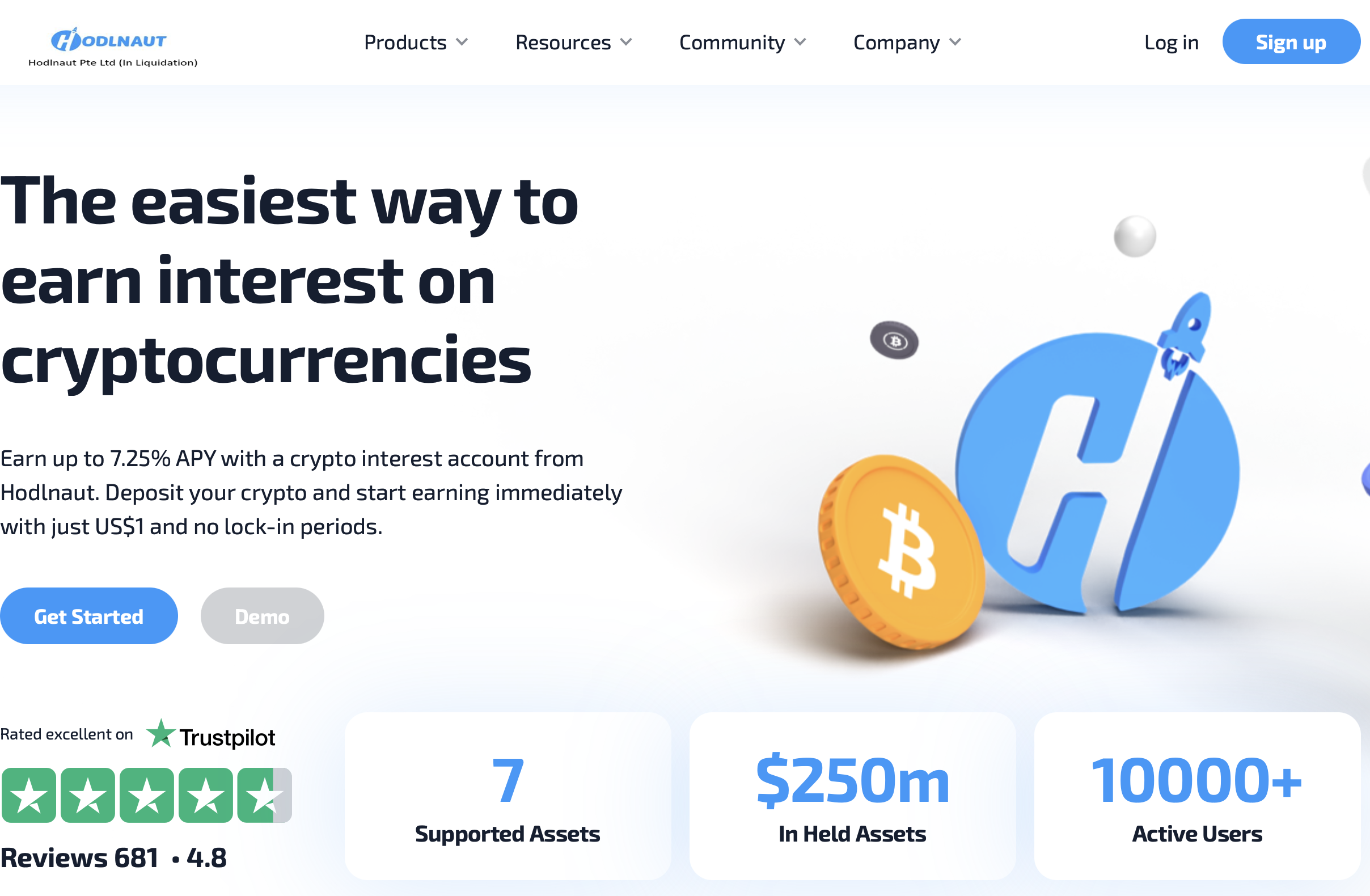
Several platforms offer Bitcoin interest or lending programs, though terms and risks vary. Nexo provides daily-compounding yields with no lock-ups, while Hodlnaut historically offered around 4% APY. Gemini’s “Earn” program, once advertising up to 7.4%, later faced regulatory scrutiny.
BTC Staking | Source: Hodlnaut
Other CeFi players like Ledn and Yield App continue to support BTC-based yield products, with the latter offering flexible or locked tiers. Binance and Coinbase instead focus on lending, allowing users to borrow against BTC collateral for liquidity.
The appeal is obvious: no DeFi learning curve, predictable payouts and straightforward withdrawals. The trade-off, however, is giving up self-custody, since the individuals coins remain in the platform’s wallet. If that platform goes insolvent, halts withdrawals or gets hacked, the BTC is exposed to serious risk.
In 2025, centralized yield remains attractive for convenience, but choosing platforms with strong track records and proof-of-reserves transparency is a critical lending practice.
Layer-2 and Sidechain Systems (e.g., Stacks, Rootstock)
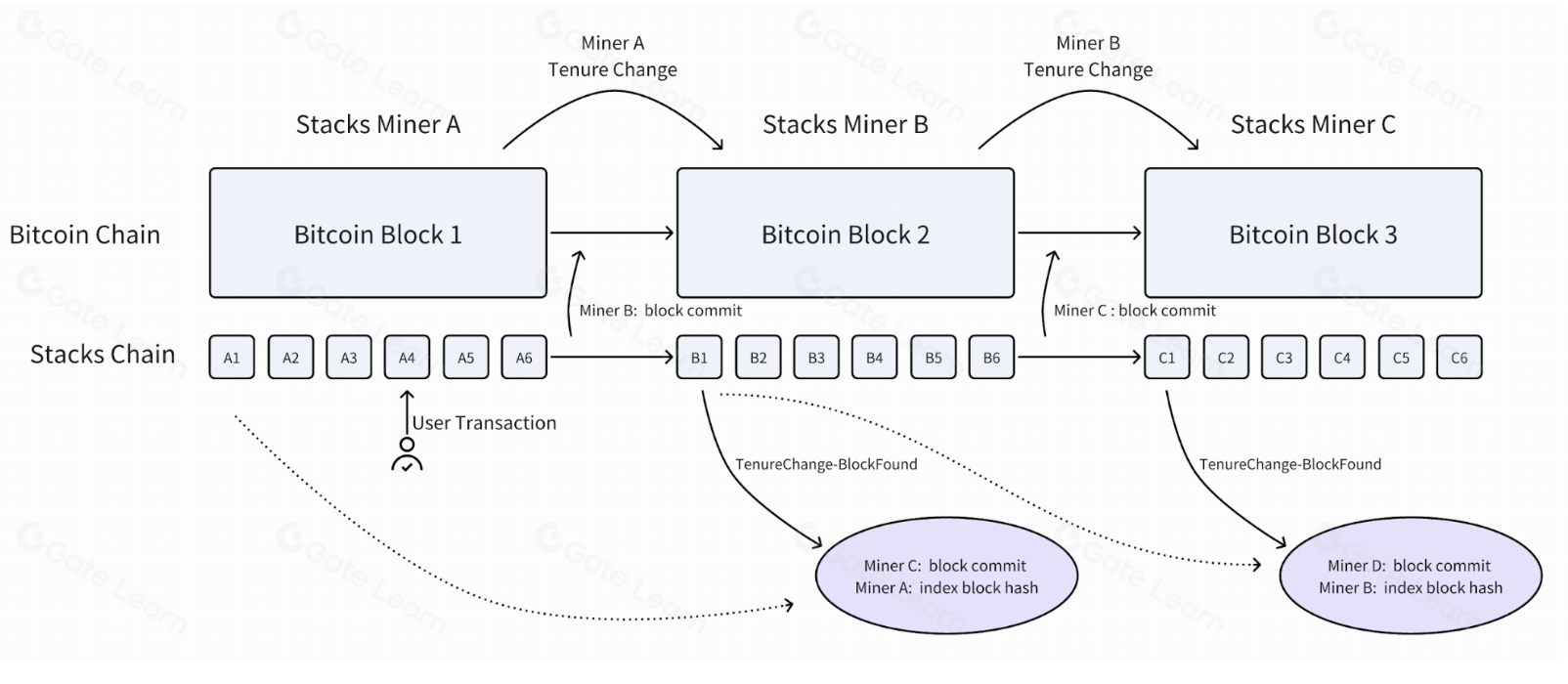
Layer-2 solutions and sidechains bring smart contracts and faster transactions to Bitcoin without changing its core protocol. Systems like Stacks let one “stack” BTC to help secure the network, earning BTC rewards in return. Rootstock operates as a Bitcoin sidechain, enabling Ethereum-style dApps where BTC can participate in DeFi activities.
Interaction between the Stacks chain and the Bitcoin chain | Source: Gate.com
In both cases, one can lock up Bitcoin into the network’s protocol, either through multisig contracts, or specialized bridges. This offers Bitcoin-native yield while supporting ecosystem growth, but it comes with protocol-specific risks, such as bugs in the locking mechanism or sidechain governance failures.
Layer-2 ‘Stacking’: The Closest Thing to Native Staking
The most interesting evolution is happening on the Stacks network. Instead of changing Bitcoin’s core, Stacks builds on top of it, introducing a process called stacking. BTC holders lock coins, helping secure the Stacks network’s Proof-of-Transfer system, and in return, they earn BTC rewards.
It’s not pure PoS but a hybrid and keeps Bitcoin in the conversation about yield without touching the base layer’s proof-of-work ethos.
Real Risks Behind Bitcoin Staking
Before you chase those attractive APYs, remember: yield is never free.
Here’s the key risks to be aware of:
Custody risk: If BTC isn’t in a wallet, the individual is trusting someone else to safeguard it. Platforms can fail, get hacked or freeze withdrawals.
Counterparty risk: In lending models, the borrower (or the platform itself) might default.
Smart contract risk: In DeFi, bugs and exploits can drain funds in seconds. Even audited contracts have failed.
Bridge risk: Wrapping BTC means relying on a bridge, a frequent target for nine-figure hacks.
Liquidity risk: Lock-up periods can leave an individual sidelined during market moves.
Regulatory risk: Yield products are increasingly under the microscope, especially in the U.S.
The takeaway? If someone decides to ‘stake’ Bitcoin in 2025, it’s best to begin small, maybe with one or two platforms and first see whether the payouts actually work.
Only once there’s confidence in the staking process should one consider gradually building on top of that initial position. It’s also wise to factor in Bitcoin’s four-year cycle and stress test the proof-of-transfer platform by assessing how the payoffs hold up during a bear market.
Who Should and Shouldn’t Stake Bitcoin
Bitcoin “staking” isn’t for everyone. It’s not passive, risk-free income, it’s a calculated play that mixes opportunity with exposure.
May be ideal for:
Experienced crypto users who fully grasp custody, counterparty and smart contract risks.
DeFi and layer-2 enthusiasts who are already comfortable moving assets across chains and interacting with advanced protocols.
Risk-tolerant investors willing to trade some security for the possibility of higher returns.
Not ideal for:
Long-term HODLers who prioritize cold storage and asset security over yield.
Crypto newcomers still learning how wallets, private keys and decentralized platforms work.
Anyone relying on BTC as their primary savings should consider the risk/reward trade-off may not justify the exposure.
Alternatives to Staking Bitcoin
If “staking” sounds too complexor too risky that person can still earn yield on BTC without diving deep into DeFi.
Bitcoin lending platforms: Services like Ledn or Unchained Capital let an individual earn interest by lending BTC to vetted borrowers or use it as collateral for loans.
Mining pools: Contribute computing power (or invest in mining hardware) to share in BTC block rewards. Less flexible but fully native to Bitcoin’s ecosystem.
Lightning Network liquidity: Open channels, provide liquidity and earn routing fees. More technical, but it supports Bitcoin’s scalability while generating modest yield.
Conclusion
Yield can be tempting because it feels like free money, but in Bitcoin’s design, nothing is truly free. Proof-of-work directly rewards miners for securing the network, while hodlers benefit indirectly as that security protects the value of their coins.
Every yield opportunity for BTC in 2025 is an external add-on, creative, yes, but outside Bitcoin’s native design.
That’s not a bad thing.
Innovation around Bitcoin keeps BTC competitive and expands its use cases, but if that individual steps into ‘staking’ territory, do it with eyes wide open, weigh the risks, and choose methods that match the knowledge, goals and risk tolerance associated with staking Bitcoin.
Can I stake Bitcoin directly on the Bitcoin blockchain?
No. Bitcoin uses proof-of-work, so there’s no native staking. Any “staking” is through third-party platforms, DeFi, or layer-2 solutions.
Is wrapped Bitcoin staking safe?
It depends on the custodian and bridge. These are common targets for hacks, so they carry higher risk than holding BTC directly.
What is Stacks “stacking”?
Stacks is a Layer-2 network for Bitcoin. “Stacking” locks BTC in a smart contract to help secure the network and earn BTC rewards.
How much can I earn from BTC staking in 2025?
Yields vary widely, from 1–2%, on centralized platforms to 5–10%+ in DeFi. Higher yields usually mean higher risk.
Disclaimer:
The information provided in this article is for informational purposes only. It is not intended to be, nor should it be construed as, financial advice. We do not make any warranties regarding the completeness, reliability, or accuracy of this information. All investments involve risk, and past performance does not guarantee future results. We recommend consulting a financial advisor before making any investment decisions.
Andrew Kamsky is a chart analyst and writer with a background in economics and ACCA certification. He has held roles at a Big Four firm, a fintech bank, and a listed bank specializing in currency hedging. His work explores Bitcoin, macro trends, and market structure. Outside finance, he's passionate about music, travel, and neon design.


 Easy
Easy