XRP has fallen 50% despite Ripple's growing ecosystem. Explore how the $785 million RLUSD stablecoin could be boosting network activity. | Credit: CCN.com
Share
Key Takeaways
XRP has fallen around 50% over the past year, underperforming despite Ripple expanding its payments ecosystem and increasing activity on the XRP Ledger.
Ripple’s RLUSD stablecoin has grown to approximately $785 million in circulation, becoming one of the largest assets on the XRP Ledger.
However, technical indicators remain bearish, with XRP trading below key moving averages and derivatives markets showing continued short bias.
XRP has endured one of its most difficult years since the last crypto bull market, losing roughly 50% of its value despite Ripple achieving several major business milestones.
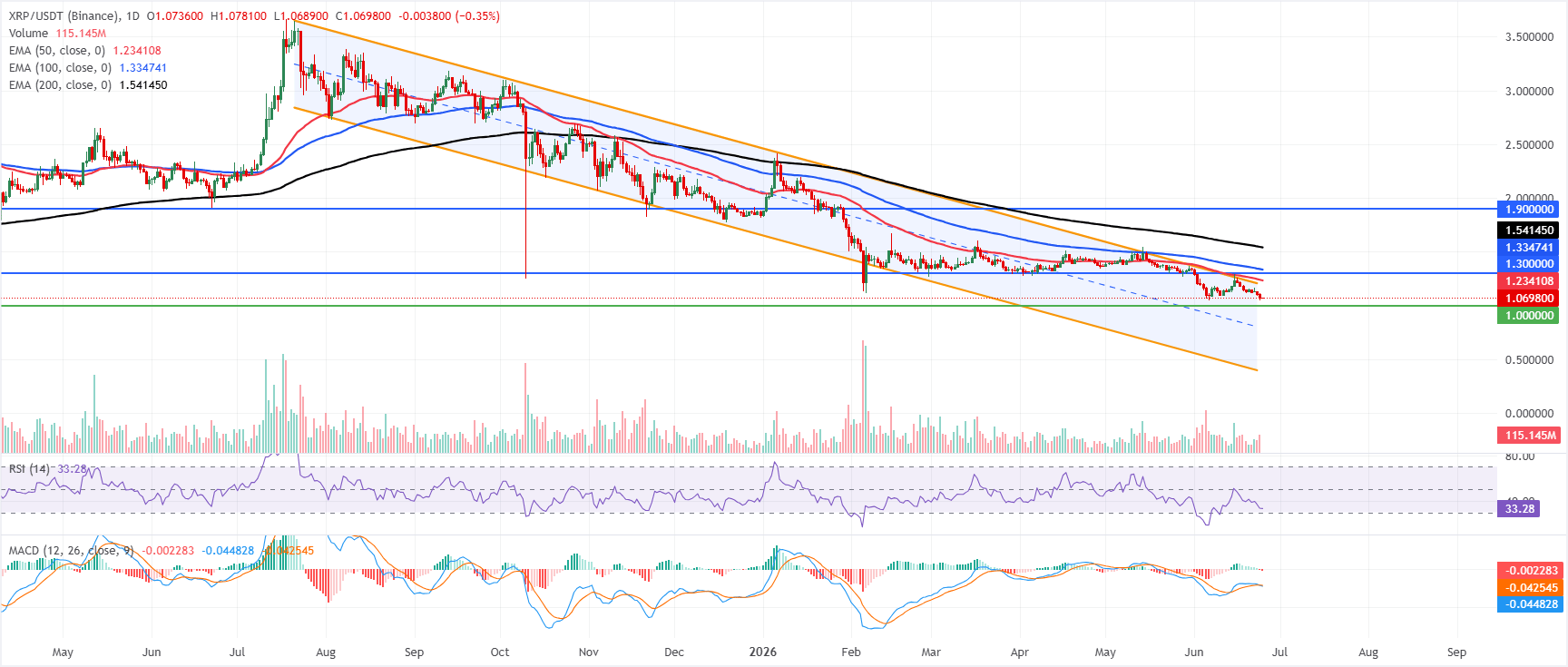
The latest setback has seen XRP fall below the critical $1.10 level, extending weekly losses as weak derivatives positioning and broader market uncertainty continue to weigh on sentiment.
Yet the decline comes at a paradoxical moment for Ripple. The company has expanded its RLUSD stablecoin into Japan, secured regulatory approval from Japan’s Financial Services Agency (JFSA), and grown RLUSD into a nearly $785 million stablecoin ecosystem.
Ordinarily, this type of network expansion would be expected to strengthen the value of a blockchain’s native token. Instead, XRP continues to struggle even as activity across the XRP Ledger reaches new highs.
The disconnect raises an increasingly important question for investors: could Ripple’s own stablecoin be absorbing demand that would otherwise flow into XRP?
Try Our Recommended Crypto Exchanges
Sponsored
Disclosure
We sometimes use affiliate links in our content, when clicking on those we might receive a commission at no extra cost to you. By using this website you agree to our terms and conditions and privacy policy.
RLUSD Is Growing Rapidly, but XRP Isn’t Benefiting
Ripple’s expansion strategy increasingly revolves around RLUSD, a regulated US dollar-backed stablecoin designed for payments, settlement, tokenization, and institutional finance.
RLUSD officially launched in Japan via SBI Group’s VC Trade platform, making the stablecoin available to both retail and institutional users.
The launch reinforces Ripple’s long-term ambitions to position RLUSD as a key settlement asset for cross-border finance. However, markets largely ignored the announcement.
XRP continued trading near yearly lows, suggesting investors remain unconvinced that RLUSD’s success automatically translates into value for XRP holders.
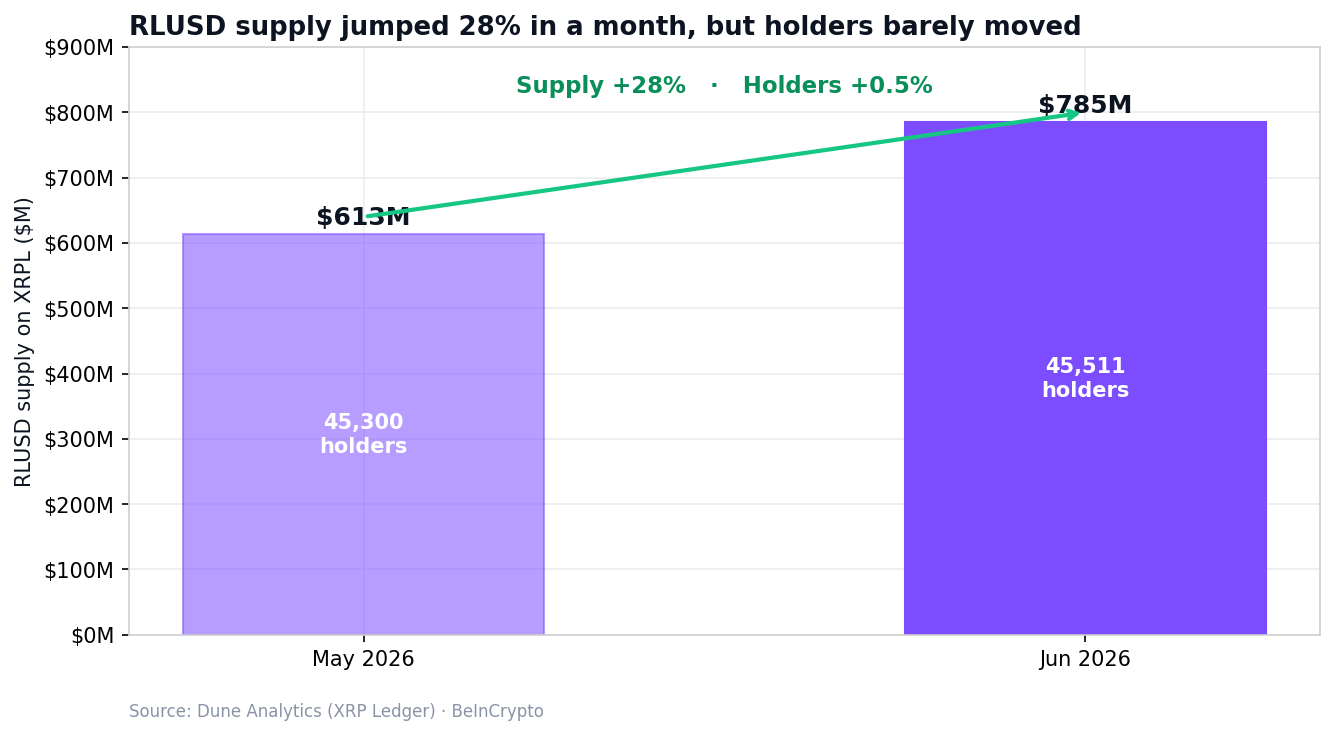
Supply on the network sits near $785 million across about 45,500 holders. | Credit: Dune Analytics
On-chain data helps explain why.
RLUSD supply has climbed to approximately $785 million across around 45,500 holders after growing nearly 30% in just one month.
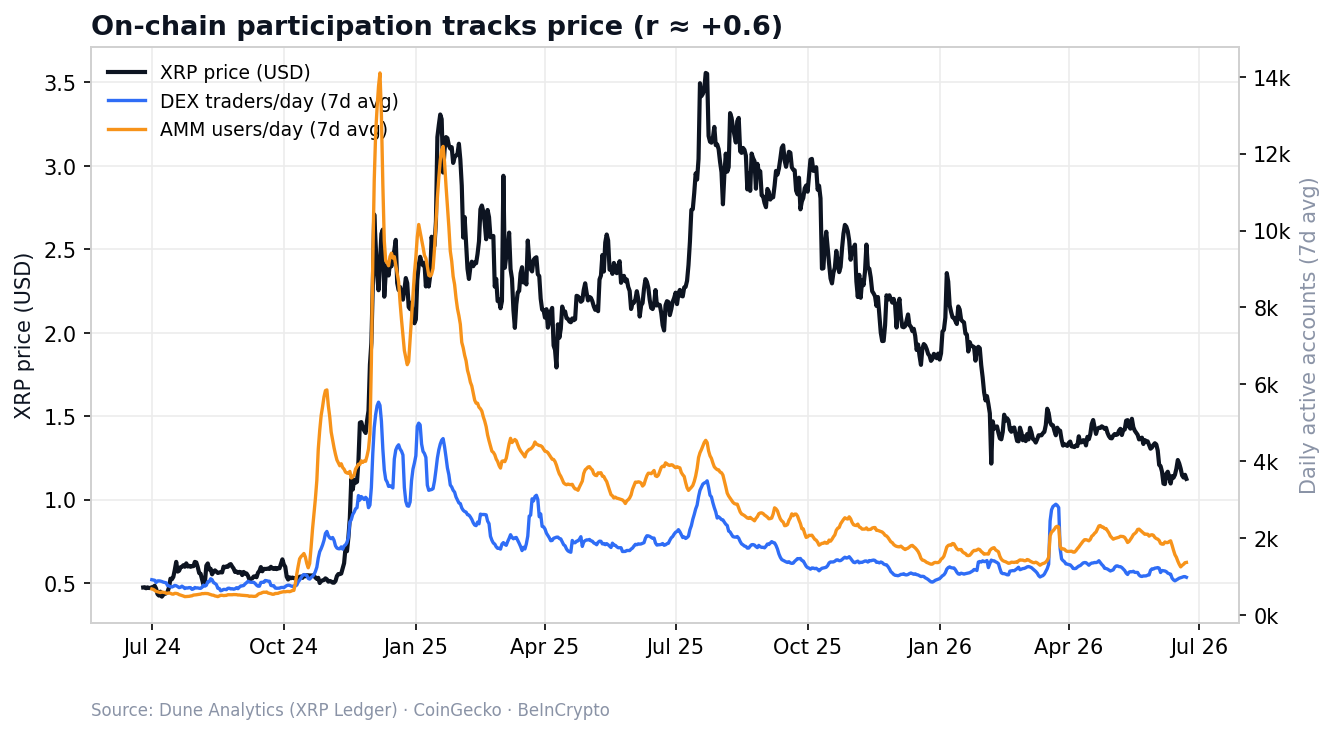
At the same time, liquidity within XRP Ledger automated market maker (AMM) pools has more than tripled this year, while decentralized exchange volumes have consistently exceeded 2024 averages.
Normally, rising liquidity and trading activity would support the underlying token. Instead, XRP’s price has continued trending lower.
The reason appears structural. Much of the new capital entering the XRP Ledger is flowing into RLUSD rather than XRP itself.
The stablecoin is now one of the largest liquidity assets on the network, allowing traders and institutions to settle transactions without necessarily holding significant amounts of XRP.
Stablecoin Adoption May Be Reducing Natural XRP Demand
The XRP Ledger was originally designed around XRP serving as the bridge asset between different currencies. RLUSD changes part of that equation.
For institutions seeking price stability, a regulated dollar-backed asset is naturally more attractive than a volatile cryptocurrency.
If payments, treasury operations, collateral management and tokenized assets increasingly settle directly in RLUSD, demand for XRP as an intermediary could weaken over time.
Current network data supports this possibility. While total value locked and AMM liquidity continue climbing, user participation and trading activity still closely follow XRP’s market performance rather than liquidity growth itself.
In other words, more money is entering the ecosystem, but relatively little of it appears to be creating new buying pressure for XRP.
Another factor is concentration. Around 82% of RLUSD remains held by the ten largest wallets, indicating that institutional participants, not retail investors, are driving most of the stablecoin’s expansion. This benefits Ripple’s broader payments ecosystem but does little to increase speculative demand for XRP.
That doesn’t necessarily mean RLUSD is harmful to XRP over the long term. Since many liquidity pools pair RLUSD with XRP, higher stablecoin usage could eventually require greater XRP liquidity. However, that relationship has yet to materialize in market prices.
Technical Weakness Meets Long-Term Optimism
Technical indicators continue to reflect bearish conditions. XRP remains below its 50-day, 100-day and 200-day exponential moving averages, while momentum indicators such as the Relative Strength Index and MACD suggest sellers still control the market.
Derivatives markets reinforce this caution, with negative funding rates and long-to-short ratios below one indicating that bearish positioning remains dominant.
Nevertheless, there are reasons for cautious optimism. Spot XRP ETFs have recorded modest inflows in recent sessions, while several large whale investors have reportedly opened significant leveraged long positions in both XRP and Bitcoin.
Historically, such whale accumulation during periods of extreme pessimism has sometimes preceded market reversals.
Ultimately, XRP’s recovery may depend less on RLUSD’s headline growth and more on whether that expanding stablecoin ecosystem eventually generates meaningful demand for XRP itself.
If RLUSD simply becomes the preferred settlement asset, XRP could continue struggling despite rising network activity. But if increasing stablecoin adoption ultimately routes more transactions through XRP liquidity pools and bridge functions, today’s divergence between network growth and token price may eventually close.
For now, investors face an unusual dynamic: Ripple’s business is expanding faster than ever, yet its flagship token continues to trade as though the growth barely exists.
Until those two narratives begin moving in the same direction, XRP may remain caught between impressive ecosystem development and disappointing market performance.
Giuseppe Ciccomascolo began his career as an investigative journalist in Italy, where he contributed to both local and national newspapers, focusing on various financial sectors.
Upon relocating to London, he worked as an analyst for Fitch's CapitalStructure and later as a Senior Reporter for Alliance News. In 2017, Giuseppe transitioned to covering cryptocurrency-related news, producing documentaries and articles on Bitcoin and other emerging digital currencies. He also played a pivotal role in establishing the academy for a cryptocurrency exchange website. Crypto remained his primary area of interest throughout his tenure as a writer for ThirdFloor.