Ripple Wins Luxembourg CASP Approval Under MiCA Framework — Will XRP Price Reclaim $3?
Share
Key Takeaways
Ripple received preliminary CASP approval in Luxembourg, positioning it to offer regulated crypto services across all 30 EEA countries ahead of the July 1 MiCA deadline.
The combination of Ripple’s CASP and EMI licenses creates a framework for RLUSD issuance, redemption, and payments infrastructure across Europe, strengthening Ripple’s stablecoin strategy.
Despite the regulatory milestone, XRP fell after the announcement, highlighting that licensing alone does not create direct demand for the token.
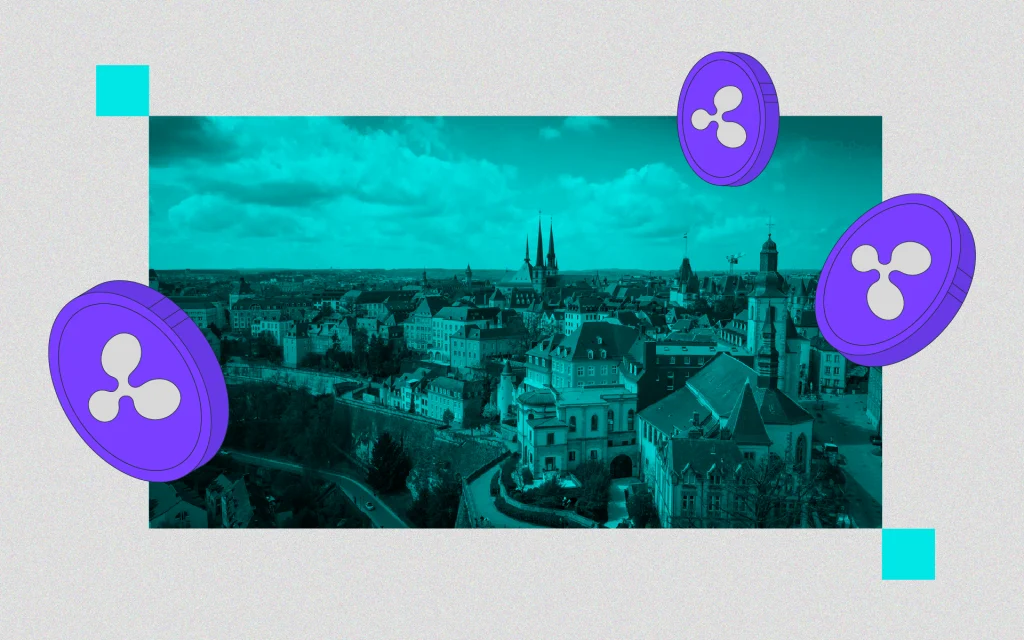
Ripple received preliminary approval for its Crypto Asset Service Provider (CASP) license from Luxembourg’s Commission de Surveillance du Secteur Financier under the EU’s Markets in Crypto Assets regulation (MiCA) on June 23.
The approval, issued as a Green Light Letter, is subject to final conditions, but the direction of travel is clear.
The approval covers all 30 countries of the European Economic Area and arrives just eight days before the July 1 hard deadline, after which unlicensed crypto firms operating in the EU are in breach of MiCA rules.
More licensing momentum!
Ripple has secured its preliminary Crypto Asset Service Provider (CASP) license in Luxembourg, paving the way for the full rollout of Ripple Payments across the EEA and full MiCA compliance: https://t.co/APQcYnCy9c
The CASP license, combined with Ripple’s existing EU Electronic Money Institution (EMI) license, means European banks, fintechs, and corporates can access Ripple’s full cryptoasset and stablecoin payments infrastructure, covering collection, exchange, and payout, through a single integration for the first time.
Such a combination matters for RLUSD, Ripple’s stablecoin, which had a circulation of over $300 million as of Q1 2026, according to DeFiLlama.
The paired EMI and CASP authorizations create a pathway for European clients to issue and redeem RLUSD under MiCA’s stablecoin framework.
Ripple Payments has processed more than $100 billion in volume to date across 60-plus markets globally. Ripple now holds over 75 regulatory licenses worldwide.
The competitive positioning is significant.
By mid-2026, around 83% of EU crypto firms had not secured MiCA licenses, leaving Ripple among approximately 210 compliant firms, a pool that notably does not include Binance, whose application in Greece is facing a potential rejection.
XRP Is Not the Story Here
The CASP green light enables regulated crypto-asset services across all 30 EEA countries. It does not create a direct demand mechanism for XRP.
According to Ripple’s own announcement, RLUSD and the XRP cryptocurrency underpin its solutions, but the approval is structured around payment infrastructure and institutional services rather than token utility.
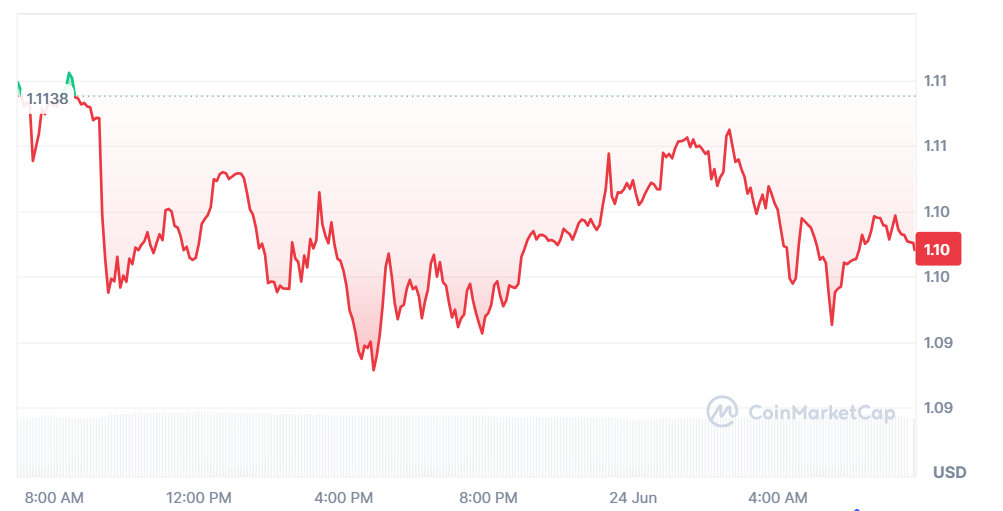
Markets priced that gap in immediately. XRP fell 2.9% on the news and is trading at $1.11 (at the time of writing) with a daily trading volume of $1.56 billion as the broader market continues to decline.
XRP hit a cycle high of $3.66 in July 2025, driven by the SEC case resolution and the launch of spot ETFs. It has not recovered that level since, closing 2025 near $1.90.
What Gets XRP Back to $3
The path to $3 runs through utility, not licensing. A sustained move through key resistance would signal a bullish trend reversal, with a medium-term target of $3.66 and a longer-term target of $5.00, contingent on XRP spot ETF flows, CLARITY Act progress, and increased XRP utility through institutional adoption of the XRP Ledger for cross-border payments and FX bridging.
Standard Chartered, which revised its earlier bullish projection, now places XRP around $2.80 under moderate conditions.
The structural argument for XRP above $3 depends on whether the MiCA license translates into measurable volume growth for Ripple Payments and, separately, whether institutional demand for XRPL as a settlement layer creates net buying pressure on the token itself.
Neither of those outcomes follows automatically from a Green Light Letter issued in Luxembourg.
The regulatory milestone is real, but the price catalyst is not, at least not yet.
Disclaimer:
The information provided in this article is for informational purposes only. It is not intended to be, nor should it be construed as, financial advice. We do not make any warranties regarding the completeness, reliability, or accuracy of this information. All investments involve risk, and past performance does not guarantee future results. We recommend consulting a financial advisor before making any investment decisions.
Dr. Guneet Kaur is a senior editor at CCN.com and a Science Fellow at Exponential Science. She is a fintech and blockchain expert with extensive experience in digital finance education, blockchain ecosystems, and cryptocurrency markets. She has worked with global media such as Cointelegraph, as well as education and blockchain platforms, to design and lead strategic content and learning initiatives. As an educator and assessor for top-tier executive programs, she bridges real-world fintech trends with academic insight.
Dr. Kaur is also a published researcher and peer reviewer across fintech and data science journals, including Financial Innovation Journal and International Journal of Big Data Intelligence and Applications. Her work spans data-driven analysis, Web3 innovation, and technical content development. With a strong foundation in both industry and academia, she translates complex financial technologies into practical applications, empowering learners, professionals, and institutions across the rapidly evolving digital finance landscape.