History shows Extreme Fear often marks major BTC turning points — Will it happen in 2026? | Credit: Derek Fenech
Share
Key Takeaways
The Crypto Fear and Greed Index has plunged into Extreme Fear, a historically capitulatory zone.
Past cycles show that peak fear often marks exhaustion of sellers, but does not guarantee a rebound.
Majors like BTC and ETH are stabilizing, while smaller tokens are leading short-term bounces.
Extreme Fear favors the accumulation of some assets, not the indiscriminate buying of all altcoins.
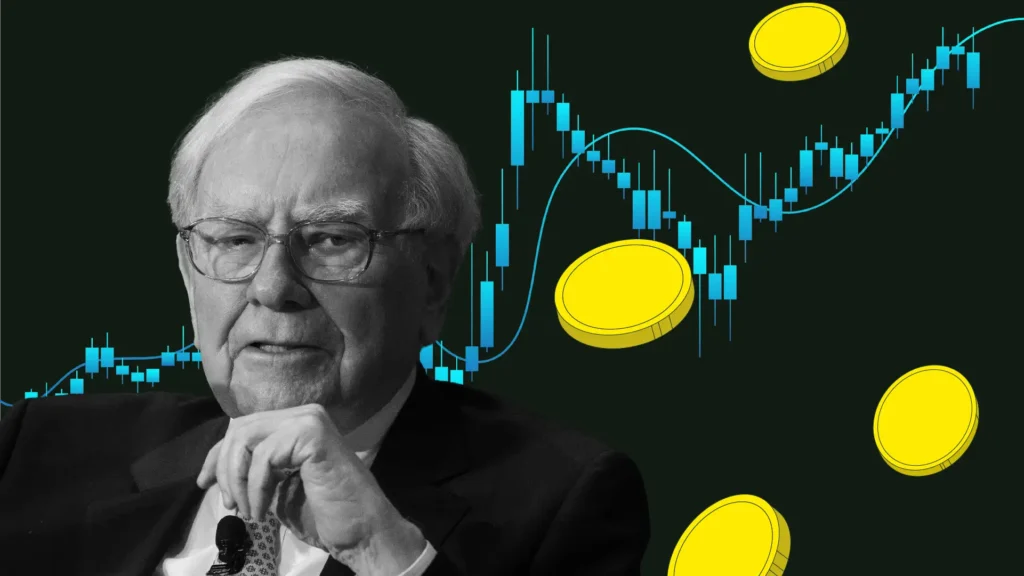
Warren Buffett has never hidden his disdain for Bitcoin (BTC).
Yet one of his most famous investing principles may be more relevant to crypto in 2026 than ever before: “Be fearful when others are greedy, and greedy when others are fearful.”
In a market defined by violent drawdowns and euphoric rebounds, the Crypto Fear and Greed Index has quietly become a sentiment proxy that mirrors this philosophy almost perfectly.
The Fear and Greed Index as a Contrarian Signal
The Crypto Fear and Greed Index condenses volatility, volume, social sentiment, dominance, and trend data into a single score ranging from 0 (Extreme Fear) to 100 (Extreme Greed).
Unlike price-based indicators, it measures psychology, which is usually the real driver of tops and bottoms.
Historically, Extreme Fear has coincided with forced selling, capitulation, and long-term opportunity, while Extreme Greed has aligned with leverage, complacency, and eventual drawdowns.
As of Feb. 11, the crypto market is attempting a relief rally after the Crypto Fear & Greed Index collapsed to 6 over the weekend, one of the lowest readings ever recorded.
However, as of this writing, it has jumped to 12. Yet, that reading still signals extreme fear.
Furthermore, Bitcoin’s brief drop below $69,000 and the broader market’s multi-day liquidation cascade wiped out billions in leveraged positions.
In response, but the first bounce has arrived, as always at Extreme Fear, it’s uneven, selective, and revealing.
This isn’t a broad recovery yet. It’s a stress test.
What a “Fear 12” Actually Means
A Fear and Greed reading of 11 doesn’t signal optimism; it signals exhaustion. Selling pressure is no longer driven by discretion but by margin calls, risk limits, and forced deleveraging. When that pressure eases, even slightly, the price snaps back violently.
Historically, these conditions produce:
Fast but fragile rallies.
Sharp divergence between assets.
Early recovery for some altcoins.
Short squeezes in oversold mid-caps.
History Rhymes, Not Repeats, but It Still Rhymes
2018 Bear Market: Extreme Fear dominated as Bitcoin collapsed from $20,000 to the $3,000 range. Those who accumulated during peak pessimism were rewarded massively in the next cycle.
Bear Market Extreme Fear | Credit: Victor Olanrewaju
March 2020 (COVID Crash): The index briefly fell into single digits. That moment of panic marked one of the most powerful long-term entry points in Bitcoin’s history.
2021 Mid-Cycle Crash: Fear returned after the May selloff. Buyers who stepped in during that fear window caught the second leg of the bull market.
2021 Cycle Recovery | Credit: Victor Olanrewaju
2022 Crypto Winter: Prolonged Extreme Fear reflected structural damage, but also laid the foundation for the next recovery phase.
The pattern is consistent: fear marks exhaustion, not irrelevance.
Why the Signal Matters in 2026
By the latter part of 2026, crypto might be more mature, more regulated, and more institutional, but not less emotional. Macro shocks, policy shifts, protocol failures, and liquidity cycles still drive sentiment to extremes.
An Extreme Fear reading in 2026 likely signals:
Broad capitulation after leverage unwinds.
Regulatory or macro-driven panic.
Forced selling rather than informed exit.
Long-term holders are transferring assets from weak hands to strong ones.
That’s not when risk disappears, but it’s often when asymmetric opportunity appears.
Beyond Bitcoin: Selectivity Is Everything
Extreme Fear doesn’t mean “buy everything.” It means buy quality, while others are indiscriminate sellers. In previous crypto cycles, here are the three things that happen during this period:
Bitcoin remains the core sentiment anchor.
Ethereum often benefits from fear-driven repricing against rising usage.
High-utility Layer 1s and infrastructure protocols can outperform, but only if fundamentals survive the downturn.
However, most altcoins won’t recover. Fear exposes that quickly.
The key question isn’t whether the market bounces as it almost always does. The question is who leads and who doesn’t.
Who Is Bouncing First, and Why?
As expected, the top altcoins by market cap are not the ones bouncing first. At the time of writing, BTC, ETH, SOL, and XRP prices are still massively down.
However, these are the clear early leaders in the post-crash rebound, emerging just as the Fear & Greed Index hit Extreme Fear and forced-selling pressure began to fade.
To start with, PIPPIN seems like the purest expression of memecoin liquidity rotation on Solana.
As majors bled, PIPPIN price exploded by over 100%. The move was reinforced by a jump in open interest, signaling fresh long positioning.
Next is Humanity (H), which held up for a different reason. Notably, its “Human ID” narrative gained real-world weight through a strategic partnership with Mastercard.
Volume also jumped despite an upcoming token unlock, suggesting larger players may be positioning early ahead of the protocol’s governance transition later in 2026.
According to CCN’s findings, a spot listing on LBank helped expand access, and the project’s $12 million strategic round with high-profile backers strengthened the uptrend.
Also, on the list is SKY, which has continued grinding higher on the back of its rebrand and tighter token dynamics.
Recent buybacks, burn mechanisms, and ecosystem expansion have helped reduce circulating supply. Also, because SKY is linked to DeFi lending yields, it has attracted defensive rotation during the market downturn.
Last on the list is ASTER. After its DEX reported $4.1 billion in 24-hour perpetual volume, the market treated the move as a signal of rising activity rather than a dead-cat bounce.
As a result, whale wallets also aggressively accumulated during the dip, reinforcing the upside.
With a Layer-1 mainnet launch expected in Q1 2026, ASTER is increasingly being priced in, and its market value could surge higher.
Top Gainers of February 2026 First Week
PIPPIN: +116%
Humanity (H): +39%
RIVER: +32%
SKY: +16%
ASTER: +14%
Meanwhile, Bitcoin and Ethereum have yet to register any major upside, but have relatively stabilized.
That’s typical at this stage. Majors stabilize first; momentum comes later.
What to Watch to Separate a Bounce From a Bottom
A Fear-6 rally is often a dead-cat bounce unless specific conditions follow. The market has seen this movie before.
Three signals matter most now:
Bitcoin dominance: If BTC dominance keeps rising while alts bounce, capital is still hiding, not rotating. That limits upside.
At press time, Bitcoin dominance on the weekly timeframe is showing early signs of structural fatigue after an extended uptrend.
As seen below, the chart highlights a rising wedge formation that developed from 2023 to 2025.
This was followed by a breakdown and a roughly 13% pullback from the recent local top near the 65% area.
Historically, major drawdowns in BTC dominance have preceded phases of altcoin outperformance.
The 2021 drop of roughly 44% marked the transition into a strong alt season.
While the current decline is far smaller in magnitude, the structural similarity lies in the rejection near the upper historical resistance zone.
The key level to watch is the mid-range support near the 50% area.
If dominance loses that region, it would confirm a shift in relative strength away from Bitcoin.
In that scenario, capital rotation into large-cap altcoins like ETH, SOL, and others would likely accelerate. But as it stands, market hesitation would likely not support that.
At this stage, the rejection of long-term resistance tilts the odds toward an extended market decline.
Given the current crypto fear index, Bitcoin’s price, and the prices of major altcoins, they might continue to slide.
Funding rates: Deeply negative funding needs to normalize. That’s how you know shorts have been flushed, and the pressure has cleared.
Key level reclaim: For Bitcoin, holding above the high-$60Ks on daily closes matters more than intraday spikes. Failed reclaims usually lead to another leg lower.
Without these confirmations, relief rallies tend to stall.
The Buffett Lesson, Applied to Crypto
Warren Buffett has never endorsed Bitcoin. But his most famous rule fits this moment perfectly: “Be greedy when others are fearful.”
Extreme Fear readings have historically aligned with the 2018 bear-market bottoms, the March 2020 COVID crash, the 2021 mid-cycle flush, and the depths of the 2022 crypto winter.
In each case, fear peaked after the damage was done, not before. The best opportunities emerged when sentiment felt unbearable, not when confidence returned.
That doesn’t mean buying blindly. It means being selective, favoring assets with liquidity, infrastructure value, or durable narratives, while avoiding low-quality speculation that only survives during euphoria.
The Bottom Line
A Fear and Greed Index at 11 doesn’t guarantee a bottom. However, it does tell you the market has reached maximum stress.
The bounce now underway is less about recovery and more about who still has buyers when sellers are gone.
Disclaimer:
The information provided in this article is for informational purposes only. It is not intended to be, nor should it be construed as, financial advice. We do not make any warranties regarding the completeness, reliability, or accuracy of this information. All investments involve risk, and past performance does not guarantee future results. We recommend consulting a financial advisor before making any investment decisions.
Victor Olanrewaju is a crypto analyst and reporter at CCN with deep roots in on-chain research and technical analysis. His crypto journey began in 2017, but it was the 2020 Uniswap airdrop that sparked a full-time pivot into the space.
With a foundation in copywriting, Victor honed his craft creating high-converting content for leading crypto brokers — most notably an XRP price prediction that ranked #1 on Google during the 2021 bull run.
He later joined AMBCrypto in 2022, where he combined storytelling with technical and on-chain analysis to cover key market narratives.
In 2024, he expanded his expertise at BeInCrypto, collaborating with analysts and using tools like Glassnode, Santiment, and IntoTheBlock to break down Bitcoin and altcoin trends.
At CCN, Victor covers the top cryptocurrencies, memecoins, macro shifts, blending real-time insights with deep-dive metrics.
He holds a Bachelor’s degree in Physics from the University of Ibadan, equipping him to simplify complex data for a wide audience. Follow his work or connect on LinkedIn or X.