Key Takeaways
- President Trump’s sweeping tariffs on all Chinese imports have reignited fears of global economic fragmentation.
- SWIFT’s blockchain pivot may now be more urgent due to heightened risk of political weaponization and fragmentation.
- The shift could help maintain SWIFT’s dominance as a neutral backbone amid the threat of trade wars.
A fresh round of U.S. tariffs has reignited fears of global economic fragmentation and may have thrust SWIFT’s quiet push into blockchain into the geopolitical spotlight.
After President Donald Trump announced sweeping 100% tariffs on all Chinese imports, the vulnerability of the systems that move money across borders has come under renewed scrutiny.
For SWIFT, the 50-year-old network that underpins global payments, the new tariff turmoil adds urgency to a blockchain effort designed to make it more resilient and politically neutral.
Trump Tariffs Cause Market Carnage
Trump’s decision to impose 100% tariffs on all Chinese imports, announced on Oct.10 in response to Beijing’s new export controls on rare earth minerals and critical software, has sharpened concerns that the financial system itself could splinter along political lines.
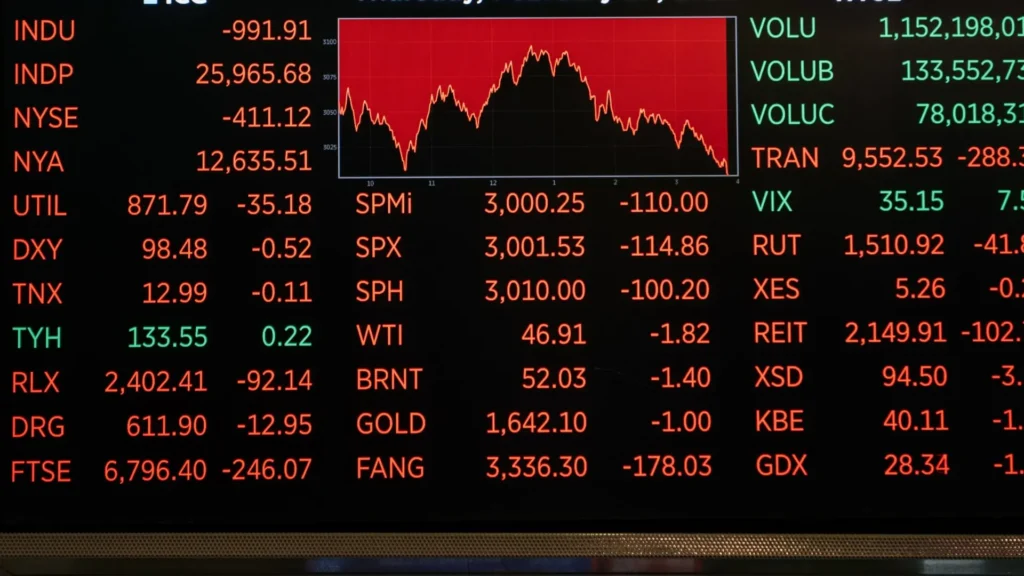
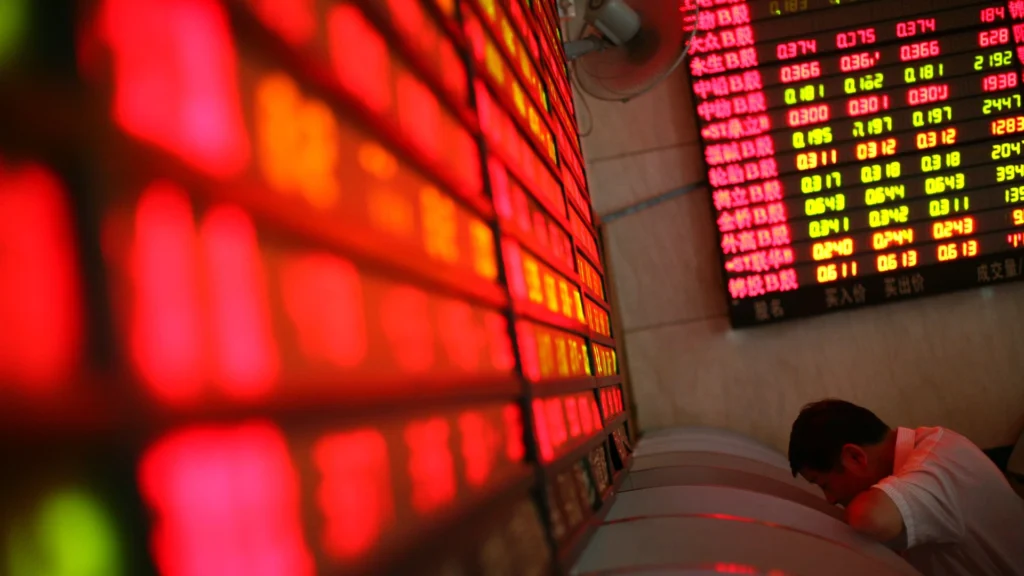
The escalation, due to take effect on November 1, sent shockwaves through markets, with nearly $19 billion liquidated in crypto positions within hours.
Bitcoin tumbled from above $125,000 to below $102,000, and roughly $560 billion was erased from total crypto-asset value in one day.
Following the tariff fallout, the Crypto Fear & Greed Index dropped to a “Fear” level of 27 on Saturday.
Stuart Connolly, CIO at Deus X Capital, told CCN that President Trump’s tariff rhetoric has triggered what “we believe is a meaningful ‘risk off’ within markets and the crypto market has taken the brunt of that.”
Connolly added that the “market needed a reset” and that crypto assets could see a stronger Q4 if Trump’s position softens.
SWIFT’s Blockchain Ambitions
SWIFT’s blockchain program has been unfolding steadily over the past several years as the cooperative works to adapt to the rapid evolution of digital finance.
In March 2024, the organization publicly acknowledged the potential of tokenized assets and shared ledgers.
At the time, this was the clearest signal yet that blockchain technology would be part of its future infrastructure.
By late 2024, SWIFT had begun running proof-of-concept projects, including “Project Guardian” on tokenized funds, along with pilot messaging trials designed to test how digital assets could be integrated.
The most significant development came in September 2025, when SWIFT announced a collaboration with ConsenSys’s Linea and more than 30 major financial institutions to build a blockchain-based “shared ledger” layer.
The new layer is designed to support real-time, 24/7 settlement and, over time, enable interoperability between fiat payments, stablecoins, and central bank digital currencies (CBDCs).
Live trials of digital-asset transfers are scheduled to begin between 2025 and 2026.
Trade War Tensions Add Urgency
SWIFT has emphasized that the initiative is not intended to replace its existing network but will instead be an expansion. The effort aims to make global payments faster, more resilient, and more transparent.
For SWIFT, whose infrastructure has long served as the connective tissue of international finance, the shift toward blockchain could be viewed as a strategic defense.
SWIFT’s blockchain-focused mission may now have taken on new urgency in the wake of Trump’s sweeping tariffs on Chinese imports and Beijing’s retaliatory export controls.
With renewed fears of financial fragmentation, migrating partly to blockchain could be a way to stay neutral despite looming threats of sanctions, tariffs and competing regional systems.
Fei Chen, founder and CEO of Intellectia.ai, told CCN that “decentralization is the only real defense against fragmentation.”
“Trump’s new tariffs serve as a reminder that money transfer networks can be just as vulnerable to manipulation as supply chains,” he added.
Chen said that by SWIFT embracing blockchain it’s trying “to stay neutral in a financial system that’s becoming increasingly polarized.”
Weaponized Access
The blockchain pivot will also allow SWIFT to distribute transaction validation across multiple nodes rather than relying on centralized control.
This will make it harder for any single government to weaponize access, as happened when Western sanctions forced Russian banks off the network in 2022.
At the same time, blockchain interoperability could bridge rival systems, allowing SWIFT to connect fiat rails, CBDCs, and tokenized assets from competing regions.
The shift is particularly significant amid renewed trade tensions, with Trump’s tariffs heightening fears that global financial systems could be pulled in as tools for economic leverage.
“A blockchain-enabled SWIFT could preserve global interoperability when politics threaten it,” Chen said. “Without that, we risk a split financial internet, one led by the West, another by Asia, and that would change the world’s payment order.”
SWIFT’s Pilot May Be Boosted
The shift has positioned SWIFT in the same conversation as blockchain-native players such as Ripple Labs, which has long promoted on-chain cross-border transfers through its RippleNet network and XRP token.
For years, Ripple has argued that blockchain technology can move money faster and cheaper than the legacy systems that underpin global banking.
However, Ripple and similar platforms operate at a much smaller scale than SWIFT, which touches nearly every major bank in the world.
This reach could now matter more than ever in the wake of heightened trade tariffs and growing protectionism.
In an environment of economic fragility, banks and regulators may be less likely to migrate to smaller crypto-native systems and more inclined to rally around a familiar entity.
For SWIFT, that could boost international sentiment around its systems.
Top Trending Crypto Articles

Kurt Robson is a London-based reporter at CCN, specialising in the fast-moving worlds of crypto and emerging technology. He began his career covering local news in Cornwall after graduating from Falmouth University with First Class Honours in Journalism. There, he cut his teeth on everything from council meetings to missing swans.
He quickly rose through the ranks to become a frontline journalist at several of the UK’s leading national newspapers. Over the years, he has interviewed musicians and celebrities, reported from courtrooms and crime scenes, and secured multiple front-page exclusives.
Following the upheaval of the COVID-19 pandemic, Kurt shifted his focus to technology journalism—just ahead of the AI boom. With a natural curiosity and a trained eye for emerging trends, he has found a new rhythm in reporting on innovation.
At CCN, Kurt's work focuses on the cutting edge of crypto, blockchain, AI, and the evolving digital world. Drawing on his background in people-first reporting and his deep interest in disruptive tech, Kurt delivers stories that are insightful, entertaining, and human-centric.