Key Takeaways
- Solana’s tokenized equity market surpassed $600 million before reaching $1.22 billion in November, nearly doubling from the end of October.
- Investors can now use tokenized stocks, including Tesla shares issued by Ondo Finance, as DeFi collateral without selling their equity exposure.
- Jupiter recorded a 72% quarterly increase in tokenized asset trading volume, signaling growing demand for onchain equities.
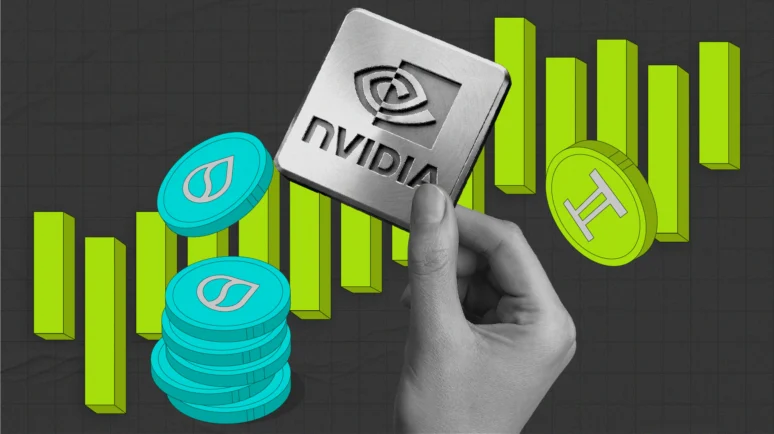
Solana’s tokenized equity market is experiencing rapid growth as traditional finance and decentralized finance (DeFi) become increasingly interconnected, allowing investors to unlock liquidity from their stock holdings without selling them.
According to The Kobeissi Letter, tokenized equity supply on Solana surpassed $600 million, representing a 210% year-to-date increase despite the broader cryptocurrency market downturn.
More recent data cited by Solana on Nov. 19 showed that the circulating value of tokenized equities had reached $1.22 billion, nearly doubling from the end of October.
The expansion comes as major financial institutions deepen their involvement in blockchain infrastructure and tokenization platforms introduce new ways to use traditional financial assets within DeFi applications.
Tokenized Stocks Unlock New DeFi Lending Opportunities
One of the most significant developments in Solana’s tokenization ecosystem is the growing ability to use tokenized equities as collateral for decentralized lending.
For example, investors holding Ondo Finance’s tokenized version of Tesla stock can use their holdings as collateral through compatible DeFi lending protocols.
This allows investors to access liquidity while maintaining exposure to the underlying equity, rather than selling their investments to raise capital.
The development brings a familiar traditional finance practice, securities-backed lending, to blockchain-based financial markets, where transactions can take place around the clock.
Tokenized equities could also improve capital efficiency by allowing investors to deploy assets that would otherwise remain idle in their portfolios.
Growing demand is already translating into increased trading activity. According to The Kobeissi Letter, Jupiter, one of Solana’s largest decentralized trading platforms, recorded a 72% quarter-on-quarter increase in tokenized asset trading volume.
However, using tokenized stocks as collateral introduces additional risks, including potential liquidations, smart contract vulnerabilities and pricing discrepancies outside traditional stock market trading hours.
Ondo, xStocks and Securitize Drive Solana’s Equity Expansion
Several tokenization providers have contributed to the rapid expansion of Solana’s equity market, including Ondo Finance, xStocks, Backpack Securities and Securitize.
According to the Solana Foundation’s October ecosystem report, Ondo’s tokenized assets on the network surpassed $500 million, while decentralized exchange aggregator 1inch enabled trading for more than 450 Ondo tokenized stocks and exchange-traded funds (ETFs).
Meanwhile, cumulative xStocks trading volume reached $7.5 billion, while Backpack Securities processed more than $6 billion in tokenized asset trading volume.
Backpack also expanded its offering by adding more than 20 tokenized stocks during October through its infrastructure partner Sunrise.
Securitize entered Solana’s tokenized equity market in October through its registered broker-dealer infrastructure, initially offering 12 products linked to major US companies, including Apple, Microsoft, Nvidia, Tesla and Amazon.
The company subsequently expanded its catalog to 25 stocks in November, adding companies such as Exxon Mobil, GameStop and Uber.
Securitize said each token has the backing of an underlying share that the company would not lend out.
The growing range of available products highlights how blockchain networks are increasingly becoming alternative infrastructure for accessing traditional financial markets.
Institutional Adoption Strengthens Solana’s Tokenization Outlook
Institutional participation is emerging as another important driver of Solana’s tokenization ecosystem.
Major financial institutions, including JPMorgan, BNY Mellon and State Street, are engaging with Solana-related infrastructure in different capacities, reflecting broader institutional interest in blockchain-based financial services.
On Nov. 12, the Depository Trust & Clearing Corporation (DTCC) announced plans to connect its Tokenization Service to Solana during the second half of 2027.
The initiative would allow eligible securities held through the Depository Trust Company to receive blockchain-based representations while retaining their underlying ownership rights and investor protections.
The planned integration could help bridge the gap between regulated securities markets and blockchain-based financial infrastructure.
For Solana, the expansion of tokenized equities represents an opportunity to diversify network activity beyond speculative cryptocurrency trading.
While regulatory uncertainty, liquidity fragmentation and technological risks remain significant challenges, the growth in tokenized equity supply suggests that real-world assets are becoming an increasingly important component of the blockchain economy.
The ability to trade, transfer and borrow against traditional equities onchain could ultimately reshape how investors access and manage capital across financial markets.
Top Trending Crypto Articles
The information provided in this article is for informational purposes only. It is not intended to be, nor should it be construed as, financial advice. We do not make any warranties regarding the completeness, reliability, or accuracy of this information. All investments involve risk, and past performance does not guarantee future results. We recommend consulting a financial advisor before making any investment decisions.

Giuseppe Ciccomascolo began his career as an investigative journalist in Italy, where he contributed to both local and national newspapers, focusing on various financial sectors.
Upon relocating to London, he worked as an analyst for Fitch's CapitalStructure and later as a Senior Reporter for Alliance News. In 2017, Giuseppe transitioned to covering cryptocurrency-related news, producing documentaries and articles on Bitcoin and other emerging digital currencies. He also played a pivotal role in establishing the academy for a cryptocurrency exchange website. Crypto remained his primary area of interest throughout his tenure as a writer for ThirdFloor.













 ‘Ethereum Not The Best Solution,’ PayPal Crypto Head Explains Solana Choice for PYUSD