Key Takeaways
- Ripple CEO Brad Garlinghouse said he was “never an XRP Maxi” and promoted a “multi-chain world” at Consensus 2026.
- Former Ripple CTO David Schwartz revealed he had sold most of his XRP holdings.
- The comments come as Ripple continues positioning XRP as part of a plan to modernize global payments.
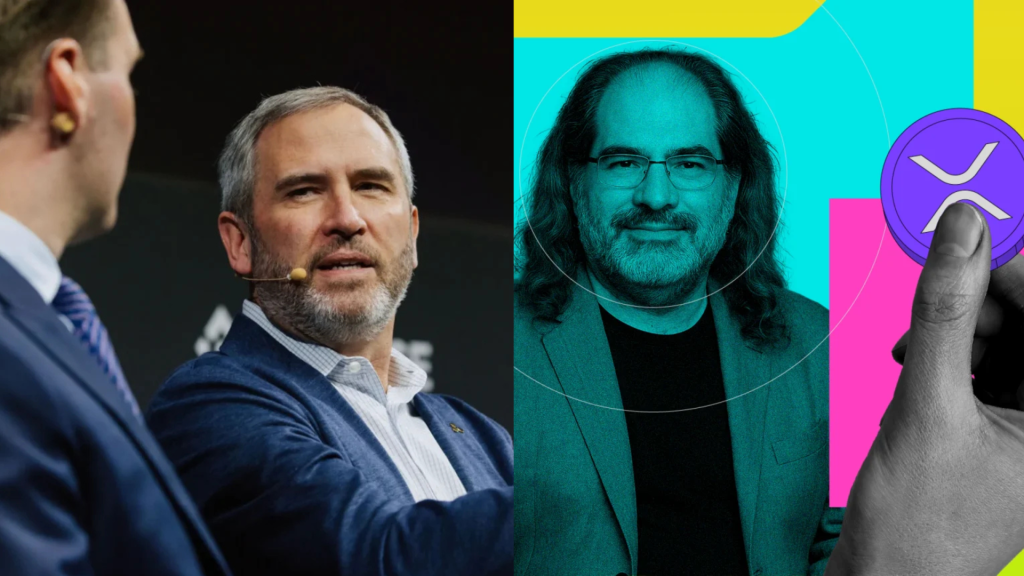
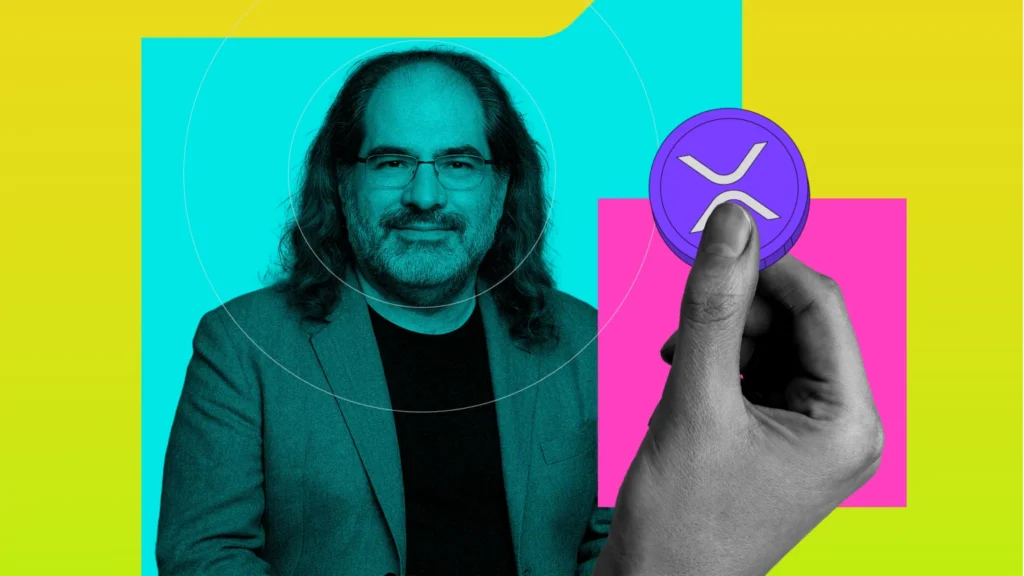
Ripple Chief Executive Brad Garlinghouse has announced he was “never an XRP Maxi” at Consensus 2026, comments that come days after Ripple Chief Technology Officer David Schwartz said he had sold most of his XRP holdings.
The remarks have created difficult optics for some already nervous XRP holders, who have been banking on positive reinforcement from insiders at the firm following months of lows.
Garlinghouse Promotes Multi-Chain Outlook
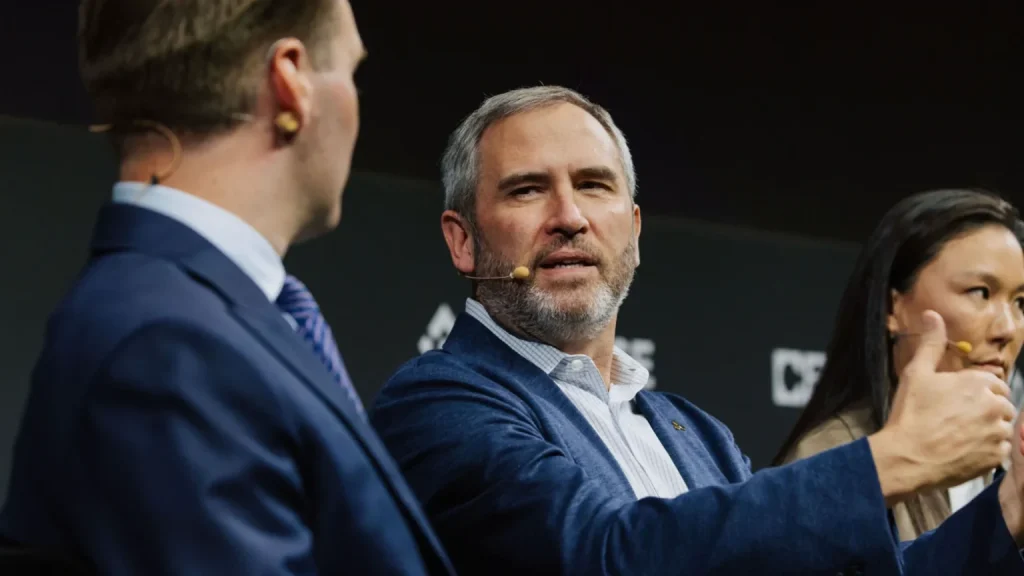
Speaking in an interview at the Miami event, Garlinghouse said he had “never been an XRP maxi.”
The Ripple CEO, whose firm recently flooded Las Vegas with ads promoting XRP, said he also wanted to see Bitcoin succeed.
“It’s not going to be a one-chain world. It’s going to be a multi-chain world,” he said.
The remarks underscore Ripple’s increasingly pragmatic positioning within the broader crypto industry.
Institutional adoption is becoming a more prominent theme than tribal competition between blockchain communities.
Garlinghouse’s comments also come at a sensitive moment for Ripple and XRP, whose retail investor base has long promoted the token as a cornerstone of global finance.
XRP’s biggest supporters have frequently expressed frustration over the token’s price swings and slower-than-expected appreciation compared with rival cryptocurrencies.
Former Ripple CTO Reduces XRP Exposure
The debate intensified this week after Ripple’s former Chief Technology Officer, David Schwartz, disclosed on X that he had significantly reduced his crypto exposure, prompting backlash from many long-term XRP holders.
“I don’t have that much left anymore,” Schwartz wrote.
“I’ve tried to get most of my assets (other than Ripple stock) away from crypto exposure,” he added. “As I’ve said, I really don’t like risk even though pretty much every risk I’ve taken has worked out amazingly well for me.”
In follow-up posts, Schwartz acknowledged that crypto could still represent “a once-in-a-generation chance to get rich,” but said he was comfortable potentially missing future gains.
“I’m not the diamond hands guy. That’s not me,” he wrote.
Schwartz added that his more conservative approach to investing was likely the reason he had not become significantly wealthier despite being involved in crypto from its early years.
The comments rattled parts of the XRP community, where some investors interpreted the remarks as a sign of weakening conviction from one of the network’s most prominent architects.
Schwartz later sought to separate his personal financial decisions from his views on XRP itself, arguing that his motivation for supporting the XRP Ledger extended beyond financial gain.
“I want XRP and XRPL to be successful because I feel like they’re a reflection of me,” he wrote.
Asked what metrics would define XRP’s long-term success, Schwartz said price still mattered to him “to some extent,” but pointed to broader network indicators, such as total value traded, as well.
Schwartz also rejected suggestions that Ripple should more tightly link XRP ownership with Ripple equity exposure.
“I don’t think it’s good for XRP for its value to become more entangled with Ripple’s success or failure than it absolutely needs to be,” he wrote.
Previous Ripple Pushback Against Bullish XRP Price
The latest controversy follows Schartz’s remarks earlier this week, again pushing back against bullish XRP price predictions.
On May 1, Schwartz responded to a user on X:
“If there were a few very rich, very rational people who really believed that there was a 1% chance that XRP could hit $10K in 10 years, they’d bid XRP up to at least $20 today. Why aren’t they? Conspiracy?”
It comes after the former CTO publicly pushed back against predictions in January that XRP could eventually reach between $50 and $100 per token.
“I don’t feel comfortable saying something like that,” Schwartz wrote at the time.
“While I don’t think it’s likely, I didn’t think it was likely that XRP would ever hit $0.25.”
He said crypto markets were often driven by unpredictable external developments rather than predetermined price trajectories.
“I started selling XRP at $0.10 because it seemed insane,” Schwartz wrote. “I remember when Bitcoin hitting $100 seemed like an impossible dream.”
Schwartz argued that if investors genuinely believed XRP had a meaningful probability of reaching $100 within several years, market pricing would already reflect that expectation.
“If many rational people believed that there was a 10% chance that XRP hit $100 within a few years, they definitely wouldn’t sell very much today at much less than $10,” he wrote.
The comments drew sharp criticism from some XRP holders, several of whom accused Schwartz of undermining morale among long-term investors.
Others praised him for offering what they described as a more realistic assessment of crypto markets.
Ripple Targets Legacy Payment Infrastructure
Garlinghouse has meanwhile continued to frame Ripple’s and XRP’s broader mission as modernizing outdated global payment systems, particularly infrastructure dominated by SWIFT.
Speaking at a recent event, Garlinghouse admitted that Ripple was in direct competition with the traditional banking system.
He described SWIFT as a platform that failed to evolve alongside the internet era, comparing the current landscape to the early days of AOL.
“Do we compete with Swift? Yes,” Garlinghouse said.
Adding: “And when I think at the core, what Ripple’s trying to do, we’re trying to let value move the way information moves today.”

Kurt Robson is a London-based reporter at CCN, specialising in the fast-moving worlds of crypto and emerging technology. He began his career covering local news in Cornwall after graduating from Falmouth University with First Class Honours in Journalism. There, he cut his teeth on everything from council meetings to missing swans.
He quickly rose through the ranks to become a frontline journalist at several of the UK’s leading national newspapers. Over the years, he has interviewed musicians and celebrities, reported from courtrooms and crime scenes, and secured multiple front-page exclusives.
Following the upheaval of the COVID-19 pandemic, Kurt shifted his focus to technology journalism—just ahead of the AI boom. With a natural curiosity and a trained eye for emerging trends, he has found a new rhythm in reporting on innovation.
At CCN, Kurt's work focuses on the cutting edge of crypto, blockchain, AI, and the evolving digital world. Drawing on his background in people-first reporting and his deep interest in disruptive tech, Kurt delivers stories that are insightful, entertaining, and human-centric.