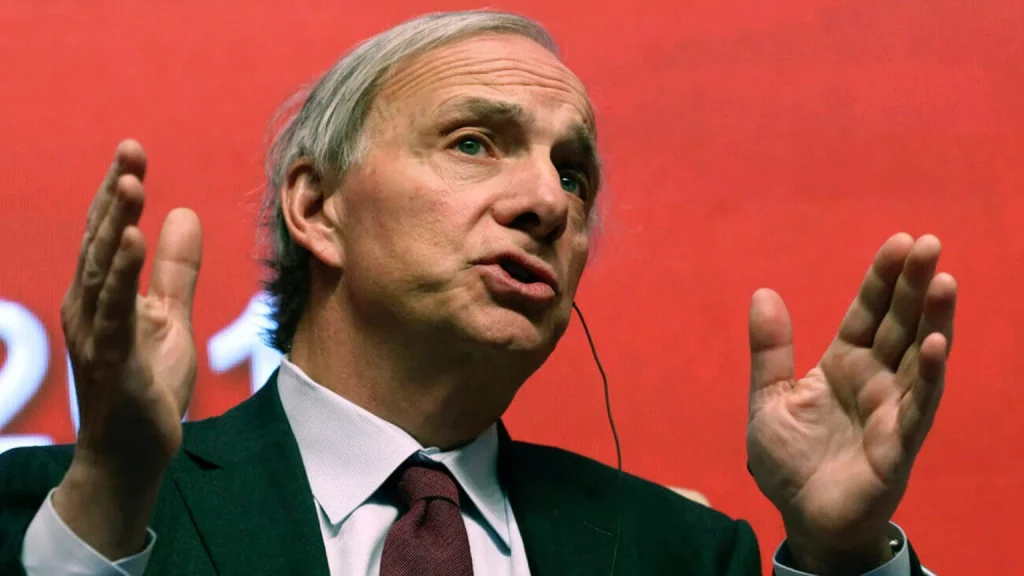
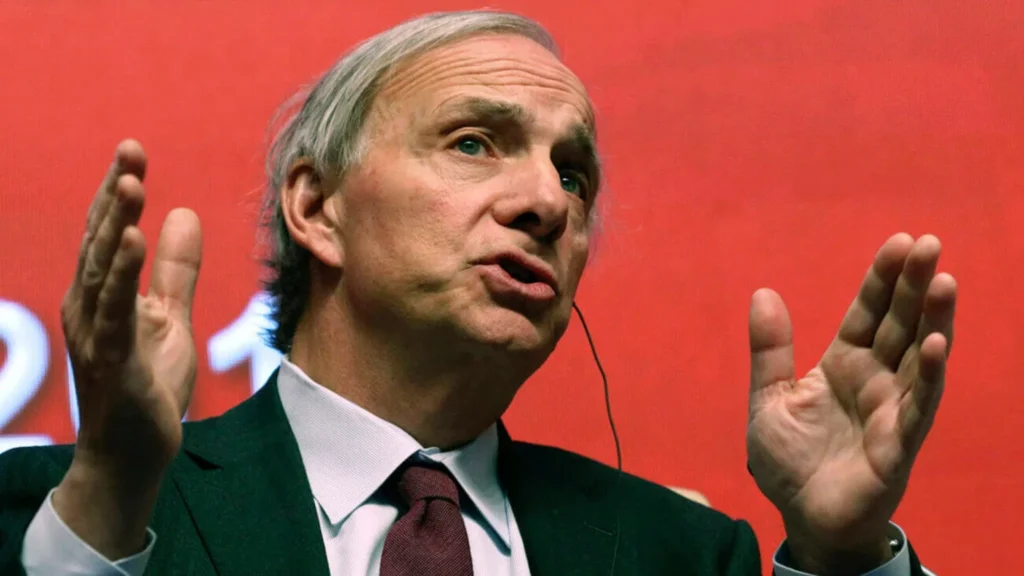
Ray Dalio is once again criticizing Bitcoin in favor of Gold. | Source: Getty Images.
Share
Key Takeaways
Ray Dalio reignited the Bitcoin-versus-gold debate.
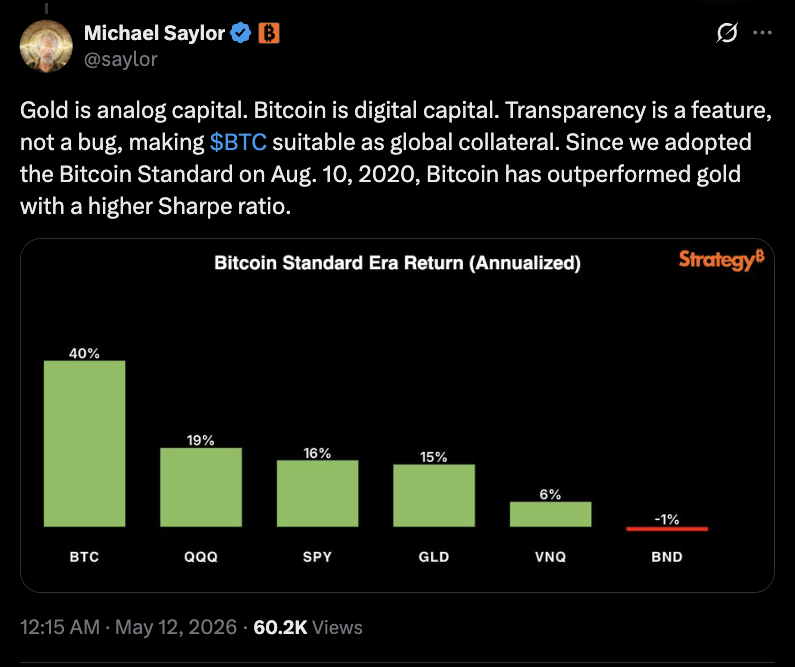
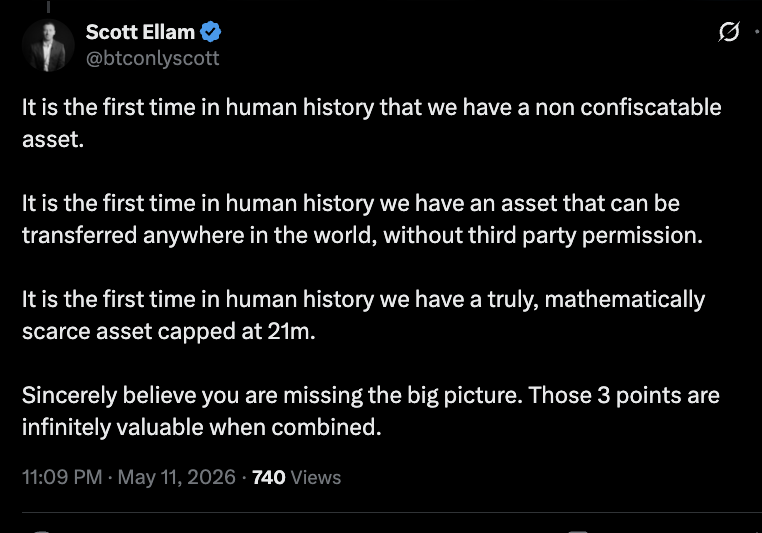
Crypto executives, including Michael Saylor and Samson Mow, strongly rejected Dalio’s claims.
The debate comes as tokenized gold trading volumes surge.
Ray Dalio’s latest criticism of Bitcoin triggered swift backlash from some of the crypto industry’s most prominent supporters, after the billionaire investor argued that gold remains a superior safe-haven asset due to Bitcoin’s lack of privacy and correlation with tech stocks.
The comments come just two months after previous comments against Bitcoin in March, which also received widespread backlash from crypto executives.
Try Our Recommended Crypto Exchanges
Sponsored
Disclosure
We sometimes use affiliate links in our content, when clicking on those we might receive a commission at no extra cost to you. By using this website you agree to our terms and conditions and privacy policy.
Ray Dalio Spills Bitcoin Under Gold Argument, Again
In a post on X on May 11, the founder of Bridgewater Associates said Bitcoin had failed to fulfill the “safe-haven role many expected,” despite the significant attention it has received.
“First, Bitcoin lacks privacy. Transactions can be monitored and potentially controlled, which is why central banks aren’t looking to hold them,” Dalio wrote.
He added that it also has a “high correlation with tech stocks.” The billionaire claimed that investors sell it when they need coverage for other areas of their portfolio.
Dalio also argued that Bitcoin remained a comparatively small and “controllable” market relative to gold.
While Bitcoin gets a lot of attention, it hasn’t played the safe-haven role many expected. In my view, there are a few reasons why.
First, Bitcoin lacks privacy. Transactions can be monitored and potentially controlled, which is why central banks aren’t looking to hold it.… pic.twitter.com/j78NJdvrOw
“Ultimately, gold is more widely held, deeply established, and still plays a central role in the global system,” he wrote.
Dalio accompanied the post with a clip from a March appearance on the All-In Podcast, where he expanded on his concerns about Bitcoin’s suitability as a reserve asset.
“Bitcoin does not have privacy,” Dalio said in the interview.
“Any transactions can be monitored… and then indirectly perhaps controlled.”
Dalio said central banks were unlikely to adopt Bitcoin in meaningful size.
“Some hear criticism; I hear opportunity,” Hougan wrote on X in response to the podcast clip in March.
Some hear criticism; I hear opportunity.
These are the reasons bitcoin is 4% of size of gold. If these critiques did not exist, bitcoin would already be ~$750,000/coin. I invest in bitcoin in part because I am confident these things will change over time. https://t.co/pYtmJyv0Wt
“If these critiques did not exist, Bitcoin would already be ~$750,000/coin,” he wrote.
Hougan said Bitcoin’s upside potential depended on the gradual resolution of concerns surrounding the asset.
“I invest in Bitcoin in part because I am confident these things will change over time,” he added.
Dalio’s Earlier Fiat Warnings — Bullish For Bitcoin?
Despite his latest criticism of Bitcoin in favor of gold, some of Dalio’s earlier comments about the global monetary system have previously been interpreted by crypto traders as supportive of Bitcoin’s long-term thesis.
Speaking to CNBC during the World Economic Forum in Davos in January, Dalio warned that the global monetary order was beginning to weaken as confidence in fiat currencies declined.
“The monetary order is breaking down,” Dalio said.
Dalio pointed to shifting reserve allocations and rising gold demand as evidence of broader structural changes in global finance.
JUST IN: BILLIONAIRE RAY DALIO JUST SAID THAT THE CURRENT MONETARY ORDER IS "BREAKING DOWN" AND "FIAT IS NO LONGER A CENTRAL BANK ASSET"
The remarks circulated widely among crypto traders, with some arguing that weakening confidence in fiat currencies could ultimately benefit decentralized assets such as Bitcoin.
One trader wrote that “Bitcoin is gonna thrive in chaos now,” while another said “Fiat doubts push more people toward Bitcoin.”
Others, however, argued that macroeconomic instability has historically weighed heavily on risk assets.
“Bitcoin is a product of fiat, it will go down as well,” one user wrote in response to Dalio’s comments.
Another trader added that “anytime there’s macro uncertainty Bitcoin tanks more than anything else.”
Tokenized Gold Surging
The renewed comments come as tokenized gold has emerged as one of the fastest-growing sectors of the crypto market, with trading activity accelerating sharply in early 2026.
According to CoinGecko’s 2026 Real World Asset (RWA) Report, spot trading volume for tokenized gold products reached $90.7 billion in the first quarter alone, already surpassing the entire $84.6 billion recorded throughout 2025.
Over the past 15 months, monthly trading volumes for major tokenized gold products averaged roughly $11.7 billion.
Major activity spikes were mainly seen during periods of geopolitical tension and broader macroeconomic uncertainty.
It comes as CoinGecko said the broader tokenized commodities sector grew 289.1% over the period to reach a market capitalization of $5.55 billion.
Bitcoin Evolving Past Risk Asset?
While Dalio argues Bitcoin still behaves like a speculative tech-linked asset, other crypto executives say recent market behavior suggests the investment thesis around Bitcoin is evolving.
Bitwise Chief Investment Officer Matt Hougan recently argued that Bitcoin is increasingly being viewed through two distinct lenses:
A digital store of value competing with gold.
A politically neutral monetary network operating outside the traditional financial system.
Since US and Israeli airstrikes began on Feb. 28, Bitcoin has climbed roughly 12%, outperforming both traditional safe-haven assets and equities, according to market data cited by Hougan.
Over the same period, the S&P 500 fell around 1% while gold declined roughly 10%.
Hougan said the “digital gold” narrative has dominated institutional adoption in recent years, but argued that a second thesis tied to global financial fragmentation is becoming increasingly relevant.
He pointed to the growing use of financial infrastructure as a geopolitical weapon, including Russia’s removal from the SWIFT banking network in 2022.
“I mused at the time that the weaponization of SWIFT might one day open up space for Bitcoin,” Hougan wrote.
“If countries grew reluctant to deal in dollars, it stood to reason that they might prefer an apolitical alternative at some point.”
Kurt Robson is a London-based reporter at CCN, specialising in the fast-moving worlds of crypto and emerging technology. He began his career covering local news in Cornwall after graduating from Falmouth University with First Class Honours in Journalism. There, he cut his teeth on everything from council meetings to missing swans.
He quickly rose through the ranks to become a frontline journalist at several of the UK’s leading national newspapers. Over the years, he has interviewed musicians and celebrities, reported from courtrooms and crime scenes, and secured multiple front-page exclusives.
Following the upheaval of the COVID-19 pandemic, Kurt shifted his focus to technology journalism—just ahead of the AI boom. With a natural curiosity and a trained eye for emerging trends, he has found a new rhythm in reporting on innovation.
At CCN, Kurt's work focuses on the cutting edge of crypto, blockchain, AI, and the evolving digital world. Drawing on his background in people-first reporting and his deep interest in disruptive tech, Kurt delivers stories that are insightful, entertaining, and human-centric.