Key Takeaways
- FCA finalizes UK crypto rulebook, with applications opening September 30, 2026.
- Stablecoin issuer capital requirement cut from 2% to 1% after industry feedback.
- The UK framework mirrors MiCA broadly but keeps a separate national regulatory path.
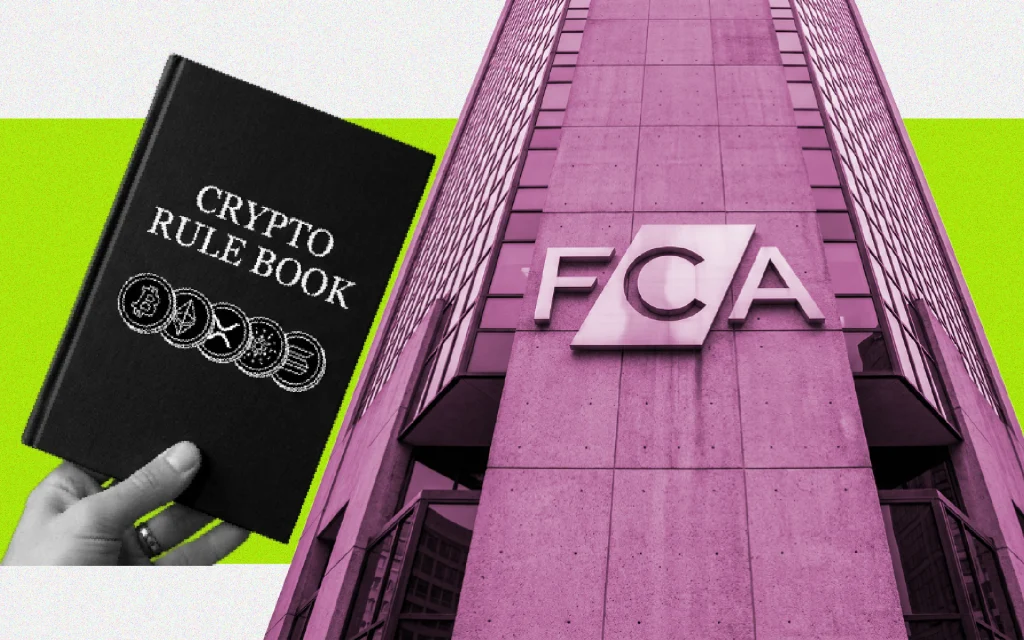
The UK’s Financial Conduct Authority has finalized its long-awaited cryptoasset regulatory framework, bringing exchanges, custodians, trading platforms, lenders and stablecoin issuers under a single licensing regime. The rulebook, finalized June 29 to 30, 2026, marks the most sweeping overhaul of UK digital asset oversight to date.
The package introduces new standards for governance, consumer protection, custody, market integrity and operational resilience, pulling much of the crypto industry closer to the rules already applied to banks and traditional investment firms.
Firms can apply for authorization between September 30, 2026, and February 28, 2027, and existing anti-money laundering (AML) registrations will not transfer automatically. The full regime takes effect October 25, 2027.
Capital Requirement Halved After Pushback
The most closely watched change is a cut to the capital requirement for non-systemic stablecoin issuers, reduced from 2% to 1% of issued value following industry consultation. Sterling-backed stablecoins remain under FCA supervision, while larger, systemically important stablecoins fall to the Bank of England. Crypto firms will also face annual stress tests using internally designed models, submitted to the FCA for review.
David Geale, the FCA’s executive director for payments and digital finance, said the UK now has a comprehensive crypto framework covering trading, custody, consumer protection and risk management. He said the package applies the same core principles used across financial services, so equivalent risks draw equivalent regulatory treatment.
Parallel to MiCA, Not a Copy
Elisenda Fabrega, general counsel at Brickken, told CCN the FCA framework should be read as running alongside Europe’s Markets in Crypto-Assets regulation (MiCA) rather than diverging from it.
“The FCA’s new framework is broadly aligned with MiCA in its direction of travel,” Fabrega said. “Both regimes seek to bring cryptoasset service providers, custody, trading platforms, stablecoins, market integrity and consumer protection within a clearer regulatory perimeter.”
She said the distinction is not about scope but about positioning. “The difference is not that the FCA regulates areas that MiCA does not,” Fabrega noted. “The FCA framework should be understood as a parallel regime: similar in substance, but designed to give the UK its own regulatory pathway and to support its ambition to remain a competitive global hub for digital assets.”
The comparison shifts when the US enters the picture. Fabrega explained that the GENIUS Act’s narrower focus sets it apart from both the FCA and MiCA. “GENIUS is primarily focused on payment stablecoins and the regulation of stablecoin issuers, whereas MiCA and the FCA framework address a broader range of cryptoasset market activities.”
Innovation Question Sits With Payments
Fabrega pointed to stablecoins and payments as the area where the UK’s regime leaves the most room for firms to build.
“The innovation angle is strongest around stablecoins and payments,” she said. “This is consistent with the FCA’s focus on stablecoin standards and with the wider UK discussion on how stablecoin payments may connect with the modernisation of payments regulation.”
She noted that the FCA’s task as a balancing act between certainty and flexibility.
“The key point is that the UK is trying to provide regulatory certainty while still leaving room for firms to innovate, Fabrega said”
For digital asset businesses operating in the UK, Fabrega called the rulebook a constructive step, with a caveat attached to execution rather than design.
“Clearer authorization requirements, financial resilience standards, custody safeguards and market integrity rules can help build trust in the UK crypto market,” she said. “The main challenge will be whether the regime is implemented in a way that remains proportionate, coherent and practical for firms.”
Industry Feedback Has Reshaped the UK’s Stablecoin Rules
Both the capital cut and the Bank of England‘s parallel decision to swap stablecoin holding limits for a 40 billion pound issuance guardrail point the same direction: regulators softening the entry terms after a year of industry feedback.
Whether that holds once the FCA’s authorization window opens in September, and once firms start testing how custody, stress testing and capital rules interact in practice, is the question the next eighteen months will answer.
Top Trending Crypto Articles
The information provided in this article is for informational purposes only. It is not intended to be, nor should it be construed as, financial advice. We do not make any warranties regarding the completeness, reliability, or accuracy of this information. All investments involve risk, and past performance does not guarantee future results. We recommend consulting a financial advisor before making any investment decisions.

Dr. Guneet Kaur is a senior editor at CCN.com and a Science Fellow at Exponential Science. She is a fintech and blockchain expert with extensive experience in digital finance education, blockchain ecosystems, and cryptocurrency markets. She has worked with global media such as Cointelegraph, as well as education and blockchain platforms, to design and lead strategic content and learning initiatives. As an educator and assessor for top-tier executive programs, she bridges real-world fintech trends with academic insight.
Dr. Kaur is also a published researcher and peer reviewer across fintech and data science journals, including Financial Innovation Journal and International Journal of Big Data Intelligence and Applications. Her work spans data-driven analysis, Web3 innovation, and technical content development. With a strong foundation in both industry and academia, she translates complex financial technologies into practical applications, empowering learners, professionals, and institutions across the rapidly evolving digital finance landscape.