Key Takeaways
- House Democrats released a 56-page report accusing the Trump administration of shaping U.S. crypto policy to enrich the Trump family.
- The report claims the family earned more than $800 million in early 2025 and now holds as much as $11.6 billion in crypto assets.
- Lawmakers say enforcement was softened, investigations were halted, and foreign investors with links to Trump ventures gained unusual access.
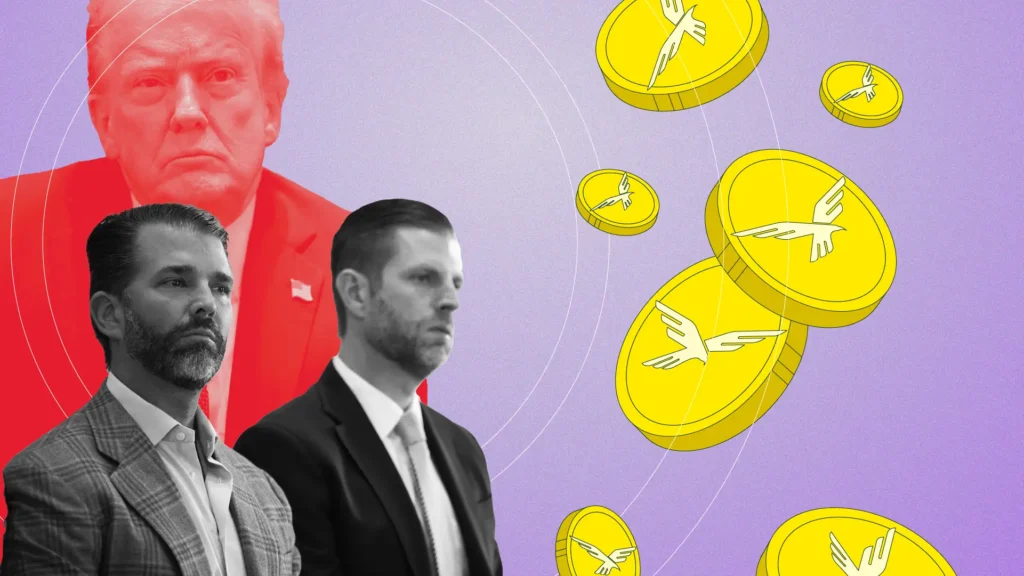
House Democrats are sharpening their focus on President Donald Trump’s deepening ties to the crypto industry, releasing a sweeping new report that argues the administration’s pro-crypto posture has doubled as a “crypto cash machine” for the Trumps.
The 56-page document, assembled by the Judiciary Committee’s Democratic staff, doesn’t introduce an entirely new storyline so much as it pulls together months of scattered developments into a single, sweeping narrative.
The report, assembled under the leadership of Ranking Member Jamie Raskin, argues that Trump and his family have effectively turned the crypto boom of 2025, however brief it may have been, into a personal profit engine.
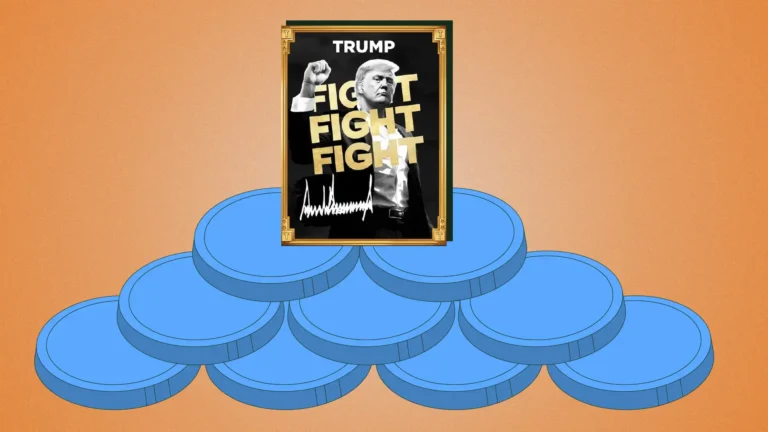
According to the committee, the family’s constellation of crypto ventures, including World Liberty Financial and the TRUMP token, generated more than $800 million in income during the first half of the year, with total reported holdings reaching as high as $11.6 billion.
A Presidency Entangled With Its Own Crypto Ventures
Much of what appears in the report builds on concerns Democrats have been raising since the earliest months of Trump’s second term, that the Trump family’s private crypto interests and the administration’s public agenda evolved in parallel.
The report highlights three legislative centerpieces:
Each bill, Democrats say, would ease regulatory burdens in ways that directly advance Trump-linked crypto businesses such as World Liberty Financial or the TRUMP token ecosystem.
They argue that White House decision-making “tracked closely” with the financial incentives of these ventures, and that key agencies adopted priorities that benefitted corporate partners tied to the Trump family.
Regulatory Pullback and Dropped Crypto Investigations
A primary focus is the speed at which federal regulators backed away from ongoing crypto enforcement actions.
The report lists seven high-profile companies whose SEC investigations were “halted, narrowed, or quietly terminated” after they made investments in or formed partnerships with Trump-connected ventures:
-
Coinbase
-
Gemini
-
Kraken
-
Ripple
-
Robinhood
-
Yuga Labs
-
Crypto.com
Democrats argue the timing was too aligned to dismiss as a coincidence.
Several of these cases involved allegations such as unregistered securities offerings, anti-money laundering violations, or consumer protection issues.
The report says enforcement softened after leadership changes at the SEC, first under an interim chair and later under Acting Chair Paul Atkins, who reshaped the commission’s enforcement priorities.
Foreign Money, Foreign Access
Another section centers on foreign investments.
Investigators highlight a multi-billion-dollar deal involving Binance and an Abu Dhabi–linked investment group, in which Trump family intermediaries reportedly played a role connecting the parties.
The report presents this as one example among several where:
-
Foreign capital flowed into Trump-affiliated crypto projects.
-
The investors’ home governments had strategic interests in U.S. policy.
-
Access to the administration appeared easier for entities involved.
Although the report does not allege criminal wrongdoing, Democrats describe the overlap as “a profound constitutional and national-security concern.”
Investigators Say Trump Removed Safeguards, Crypto Criminal Cases Disrupted
Democrats say personnel and structural changes inside the administration weakened the federal government’s ability to police digital-asset misconduct.
DOJ’s Crypto Unit Dissolved
One of the clearest examples, they argue, was the dissolution of the National Cryptocurrency Enforcement Team (NCET), a DOJ unit created under the Biden administration to coordinate prosecutions of crypto fraud and sanctions-evasion cases.
Closing NCET, the report claims, left multiple investigations stranded “mid-stream,” including several involving international exchanges and offshore brokers.
Pardons and Sanctions Relief
The report also highlights the use of presidential clemency.
Among the examples cited:
-
Ross Ulbricht, the founder of Silk Road, was released from jail in January as part of Trump’s campaign promises.
-
Changpeng Zhao (CZ), the founder of Binance, recently received a pardon after serving four months in jail and paying a fine of billions.
Democrats argue these decisions aligned “suspiciously well” with the financial interests of Trump-linked crypto ventures whose backers included individuals or entities connected to those pardoned.
The Bigger Picture: A System That Made It All Possible
The report concludes that Trump’s ability to accumulate billions through family-run crypto ventures “in less than a year” reflects vulnerabilities in U.S. ethics, campaign-finance, and financial-integrity laws.
Democrats recommend new legislation to tighten:
-
Anti-corruption mechanisms.
-
Conflict-of-interest rules for the executive branch.
-
Disclosure requirements for presidents and their families.
-
Protections against foreign financial influence.
-
Federal oversight of digital-asset markets.
Whether any such reforms advance is uncertain in the current Congress.
What Comes Next
Republicans are expected to dismiss the report as partisan framing, and Democrats are well aware that the political math in Congress is not in their favor.
Still, the document is positioned as a long-term play, a narrative framework that the committee can continue to build on as the administration’s deregulatory approach shapes the crypto industry and as Trump-connected ventures continue to expand.
For now, the report establishes the most comprehensive public record to date of how Democrats believe Trump’s crypto agenda has blurred the line between public policy and private profit.
The White House has not yet issued a response.
A Complicated Picture: Access, Influence, and a Booming Industry
There is, at a minimum, a factual basis for part of what Democrats are arguing.
Trump has hosted private dinners and photo-op events at the White House for high-value crypto supporters, including large holders of the TRUMP token and NFT collectors.
One attendee was Justin Sun, the controversial founder of TRON, who posted several photos from inside the White House earlier this year, a moment that drew criticism from ethics groups and political rivals.
But how much these gatherings actually reflect influence is harder to measure.
After all, this is the same President who has floated ideas ranging from hosting a UFC fight on the South Lawn.
Separating theater, personal branding, and actual policymaking has become part of the broader challenge.
Even so, it is undeniable that Trump’s crypto-friendly posture has coincided with one of the most significant expansions of the U.S. digital-asset sector to date.
Dollar-backed stablecoins have experienced a surge in adoption, and banks and crypto companies are finally collaborating under clearer regulations. The U.S. has rapidly emerged as the global center of cryptocurrency.
Supporters argue this is the outcome voters and donors wanted when they backed a pro-crypto White House: Regulatory certainty, industry expansion, and a strategic push to make the United States the dominant global hub for digital assets.
Critics counter that the same policies have enriched the President’s family, and that the overlap is too substantial to ignore.

Insha Zia is the News Editor at CCN. Based in Dubai, United Arab Emirates, he ensures the CCN newsroom provides value to readers by educating, informing, and engaging them with accurate and timely coverage.
Before joining CCN, Insha was a Senior Journalist at DailyCoin, where his career in crypto journalism took off. At DailyCoin he garnered ample experience by covering some of the biggest news in the crypto industry, especially in the Cardano ecosystem, and maintain solid relations with KOLs in the industry.
Insha has worked as a ghostwriter and a developer for three years. He has co-authored numerous articles in reputable publications, including Hackernoon, Yahoo Finance, and Nasdaq. He also has experience as a Solidity Developer and a Data Analyst.
Insha’s developer and journalist backgrounds go hand in hand when educating readers on technically complex concepts within the crypto space. He values accuracy, transparency, and delivering valuable insights to his readers.
Insha firmly believes education can propel the mass adoption of the crypto space. He is committed to giving CCN readers a greater understanding of the technology using his technical background.
Insha earned a Bachelor of Science in Computer Systems Engineering at the University of Engineering and Technology, Peshawar, in 2022. His technical foundation includes expertise in quantitative and qualitative research, data analysis, programming languages, and cybersecurity.
His comprehensive skill set enables him to communicate complex concepts to crypto readers with authority and clarity, making his articles both informative and engaging for his audience.
Insha is determined to take CCN to the top of the industry. When he’s not working on his next article or editing, Insha enjoys playing video games, mainly in FPS and MMORPG genres. He also loves playing soccer and has supported Arsenal since he was six.