Developers moved quickly to contain a major NPM supply chain hack, preventing billions in potential crypto losses. | Credit: Getty Images.
Share
Key Takeaways
A major supply chain attack on the NPM repository briefly threatened crypto users worldwide.
Malicious code was pushed into widely used JavaScript packages with billions of downloads.
Developers moved quickly, limiting losses to less than $100 before patches were deployed.
The crypto industry narrowly avoided what could have been one of its most damaging supply chain attacks after a hacker compromised the Node Package Manager (NPM) repository, injecting malicious code into popular JavaScript libraries used across countless web applications.
The attack, which surfaced on Sept. 8, specifically targeted crypto users by swapping wallet addresses inside decentralized applications and web-based wallets.
While the scale of exposure was enormous — billions of downloads across critical JavaScript packages — swift detection and intervention kept actual losses to a fraction of what was feared.
Try Our Recommended Crypto Exchanges
Sponsored
Disclosure
We sometimes use affiliate links in our content, when clicking on those we might receive a commission at no extra cost to you. By using this website you agree to our terms and conditions and privacy policy.
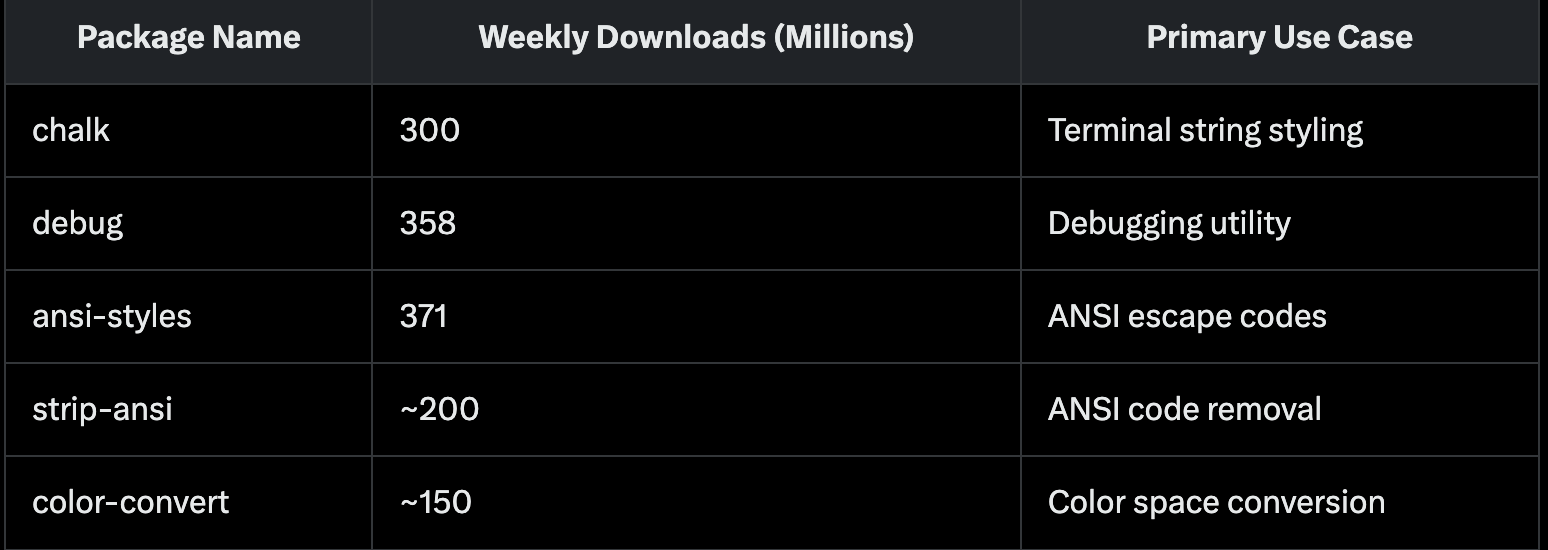
The attacker pushed malicious updates to 18 widely used libraries, including chalk, debug, strip-ansi, and color-convert — packages that underpin much of the modern web.
Security researchers later confirmed the injected malware acted as a crypto drainer or “clipper,” silently altering wallet addresses in transactions.
Security firms flagged anomalies within hours, prompting NPM to disable the compromised versions and roll back the malicious updates.
Maintainers quickly issued clean releases, and developers were urged to patch their applications.
Ledger CTO Charles Guillemet called the incident one of the most serious threats ever to crypto users, urging temporary caution with on-chain transactions.
Yet, by the time the dust settled, the attacker had managed to steal less than $100 in crypto — a staggering contrast to the billions in potential exposure.
With JavaScript libraries forming the backbone of nearly every crypto application, the attack underscored just how vulnerable the ecosystem remains to supply chain compromises.
While developers averted disaster this time, the incident has renewed calls for more rigorous package security and dependency monitoring.
Prashant Jha is a seasoned crypto journalist based in Delhi, India, with a Bachelor’s Degree in Computer Science Engineering. Passionate about the evolving world of blockchain and cryptocurrencies, he has been a dedicated voice in the industry since 2018. Prashant’s expertise lies in regulatory reporting, where he unravels complex legal and financial developments with clarity and precision. Before joining CCN in 2024, he honed his craft at Cointelegraph, establishing himself as a trusted name in crypto journalism.
His coverage spans major industry events, including the high-profile collapses of FTX, Three Arrows Capital (3AC), and LUNA, offering readers insightful analyses of their regulatory and market implications. Prashant’s technical background enables him to bridge the gap between intricate blockchain technology and its real-world applications, making his work accessible to novices and experts.
Beyond his professional pursuits, Prashant is an avid music enthusiast, often exploring diverse genres to unwind. A sports lover, he has a particular passion for cricket and frequently engages in discussions about the game. His multifaceted interests and sharp journalistic instincts make him a valuable contributor to CCN, where he continues shaping the crypto landscape's narrative.












 Ministry of Defence To Invest £200M in UK Chip Foundry as Trade War Sparks Supply Chain Concerns