Key Takeaways
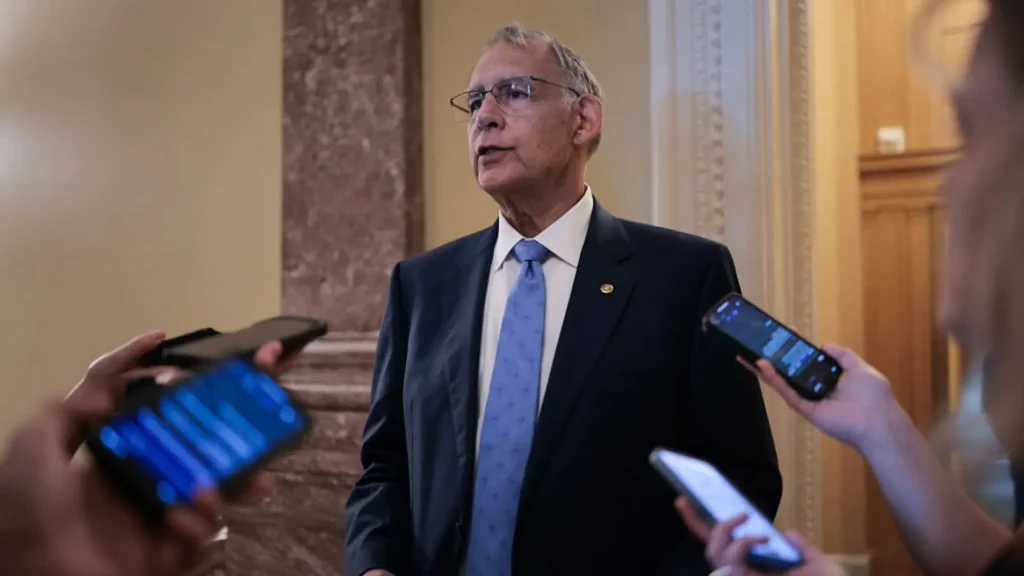
- Senators John Boozman and Cory Booker have proposed a new market structure bill.
- Their proposal is laser-focused on CFTC oversight of the crypto sector.
- By sidestepping more contested issues, the latest draft aims for bipartisan support.
With the U.S. Senate’s previous effort to pass crypto market structure legislation bogged down by partisan squabbles over decentralized finance (DeFi), a draft bill proposed on Monday, Nov. 10, could provide a path forward.
Cosponsored by John Boozman (R-Ark) and Cory Booker (D-NJ), the new bill sidesteps some of the thornier issues to get straight to the point.
As implied by its no-nonsense title, the bill aims to “provide for a system of regulation of the offer and sale of digital commodities by the Commodity Futures Trading Commission” (CFTC).
Nothing more, nothing less.
CFTC or SEC?
The question of who gets to regulate crypto in the United States has been debated in policy circles for years.
The CFTC officially planted its flag in 2015.
Upon settling a lawsuit with Derivabit, the owner of the Bitcoin options trading platform Coinflip, the regulator declared that “Bitcoin and other virtual currencies are properly defined as commodities.”
Two years later, the Securities and Exchange Commission (SEC) made its own claim to the territory.
In a report addressing the DAO token offering, the regulator concluded that crypto activity may fall under federal securities law.
While the SEC ultimately chose not to pursue legal action against The DAO, the 2017 report laid the foundations for subsequent lawsuits that would apply the Howey Test to token sales.
The Gensler Years
In the years following 2017, the SEC’s courtroom victories over Telegram and Kik helped tip the scales in its favor.
By the time Gary Gensler was sworn in as the agency’s chair in 2021, the stage was set for an industry-wide crackdown based on the notion that most cryptocurrencies were securities.
Throughout this period, however, the CFTC never truly abdicated its claim to jurisdiction over the crypto industry.
As Gensler alienated huge swathes of the crypto sector with his Howey Test-inspired enforcement streak, the CFTC’s chair at the time, Rostin Behnam, offered muted but important pushback.
While Gensler insisted that all cryptocurrencies except Bitcoin should be treated as securities, in testimony delivered to Congress, Behnam sought to claw back at least Ether and stablecoins for the commodities regulator.
During this time, Congress started considering legislative options to settle the matter in law.
Including the latest proposal, fourteen separate bills and discussion drafts seeking to draw a line between the SEC and the CFTC have been introduced since 2020.
A Consensus Emerges
With lawmakers from both parties in the House and the Senate seemingly committed to the issue, bipartisan agreement has formed around what could be called the Ripple Consensus.
In the case of SEC vs. Ripple Labs, Judge Analisa Torres ruled that XRP is not a security in and of itself.
However, she determined that Ripple’s initial sales to institutions amounted to an unregistered securities offering.
After Donald Trump entered the White House and made crypto regulation a top priority, lawmakers stepped up their efforts to formalize the Ripple Doctrine.
Market Structure Legislation
Since the House passed the CLARITY Act in July, the onus for finalizing market structure legislation has fallen on the Senate.
After years of uncertainty, Congress was finally making progress.
As recently as September, the industry held hopes that a bill could be passed before the end of the year.
But then, Democrats in the Senate Banking Committee threw a spanner in the works.
Under a proposal to regulate DeFi that was leaked in October, decentralized platforms like Uniswap would fall within the regulatory perimeter, requiring registration as a broker with the SEC or CFTC.
The idea was universally condemned by industry leaders, who argued that it would criminalize DeFi platforms and push their operators offshore.
Republicans rejected the proposal point-blank, and the Senate Banking Committee has been at a stalemate ever since.
Against this backdrop, Boozman and Booker’s bill offers a much leaner vision of crypto legislation.
It defines digital commodities, it carves out exclusions for stablecoins and tokenized securities, and that’s pretty much it.
Can Market Structure Bill Succeed Where So Many Have Failed?
To reach the Senate floor for a full vote, any market structure bill must make it through both the Agriculture Committee, of which Senator Boozman is a member, and the Banking Committee chair.
Whether Boozman and Booker’s stripped-back proposal will fare any better than previous efforts remains to be seen.
Banking Committee Chair Tim Scott said that he welcomed the draft on Monday. But the partisan standoff within his chamber may still derail the bill.
Once again, Banking Committee Democrats, led by notorious crypto hawk Elizabeth Warren, could present the biggest hurdle.
However, if they determine that resolving the jurisdiction issue once and for all is worth putting more contested debates on hold, there may still be hope for American crypto regulation.

James Morales is CCN’s blockchain and crypto policy reporter. He has been working in the news media since 2020, writing about topics such as payments, banking and financial technology. These days, he likes to explore the latest blockchain innovations and the evolving landscape of global crypto regulation.
With an educational background in social anthropology and media studies, James uses his platform as a journalist to explore how new technologies work, why they matter and how they might shape our future.