Key Takeaways
- Elizabeth Warren has warned that the CLARITY Act could “take a baseball bat” to the New York Stock Exchange (NYSE).
- Hitting back at her comments, Binance founder Changpeng Zhao (CZ) argued the NYSE shouldn’t be given special treatment.
- The U.S. economy is much bigger than the NYSE, he argued.
In a recent tirade against landmark crypto bills currently making their way through Congress, Senator Elizabeth Warren warned against large corporations taking advantage of the regulatory shift to avoid oversight and disintermediate the New York Stock Exchange (NYSE).
Hitting back at that notion, Binance founder Changpeng Zhao (CZ) defended firms’ push into blockchain and stressed that the NYSE is not synonymous with the U.S. economy.
Top Trending Crypto Articles
Crypto Threatens To “Blow up Our Entire Economy”
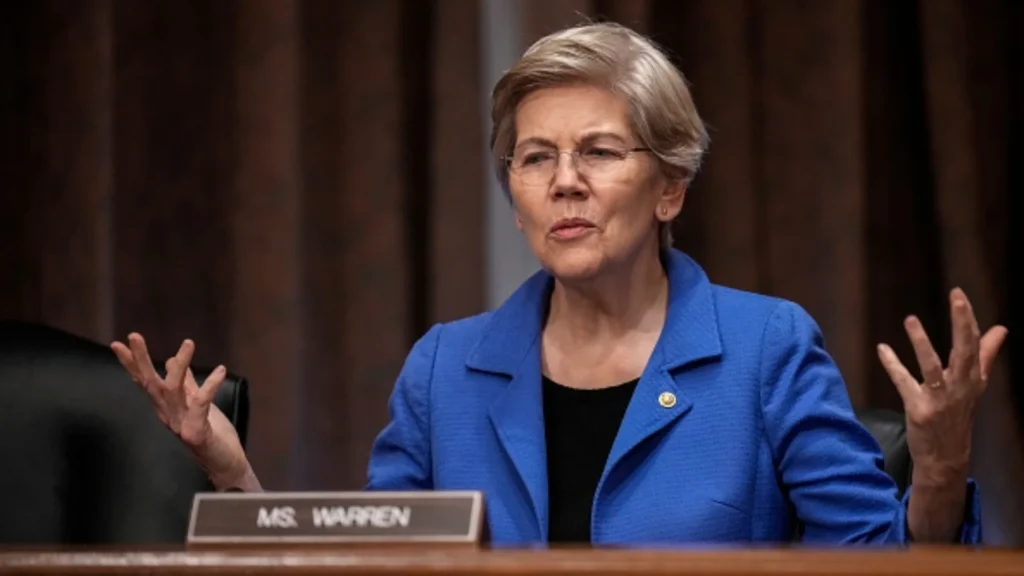
Speaking to Bloomberg TV on Wednesday, July 16, Warren said that the CLARITY Act and GENIUS Act don’t include sufficient “guardrails to ensure that crypto doesn’t blow up our entire economy.”
Criticizing the CLARITY Act, she said that if passed, the bill “would let any company listed on the NYSE opt out from SEC regulation by just digitizing themselves.”
“Put themselves on the blockchain, and all of a sudden, it turns out that Amazon or Meta or General Motors is no longer governed by the SEC,” she stated.
Under the proposed framework, “any company that doesn’t want to have its books audited and make sure that it’s following certain consumer protections and so on can just go somewhere else and be traded on the blockchain,” Warren claimed.
Tokenized Stocks and the Clarity Act
While the growth of tokenized stocks could certainly reduce the NYSE’s central role in the U.S. economy, Warren’s claim that the CLARITY Act would let companies evade SEC oversight doesn’t necessarily hold water.
The bill is quite clear. If a token represents ownership in a company, it is treated as a security, regardless of whether it is issued on a blockchain
Although her language is bombastic, Warren’s concerns stem from a far more nuanced debate.
Corporate token offerings could potentially allow firms to raise capital outside of SEC-approved channels.
However, supporters of the CLARITY Act dismiss these concerns as unfounded.
For example, in a post on X, CZ argued that Warren “wants to limit U.S. companies” by restricting blockchain innovation.
He said he is “not against NYSE,” but insisted its owner, Intercontinental Exchange, shouldn’t be prioritized over the wider U.S. economy. “NYSE ≠ economy,” he stressed.
Could Tokenized Stocks Bypass the New York Stock Exchange?
Despite Warren’s alarmist rhetoric, it is unlikely that companies will use emerging digital asset regulations to offer tokens that resemble traditional equities with voting and dividend rights.
What does seem like a possibility, however, is that third-party exchanges will increasingly list stock tokens tied to a company’s value, which could siphon trading volume away from the NYSE.
Outside of the U.S., this is already happening. For example, Robinhood, Bitget, and Kraken have all introduced tokenized stock trading in non-U.S. markets.
These new offerings grant investors access to NYSE-listed stocks, backed by real equity held in special-purpose vehicles.
In this emerging ecosystem, the NYSE still functions as the central issuer of new stocks, but its role as a trading venue could be severely diminished.
Top Trending Crypto Articles

James Morales is CCN’s blockchain and crypto policy reporter. He has been working in the news media since 2020, writing about topics such as payments, banking and financial technology. These days, he likes to explore the latest blockchain innovations and the evolving landscape of global crypto regulation.
With an educational background in social anthropology and media studies, James uses his platform as a journalist to explore how new technologies work, why they matter and how they might shape our future.