Key Takeaways
- Willy Woo says a supercycle could be approaching.
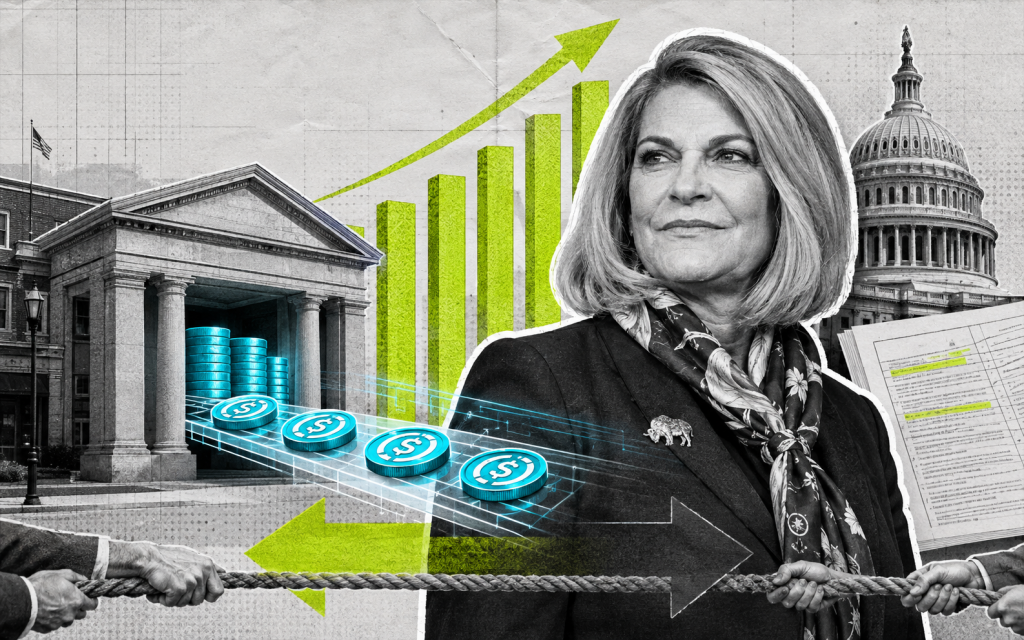
- Sen. Cynthia Lummis has warned that failure on Sept. 15 could leave Congress without another realistic opportunity to pass CLARITY until 2030.
- Grok’s historical growth extrapolation puts Bitcoin at approximately $559,000 in 2030.
Bitcoin’s long-awaited “supercycle” theory is returning to the spotlight after on-chain analyst Willy Woo said structural indicators were beginning to suggest the market was showing signs.
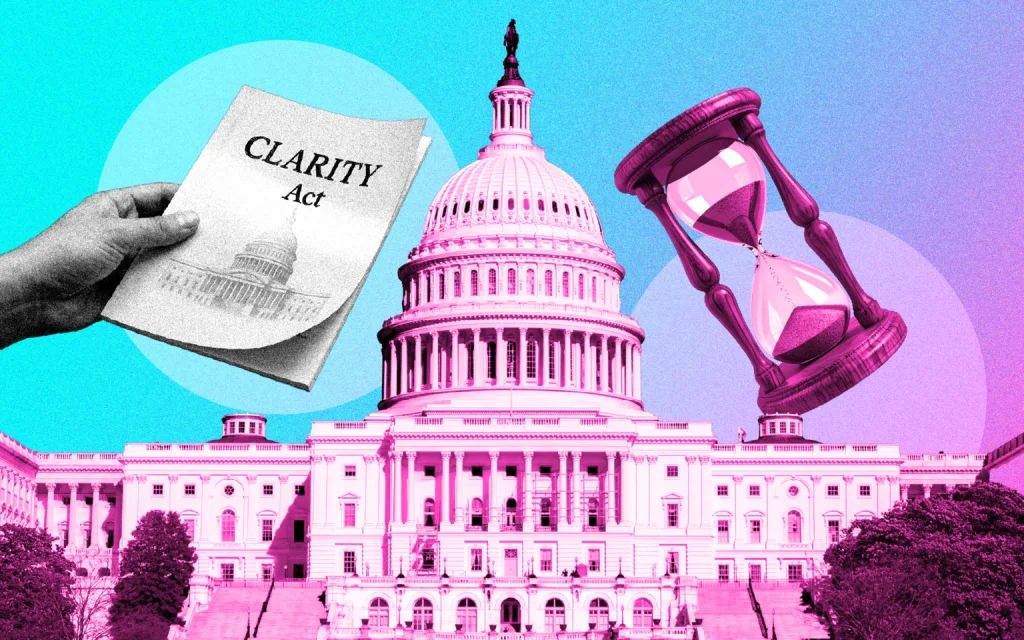
The bullish assessment comes as Washington counts down to a crucial vote in just a week to pass the CLARITY Act, which Grok believes could be a catalyst for Bitcoin to reach approximately $559,000 by 2030.
Sen. Cynthia Lummis has warned that the Sept. 15 procedural vote on the CLARITY Act may represent Congress’s final realistic opportunity to pass the act before the end of the decade.
Willy Woo Sees First Signs of a Bitcoin Supercycle
Woo said Bitcoin was beginning to produce evidence for a theory that has repeatedly failed to materialize in previous cycles.
“For the first time I’m seeing structural data hinting it may be developing,” Woo wrote on X.
A Bitcoin supercycle would involve a prolonged upward trend with shallower corrections, replacing the four-year pattern of post-halving rallies.
Woo’s argument rests on three indicators tracking liquidity, investor risk, and cost bases.
His Bitcoin liquidity-cycle model has reached what he described as an unusually shallow trough.
A conventional cycle bottom would normally involve a substantially deeper fall, while the current formation resembles a temporary dip.
Meanwhile, Woo’s risk model also reportedly produced a greater than 90% probability that Bitcoin has formed a genuine structural bottom.
The third signal concerns investor cost bases.
Bitcoin’s major bottoms in 2012, 2015, 2019, and 2022 arrived after the average cost basis of recent buyers fell below that of the wider market.
That crossover did not occur during the latest bottom, Woo said.
Bitcoin Breaks Away From Stocks
Woo has separately pointed to Bitcoin’s divergence from equities as another potentially bullish structural change.
“The last time BTC decoupled from stocks to this degree was 2015,” he wrote.
Bitcoin suffered an uncorrelated bear market in 2014 while stocks remained bullish.
During 2015 and 2016, the relationship reversed: equities struggled while Bitcoin began the rally that eventually accelerated to a bull run in 2017.
Woo believes the current setup may be developing along similar lines.
However, the decoupling claim has been disputed.
CryptoQuant contributor Darkfost published a different correlation chart that continued to show a positive relationship between Bitcoin and the S&P 500.
“I don’t know how it’s computed, but I don’t see this right now,” Darkfrost wrote.
Adding: “I think you used a high TF average, but even this way it’s hard to imagine, because there hasn’t been a strong decoupling period in a while.”
Lummis Issues Sept. 15 CLARITY Act Warning
Woo’s bullish assessment arrives six days before the Senate’s crucial major test of the CLARITY Act.
In a Newsmax opinion piece, Lummis argued that the vote was a last chance to pass before a major delay until the end of the decade.
“If we fail on Sept. 15, we will not get another realistic shot at this before the end of the decade,” she wrote.
The Wyoming Republican said lawmakers had added more than 100 provisions requested by Democratic colleagues during months of negotiations.
The Senate’s Sept. 15 vote is not a final vote on the CLARITY Act, however.
The motion needs 60 votes to advance the legislation to debate and possible amendments.
Even if cloture succeeds, the Senate would still need to approve the legislation and resolve any differences with the House before it could reach President Donald Trump’s desk.
Negotiations have continued over stablecoin rewards, protections for non-custodial developers and restrictions involving government officials’ crypto interests.
Lummis argued that failing to act would allow Europe and Asia to capture investment, companies, and jobs that could otherwise remain in the US.
Could Bitcoin Reach $559,000 by 2030?
A separate Bitcoin forecast circulating on X offers a dramatic price destination following the CLARITY Act catalyst.
Using Bitcoin’s reported US Labor Day prices between 2013 and 2026, Grok calculated a compound annual growth rate of approximately 63%.
Extending that rate produced the following projections:
| Year |
Projected Bitcoin Price |
| 2027 |
$129,000 |
| 2028 |
$210,000 |
| 2029 |
$343,000 |
| 2030 |
$559,000 |
The calculation begins with Bitcoin at $137 on Labor Day 2013 and ends with the crypto at $79,029 in 2026.
That represents an increase of roughly 577 times over 13 years.
Reaching $559,000 in 2030 would require Bitcoin to climb more than sevenfold from its 2026 Labor Day level.
Grok identified the CLARITY Act as a key catalyst for Bitcoin, though it argued that Bitcoin would benefit less directly than XRP or Ethereum because of its already-established rules.
Other commentators have attached greater importance to the legislation.
Kevin O’Leary recently claimed Bitcoin could “go nowhere” if the bill fails, arguing that regulatory clarity is necessary to unlock another wave of institutional capital.
The information provided in this article is for informational purposes only. It is not intended to be, nor should it be construed as, financial advice. We do not make any warranties regarding the completeness, reliability, or accuracy of this information. All investments involve risk, and past performance does not guarantee future results. We recommend consulting a financial advisor before making any investment decisions.

Kurt Robson is a London-based reporter at CCN, specialising in the fast-moving worlds of crypto and emerging technology. He began his career covering local news in Cornwall after graduating from Falmouth University with First Class Honours in Journalism. There, he cut his teeth on everything from council meetings to missing swans.
He quickly rose through the ranks to become a frontline journalist at several of the UK’s leading national newspapers. Over the years, he has interviewed musicians and celebrities, reported from courtrooms and crime scenes, and secured multiple front-page exclusives.
Following the upheaval of the COVID-19 pandemic, Kurt shifted his focus to technology journalism—just ahead of the AI boom. With a natural curiosity and a trained eye for emerging trends, he has found a new rhythm in reporting on innovation.
At CCN, Kurt's work focuses on the cutting edge of crypto, blockchain, AI, and the evolving digital world. Drawing on his background in people-first reporting and his deep interest in disruptive tech, Kurt delivers stories that are insightful, entertaining, and human-centric.