Key Takeaways
- Sen. Cynthia Lummis says the CLARITY Act would require qualified digital asset custodians and segregation of customer assets, arguing the rules could prevent another exchange collapse from wiping out users.
- The latest Senate text goes beyond simply defining whether crypto falls under the SEC or CFTC, adding bankruptcy protections and restrictions on how registered intermediaries can use customers’ property.
- The Senate faces its first major procedural test on Sept. 15 at 2:15 p.m. ET, when the CLARITY Act will need 60 votes to advance.
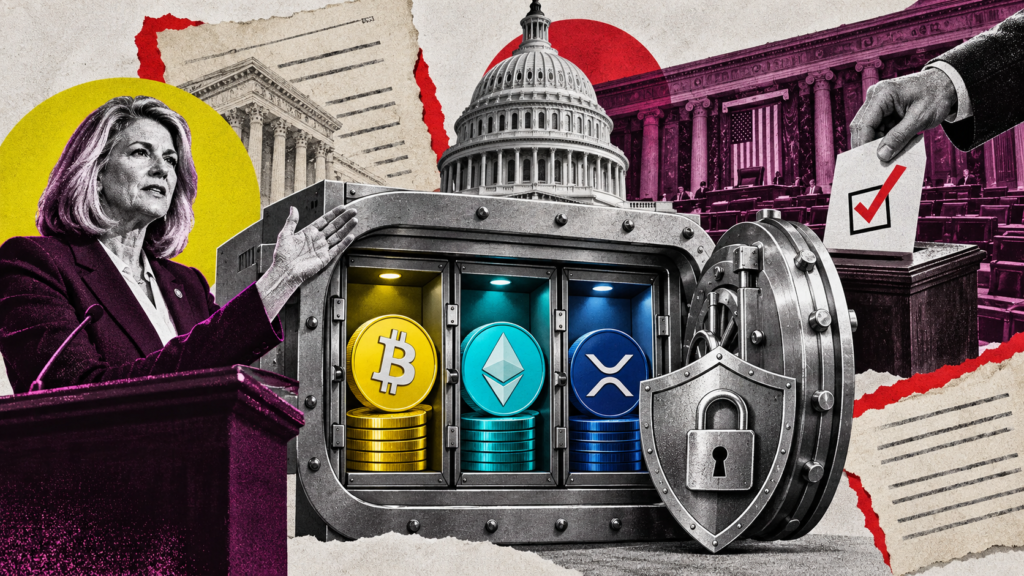
Sen. Cynthia Lummis is putting customer custody at the center of the final push for the CLARITY Act, arguing that the crypto market structure bill could prevent another exchange failure from turning customer deposits into bankruptcy claims.
“Exchanges have collapsed with no custody rules and no consequences when they fail people,” Lummis wrote on Sept. 5. “The Clarity Act requires qualified custodians and segregated customer funds so the next collapse doesn’t wipe out the people who trusted the platform.”
Her warning comes just days before the Senate returns to Washington for what could be the legislation’s most important vote yet.
The Senate Press Gallery says the cloture motion on H.R. 3633 will ripen at 2:15 p.m. ET on Sept. 15. That is a procedural vote on whether to move forward with consideration of the bill, rather than final passage, and requires 60 senators to advance.
What Would CLARITY Actually Change for Customer Crypto?
Lummis’ statement oversimplifies a regulatory system that already includes custody requirements for certain regulated financial firms. Crypto exchanges have not literally operated under “no custody rules.”
The bigger problem has been an uneven framework that depends on which assets a platform handles, how the business is registered, and which regulator has jurisdiction.
The Senate’s latest CLARITY text attempts to create explicit federal rules for the new class of registered digital commodity intermediaries.
It creates a category of “qualified digital asset custodian,” subject to supervision and examination, capital requirements, recordkeeping standards, and rules intended to protect customer assets.
Crypto Will Be ‘Customer Property’ in Bankruptcy
The bill also says customer money, crypto, and other property held by a digital commodity exchange should be treated as customer property in bankruptcy.
It would prohibit an exchange from treating assets received in custody as its own property or from using them for anyone other than the customer.
Those provisions are aimed directly at one of the biggest lessons from crypto’s 2022 collapse cycle.
Following FTX’s bankruptcy, Lummis argued that exchanges should maintain customer assets for withdrawal, keep them separate from proprietary trading activities, and use independent custodians.
She has maintained that stronger segregation and bankruptcy protections could have shielded customers from similar losses.
BlockFi and Genesis later reinforced the same concern: when companies fail, the legal status of what customers believed were “their” crypto can determine whether assets are returned or become part of a long bankruptcy process.
CLARITY Gains Momentum, But Sept. 15 Is Only the Beginning
Lummis’ renewed consumer-protection pitch comes as one political obstacle has eased.
The National Sheriffs’ Association, which had opposed the bill over concerns about illicit finance and protections surrounding DeFi and non-custodial software, changed its position to neutral last week.
The group said it would allow the legislative process to proceed while lawmakers continue negotiating unresolved details.
The Senate Banking Committee had already advanced its version of CLARITY 15-9 in May, and an updated July draft combined work from the Banking and Agriculture committees.
But custody protections alone will not decide the Sept. 15 vote.
Lawmakers are still negotiating politically difficult provisions involving illicit finance, protections for non-custodial developers, stablecoin rewards and ethics restrictions surrounding government officials’ crypto interests.
And even 60 votes next week would only open the next stage.
For Lummis, the argument heading into that vote is becoming less about whether Washington should support crypto innovation and more about whether Congress can create a market in which customers still own their assets if the company holding them fails.
Top Trending Crypto Articles
The information provided in this article is for informational purposes only. It is not intended to be, nor should it be construed as, financial advice. We do not make any warranties regarding the completeness, reliability, or accuracy of this information. All investments involve risk, and past performance does not guarantee future results. We recommend consulting a financial advisor before making any investment decisions.

Giuseppe Ciccomascolo began his career as an investigative journalist in Italy, where he contributed to both local and national newspapers, focusing on various financial sectors.
Upon relocating to London, he worked as an analyst for Fitch's CapitalStructure and later as a Senior Reporter for Alliance News. In 2017, Giuseppe transitioned to covering cryptocurrency-related news, producing documentaries and articles on Bitcoin and other emerging digital currencies. He also played a pivotal role in establishing the academy for a cryptocurrency exchange website. Crypto remained his primary area of interest throughout his tenure as a writer for ThirdFloor.