Meet the Top 101 in Crypto
Bitcoin (BTC)
4 min read

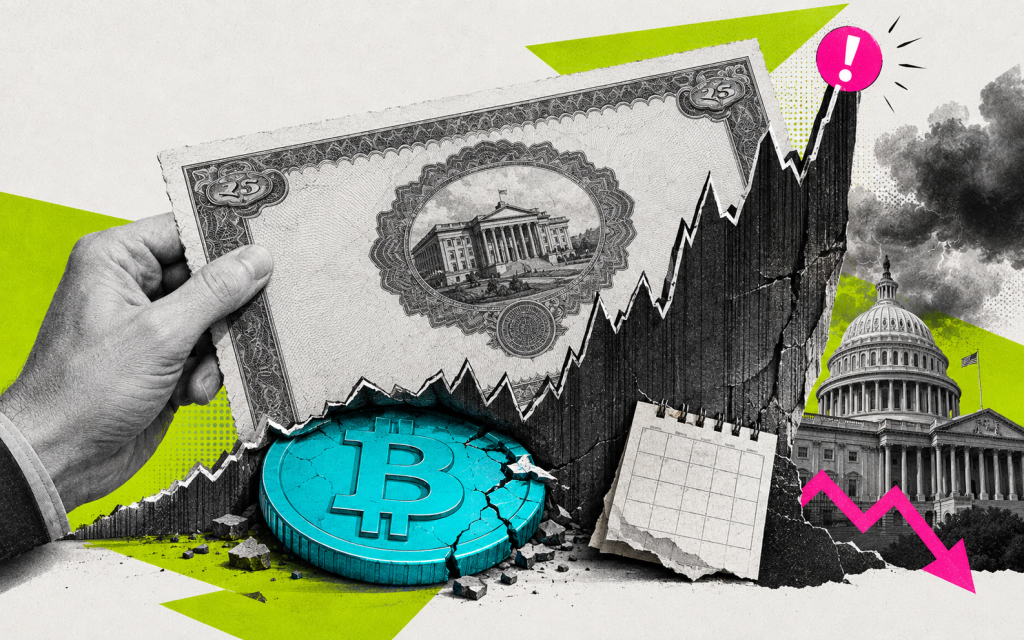
Bitcoin on Alert as 30-Year Treasury Yield Hits Level Last Seen Before 2008 Crash

Published 18 August 2026
Giuseppe Ciccomascolo
Authors

Key Takeaways 

  • The 30-year US Treasury yield climbed to around 5.29%, its highest level since 2007, increasing pressure on Bitcoin and other risk-sensitive assets.
  • Elevated risk-free and inflation-adjusted returns make government bonds more competitive with Bitcoin, which pays no yield and relies entirely on price appreciation.
  • Although similar yields preceded the 2008 crash, today’s pressure stems mainly from inflation and government borrowing.

The yield on the 30-year US Treasury bond climbed to around 5.29% on Tuesday, reaching its highest level since June 2007 and creating another potential obstacle for Bitcoin and other risk-sensitive assets.

The milestone has attracted attention because the previous period of similarly high long-term borrowing costs preceded the US recession and the 57% collapse in the S&P 500 associated with the global financial crisis.

However, the comparison does not mean another 2008-style crash is inevitable.

Today’s yield surge is being driven primarily by persistent inflation concerns, heavy government borrowing and uncertainty about monetary policy rather than the subprime mortgage crisis that destabilized banks nearly two decades ago.

Our Top Crypto Sports Betting Partners:
Sponsored
Disclosure
Opened in 2022
Promotions
Up to 550 USDT Bonus + up to €75 Free Bet + 5% cashback
Coins
Bitcoin Bitcoin Cash Dogecoin Ethereum Litecoin +53
Opened in 2021
Promotions
Up to 1 BTC Welcome Package + 100 Free Spins
Coins
Bitcoin Cash Bitcoin Ethereum Litecoin Tether +7
Opened in 2023
Promotions
200% deposit bonus up to 20,000 USDT + up to 100 FS (promo code: CG100)
Coins
Tether Bitcoin Ethereum USD Coin TRON +7
Show More

Treasury Yields Return to Pre-Bitcoin Levels

The 30-year yield has risen above 5% for its longest sustained period since before the financial crisis. The Federal Reserve’s latest H.15 release showed the 30-year constant-maturity yield at 5.25% on Aug. 14, before the latest intraday increase.

A recent Treasury auction reinforced the shift. The government sold $25 billion of 30-year bonds at a yield of 5.216%, while the sale’s bid-to-cover ratio reached 2.39, according to TreasuryDirect.

Bitcoin has never previously traded through a global bond environment like this. Its whitepaper appeared in October 2008, while the network’s genesis block was mined in January 2009, after long-term yields had already begun collapsing in response to the financial crisis.

The latest move is therefore testing Bitcoin under financial conditions that did not exist during its previous market cycles.

Why Higher Yields Threaten Bitcoin

Rising Treasury yields increase the return investors can earn from assets backed by the US government. That creates a higher hurdle for Bitcoin, which produces no interest or cash flow and depends on price appreciation to generate returns.

The pressure becomes stronger when inflation-adjusted yields rise. The 10-year real Treasury yield stood at 2.41% on Aug. 14, up from significantly lower levels two years earlier. Investors can now earn returns above inflation without accepting Bitcoin’s volatility.

Higher yields also tighten financial conditions across the economy. Mortgage rates, corporate borrowing costs and consumer loans generally respond to movements in longer-term government debt. That can slow economic activity and reduce the liquidity available for speculative assets.

Bitcoin’s recent underperformance against gold suggests investors have so far preferred the traditional safe-haven asset.

While gold has benefited from concerns about deficits and inflation, Bitcoin has struggled to translate the same macroeconomic fears into sustained demand.

The 2007 Parallel Comes With Important Differences

The last time the 30-year Treasury yield approached these levels, the US economy was moving toward recession and the stock market’s steepest decline in generations.

Still, the yield itself did not cause the 2008 crash. The crisis emerged from excessive mortgage lending, complex credit products and highly leveraged financial institutions.

Banks are now better capitalized, while current bond-market pressure is more closely connected to fiscal deficits, inflation and rising debt-servicing costs.

For Bitcoin, the key question is why yields remain elevated. If they reflect strong growth and attractive risk-free returns, Bitcoin could continue losing capital to bonds. If they instead signal growing concern about US debt sustainability, Bitcoin’s fixed supply may eventually strengthen its appeal.

Until that shift occurs, Treasury auctions, inflation data and Federal Reserve policy may matter more to Bitcoin’s direction than crypto-specific catalysts.

Disclaimer: The information provided in this article is for informational purposes only. It is not intended to be, nor should it be construed as, financial advice. We do not make any warranties regarding the completeness, reliability, or accuracy of this information. All investments involve risk, and past performance does not guarantee future results. We recommend consulting a financial advisor before making any investment decisions.
Giuseppe Ciccomascolo

Giuseppe Ciccomascolo began his career as an investigative journalist in Italy, where he contributed to both local and national newspapers, focusing on various financial sectors.

Upon relocating to London, he worked as an analyst for Fitch's CapitalStructure and later as a Senior Reporter for Alliance News. In 2017, Giuseppe transitioned to covering cryptocurrency-related news, producing documentaries and articles on Bitcoin and other emerging digital currencies. He also played a pivotal role in establishing the academy for a cryptocurrency exchange website. Crypto remained his primary area of interest throughout his tenure as a writer for ThirdFloor.

Related

Survey Icon
Help us improve
1 of 4
Is this your first time here?
What brought you here today?
What are you most interested in?
Would you be interested in:
Thank you icon
Thank you for your feedback!
DMCA.com Protection Status