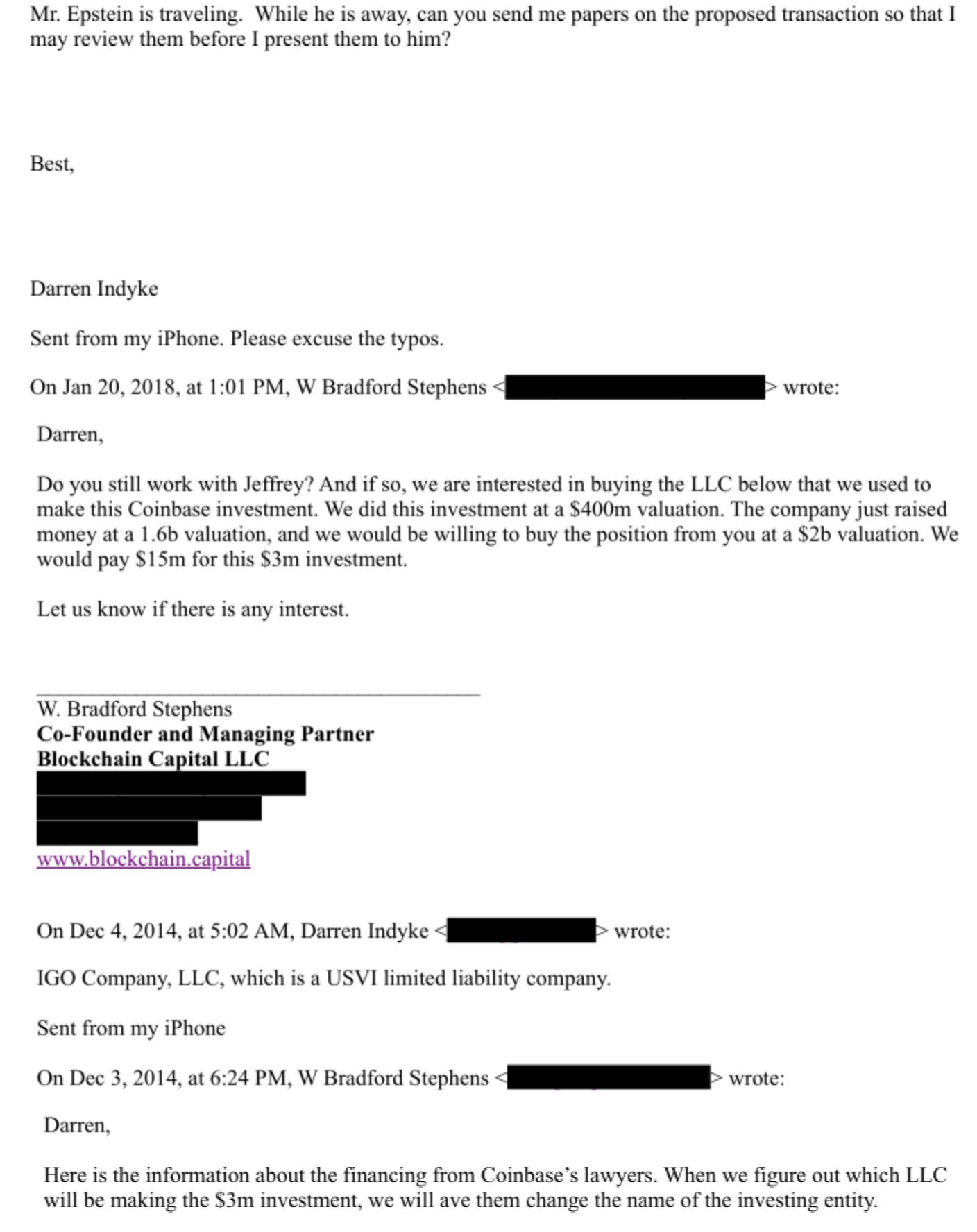
Epstein invested $3 million in Coinbase’s 2014 Series C round via his Virgin Islands entity.
The deal was facilitated by Brock Pierce, with emails showing direct outreach to Epstein’s team.
Coinbase co-founder Fred Ehrsam appeared supportive, despite Epstein’s widely reported legal history.
It’s been a wild ride since the U.S. Department of Justice (DOJ) began releasing the massive Jeffrey Epstein files late in 2025.
We’re talking millions of pages of emails, financial records, and more, all tied to Epstein.
The newest batch, dropped on Feb. 2, 2026, has the crypto world buzzing again.
First, there were eyebrow-raising links to Bitcoin’s early funding. Now, it’s Coinbase’s turn in the spotlight.
Try Our Recommended Crypto Exchanges
Sponsored
Disclosure
We sometimes use affiliate links in our content, when clicking on those we might receive a commission at no extra cost to you. By using this website you agree to our terms and conditions and privacy policy.
At the time, the exchange was valued at roughly $400 million—a steal compared to its current behemoth status.
The deal went through Epstein’s U.S. Virgin Islands-based entity, IGO Company LLC, and involved Brock Pierce co-founder of Tether and Blockchain Capital.
Found a $3,001,000 investment in Coinbase held by IGO LLC, which is an Epstein entity according to previous court documents, listed in an apparent valuation report of Epstein's assets. pic.twitter.com/bFbfQQq9lr
Epstein files mention Coinbase investment. Credit: US Gov.
Emails suggest Ehrsam was aware of the investment.
By 2018, Blockchain Capital offered to buy back half the stake for $11 million, then the full position for $15 million—a tidy 5x return.
Epstein sold part of his stake as Coinbase’s value increased.
Pierce is referenced in earlier reporting related to Epstein. He appears in over 1,800 file references.
Their relationship dates back to 2011, pre-dating Pierce’s crypto ventures.
A 2014 email arranged a face-to-face between Epstein and Ehrsam.
Coinbase has stayed mum so far, but the revelations raise uncomfortable questions.
Details of Epstein’s involvement in the deal are unclear. Interestingly, Epstein’s crypto forays don’t stop there.
The files reference investors associated with Valar Ventures and other ventures, including Peter Thiel,Elon Musk, and Howard Lutnick, without alleging wrongdoing.
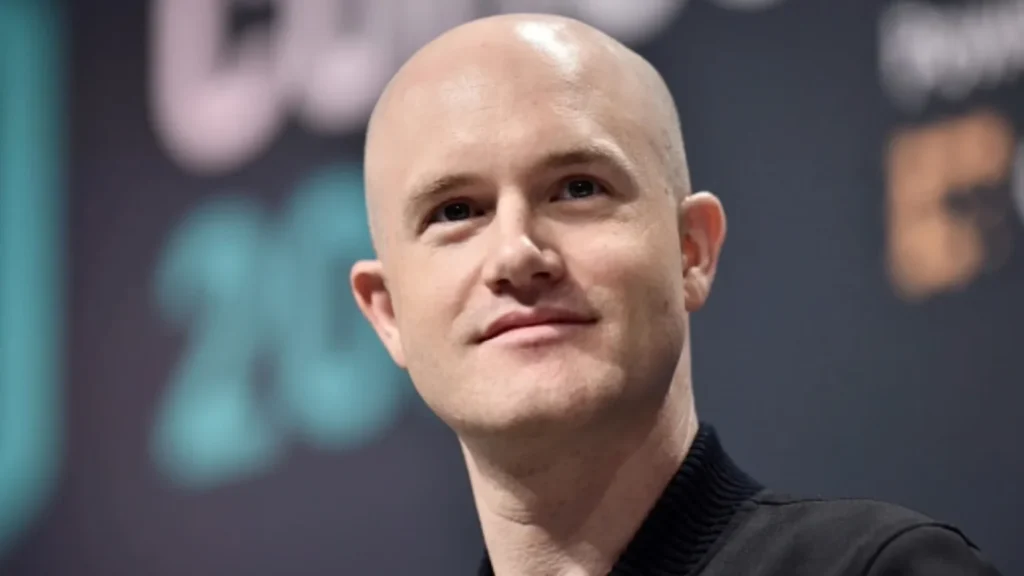
Brian Armstrong, Coinbase’s CEO, appears in 2016 emails amid Bitcoin’s block-size wars—a debate over scaling that split the community.
Armstrong communicated with investors, some of whom appear in documents mentioning Epstein.
Bitcoin Ties: From Crisis Funding to Core Development
Epstein’s involvement in Bitcoin isn’t new gossip; it surfaced in earlier file releases. But the details keep piling up.
Back in 2014, during a rough patch for Bitcoin’s development, Epstein ponied up cash that contributed to funding efforts during a difficult period.
Documents show Epstein invested about $500,000 in Blockstream’s seed round that year, partnering with Joi Ito, then-director of MIT’s Media Lab.
Ito’s involvement is messy; he later resigned amid the Epstein scandals, but the money flowed through a shared entity called Kyara Investments III.
Blockstream, now valued at billions, was developing tools to address Bitcoin’s scalability.
Co-founder Adam Back, a cypherpunk legend, even acknowledged the investment on social media, though he downplayed direct ties.
Then there’s the MIT angle. Epstein donated around $850,000 to the university between 2002 and 2017, with $525,000 earmarked for the Digital Currency Initiative (DCI).
This came at a pivotal moment: the Bitcoin Foundation was on the brink of bankruptcy in 2015, leaving developers like Gavin Andresen and Wladimir van der Laan without support.
DCI stepped in, funding their work on Bitcoin Core—the software backbone of the network.
Emails refer to Epstein as “Voldemort” internally at MIT, a nod to how his name was taboo.
Unverified speculation online has suggested Epstein had influence in Bitcoin development, though no evidence confirms this.
These links aren’t just historical footnotes. They highlight how Bitcoin, born from anti-establishment ideals, got entangled with establishment figures during its vulnerable early days.
Ethics in Crypto’s Origins
The latest set of revelations puts Coinbase, a public company, in the face of investor questions or regulatory heat.
The industry, already battling scams and hacks, doesn’t need more skeletons.
Some commentators have questioned whether early investments from controversial figures raise ethical concerns.
Yet, context matters. Epstein invested widely in tech, science, and finance. Crypto was hot in 2014; many took funds without deep vetting.
As one X post quipped, “Coinbase’s Epstein ties aren’t a 2006 throwback—they’re a 2026 compliance nightmare.”
Epstein’s past connections have resurfaced in renewed scrutiny of crypto’s early history.
From Bitcoin’s funding lifelines to Coinbase’s early boost, these files expose uncomfortable truths.
It’s not about rewriting history but understanding it. As the space matures, the real takeaway might be that demand for cleaner origins is growing.
After all, in a world of transparent ledgers, opacity off-chain is the real risk.
Prashant Jha is a seasoned crypto journalist based in Delhi, India, with a Bachelor’s Degree in Computer Science Engineering. Passionate about the evolving world of blockchain and cryptocurrencies, he has been a dedicated voice in the industry since 2018. Prashant’s expertise lies in regulatory reporting, where he unravels complex legal and financial developments with clarity and precision. Before joining CCN in 2024, he honed his craft at Cointelegraph, establishing himself as a trusted name in crypto journalism.
His coverage spans major industry events, including the high-profile collapses of FTX, Three Arrows Capital (3AC), and LUNA, offering readers insightful analyses of their regulatory and market implications. Prashant’s technical background enables him to bridge the gap between intricate blockchain technology and its real-world applications, making his work accessible to novices and experts.
Beyond his professional pursuits, Prashant is an avid music enthusiast, often exploring diverse genres to unwind. A sports lover, he has a particular passion for cricket and frequently engages in discussions about the game. His multifaceted interests and sharp journalistic instincts make him a valuable contributor to CCN, where he continues shaping the crypto landscape's narrative.