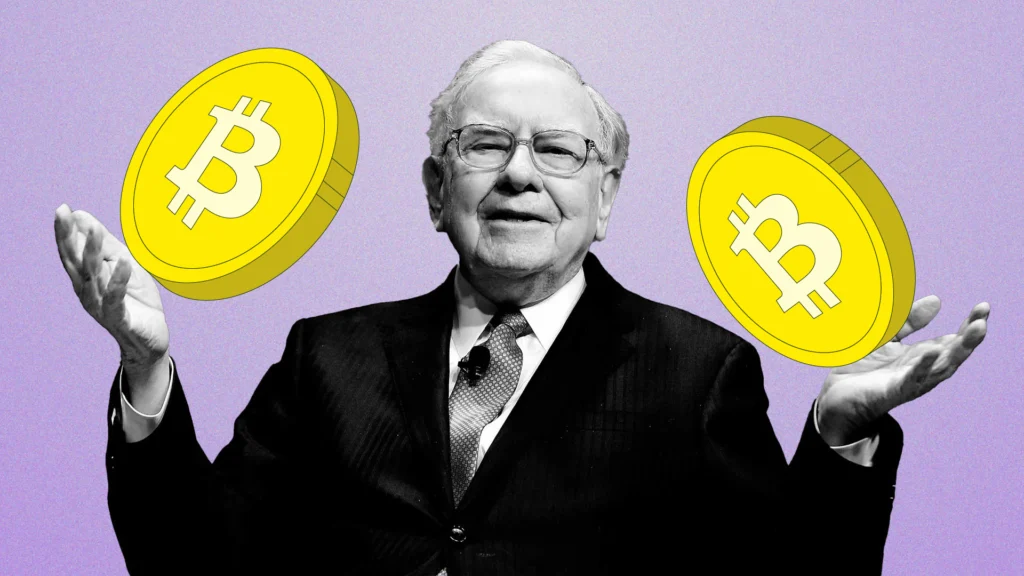
Warren Buffett retires after turning $19 into $750,000 per share. Discover Berkshire’s returns to Bitcoin’s gains, risks, and volatility. | Credit: CCN.com
Share
Key Takeaways
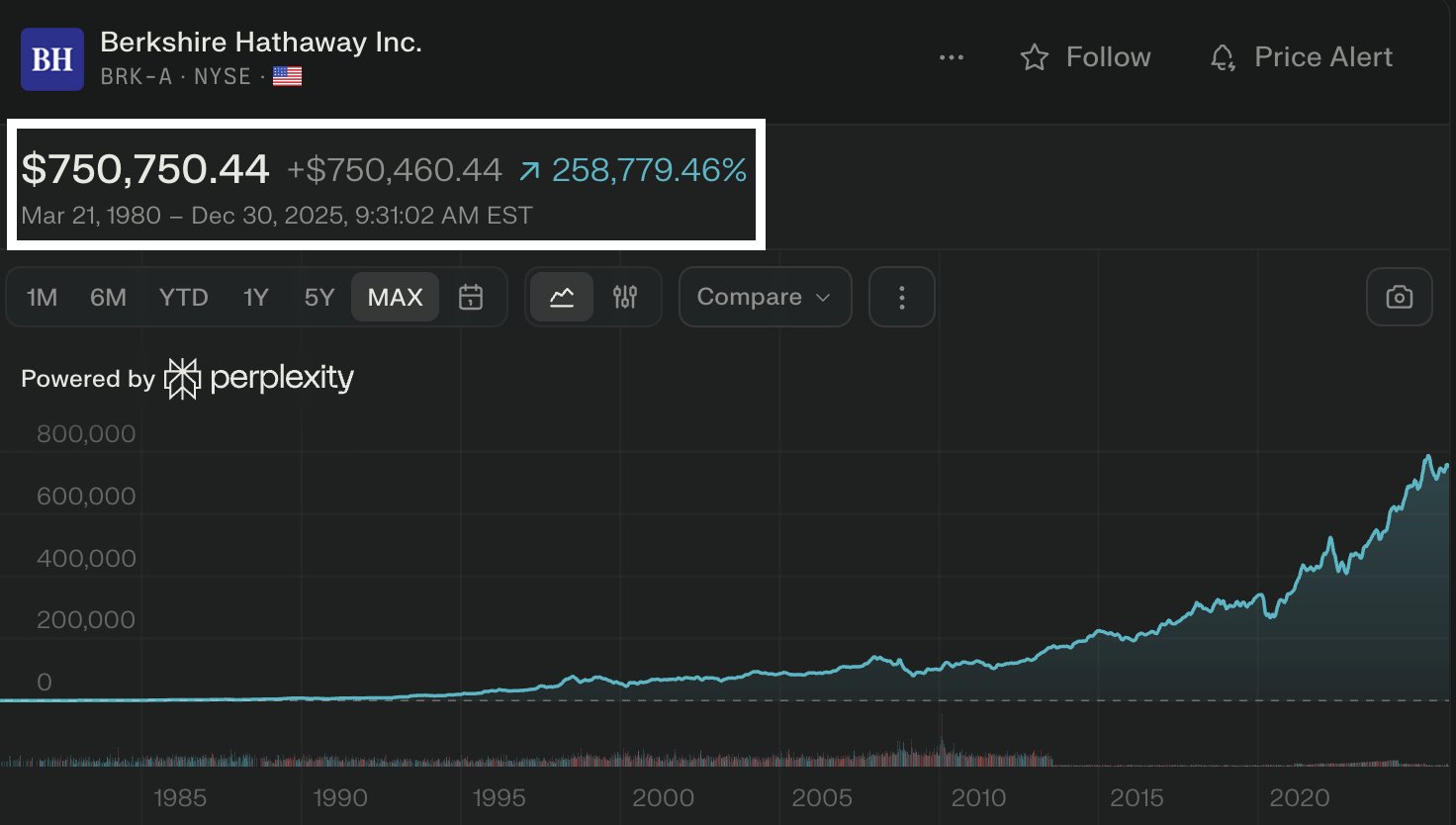
Warren Buffett grew Berkshire Hathaway from $19 per share in 1965 to roughly $750,000 today, delivering a total return of nearly 3,950,000%.
Bitcoin has produced far higher returns over a much shorter time frame, but with dramatically greater volatility, drawdowns, and uncertainty.
Buffett’s rejection of Bitcoin was consistent with his investment philosophy, which prioritizes cash flows, intrinsic value, and predictable business economics.
Comparing Berkshire and Bitcoin requires considering not just returns, but also risk factors such as drawdowns, psychological pressure, and institutional constraints.
When Buffett took control of Berkshire in 1965, the stock traded at roughly $19 per share. Today, Berkshire trades around $750,000 per share, representing a gain of approximately 3,950,000% over nearly six decades. That performance, achieved through discipline, patience, and a relentless focus on fundamentals, has earned Buffett the widely accepted title of the most significant investor of all time.
Buffett did it without leverage, without speculation, and without chasing fads. He bought businesses, held them for decades, and let compounding do the work.
Not as a replacement for Berkshire. Not as a speculative trade. However, it is a long-term asset held alongside or instead of traditional equity investments.
The comparison isn’t about declaring a winner. It’s about understanding how different forms of compounding, risk, and adoption have shaped returns, and what that says about modern investing.
Berkshire Hathaway: Buffet’s Gold Standard of Long-Term Compounding
Berkshire’s performance is legendary precisely because it was achieved in a large, regulated, and competitive market over an unusually long period.
From 1965 to the present, Berkshire has compounded at roughly 19–20% annually, an almost unheard-of feat over six decades. That rate may not sound dramatic compared to speculative booms, but sustained over time, it produced generational wealth.
This is the benchmark against which any alternative investment must be measured.
Bitcoin’s Long-Term Returns Compared to Traditional Investments
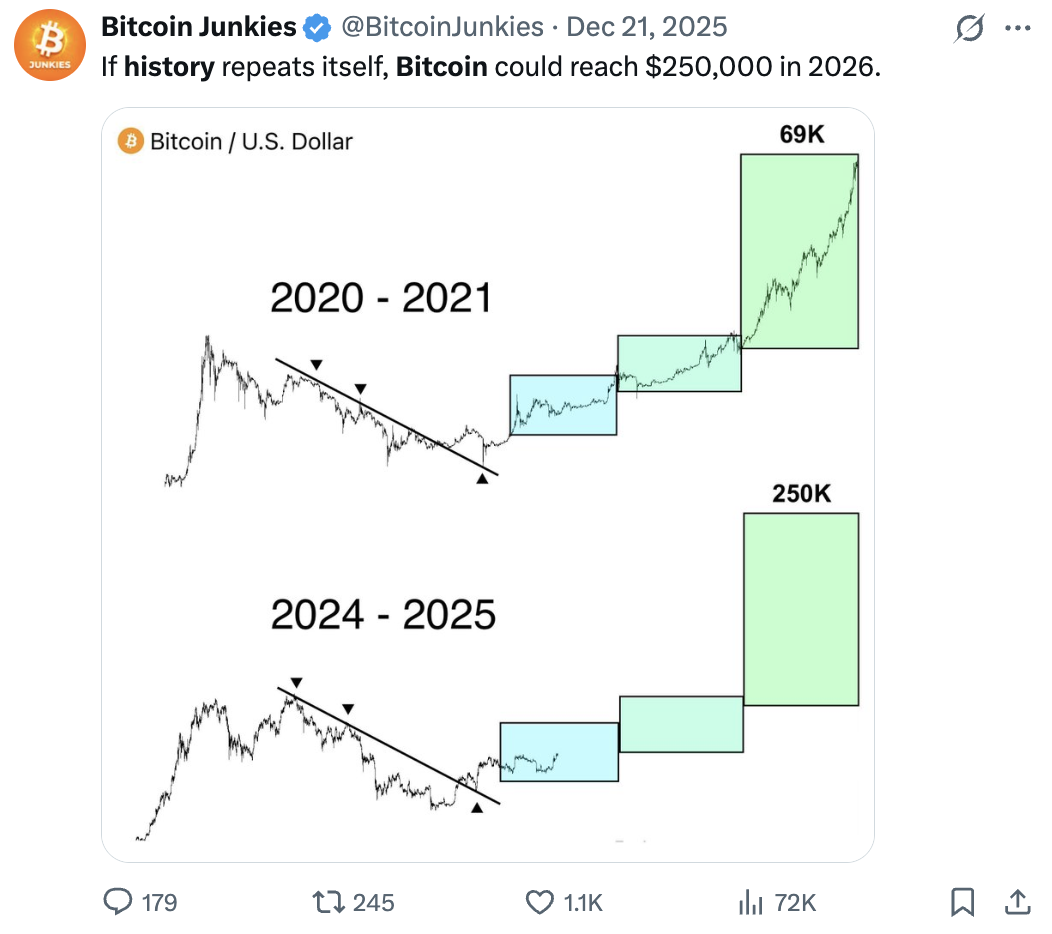
Bitcoin launched in 2009, more than 40 years after Buffett began running Berkshire. Its return profile over a much shorter time horizon has been staggering.
From essentially zero to tens of thousands of dollars per coin, Bitcoin has delivered returns that far exceed traditional equity markets, but with radically different characteristics.
Bitcoin predictions for 2026. | Credit: Bitcoin Junkies X profile
Unlike Berkshire, Bitcoin does not generate cash flow. Its value comes from demand for a scarce digital asset, not ownership of productive enterprises.
This distinction matters, but so do the numbers.
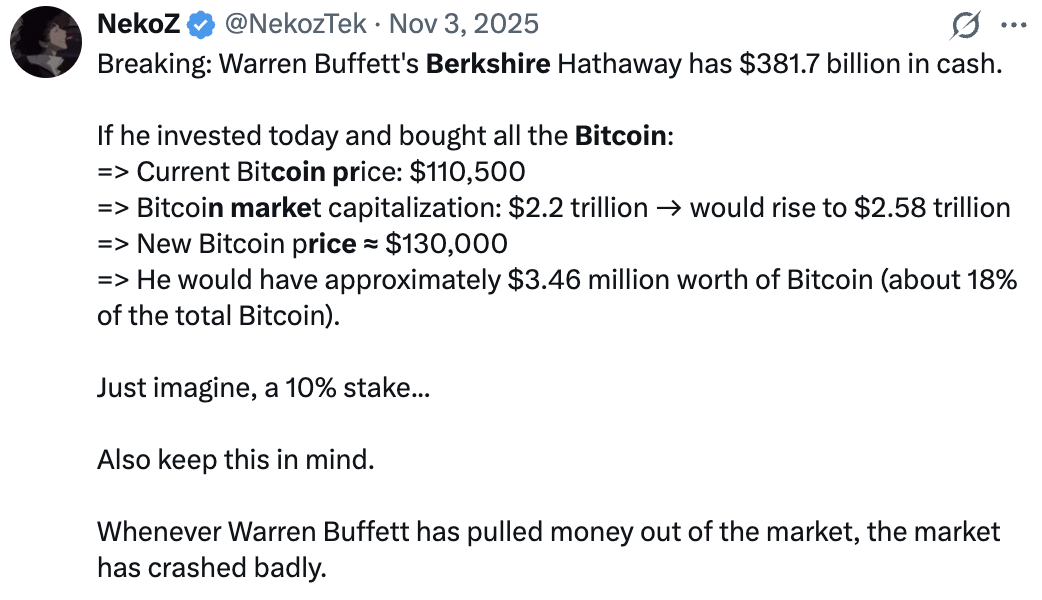
What If Warren Buffett Had Invested in Bitcoin Early?
Bitcoin rewarded conviction, but punished impatience. Berkshire rewarded patience almost by default.
What if Buffett invested his huge cash amount in Bitcoin? | Credit: Nekoz Tek X profile
The psychological burden of holding Bitcoin through repeated crashes cannot be overstated, especially at an institutional scale.
Role of Time Horizon in Bitcoin and Berkshire Performance
One reason Bitcoin’s returns appear extraordinary is due to time compression.
Bitcoin achieved in 15 years what Berkshire achieved over 60. However, early-stage technologies often exhibit explosive early growth that cannot be sustained indefinitely.
Berkshire compounded after it was already large.
Bitcoin experienced significant growth while it was still establishing its role in the global financial system.
Would Bitcoin Have Made Buffett a Better Investor?
Probably not.
Buffett’s genius came from focus, not diversification into unfamiliar territory. Bitcoin would have added noise, volatility, and philosophical conflict to a strategy that worked extraordinarily well.
But for investors without Buffett’s access, scale, or deal flow, Bitcoin offered, and still offers, a different path to asymmetric returns.
Why Comparing Bitcoin and Berkshire Misses the Bigger Picture
A better question is not “Which is better?”
It’s:
What kind of risk do you understand?
What time horizon can you tolerate?
What system do you trust?
Berkshire rewards discipline within a known framework; Bitcoin rewards conviction in a new one.
Berkshire and Bitcoin Belong to Different Eras of Investing
Warren Buffett didn’t need Bitcoin to become the most significant investor in history. His record speaks for itself.
But Bitcoin’s existence doesn’t diminish Buffett’s achievement; it highlights how investment opportunity sets change over time.
Buffett conquered the 20th century’s financial system. Bitcoin is a product of the 21st.
Understanding both may be the real edge going forward.
No. Warren Buffett has consistently stated that he does not invest in Bitcoin. He has described it as a non-productive asset that does not generate cash flow and therefore falls outside his investment framework.
How much did Berkshire Hathaway return?
Since Warren Buffett took control of Berkshire Hathaway in 1965, the stock has risen from about $19 per share to roughly $750,000 per share, representing a total gain of approximately 3,950,000% over nearly 60 years.
Has Bitcoin outperformed Berkshire Hathaway?
Over shorter time periods, Bitcoin has delivered higher percentage returns than Berkshire Hathaway. However, Bitcoin’s returns came with significantly higher volatility, deeper drawdowns, and greater uncertainty compared to Berkshire’s long-term, relatively stable compounding.
What is the main lesson from comparing Buffett and Bitcoin?
The key lesson is that different eras create different investment opportunities. Buffett mastered traditional business compounding, while Bitcoin represents a new form of digital capital formation. Understanding both helps investors think more clearly about risk and opportunity.
Disclaimer:
The information provided in this article is for informational purposes only. It is not intended to be, nor should it be construed as, financial advice. We do not make any warranties regarding the completeness, reliability, or accuracy of this information. All investments involve risk, and past performance does not guarantee future results. We recommend consulting a financial advisor before making any investment decisions.
Giuseppe Ciccomascolo began his career as an investigative journalist in Italy, where he contributed to both local and national newspapers, focusing on various financial sectors.
Upon relocating to London, he worked as an analyst for Fitch's CapitalStructure and later as a Senior Reporter for Alliance News. In 2017, Giuseppe transitioned to covering cryptocurrency-related news, producing documentaries and articles on Bitcoin and other emerging digital currencies. He also played a pivotal role in establishing the academy for a cryptocurrency exchange website. Crypto remained his primary area of interest throughout his tenure as a writer for ThirdFloor.


 Easy
Easy