Key Takeaways
- Japan transforms surplus renewable energy into value by using Bitcoin mining to absorb solar and wind power that would otherwise be wasted.
- Tokyo Electric Power Company (TEPCO) leads the innovation through its subsidiary Agile Energy X, deploying portable mining units at renewable sites.
- The 4.5-megawatt pilot project marks Japan’s first government-backed initiative combining digital assets with grid balancing and curtailment reduction.
- Renewable-powered Bitcoin mining positions Japan as a global pioneer in merging clean energy, advanced technology, and economic sustainability.
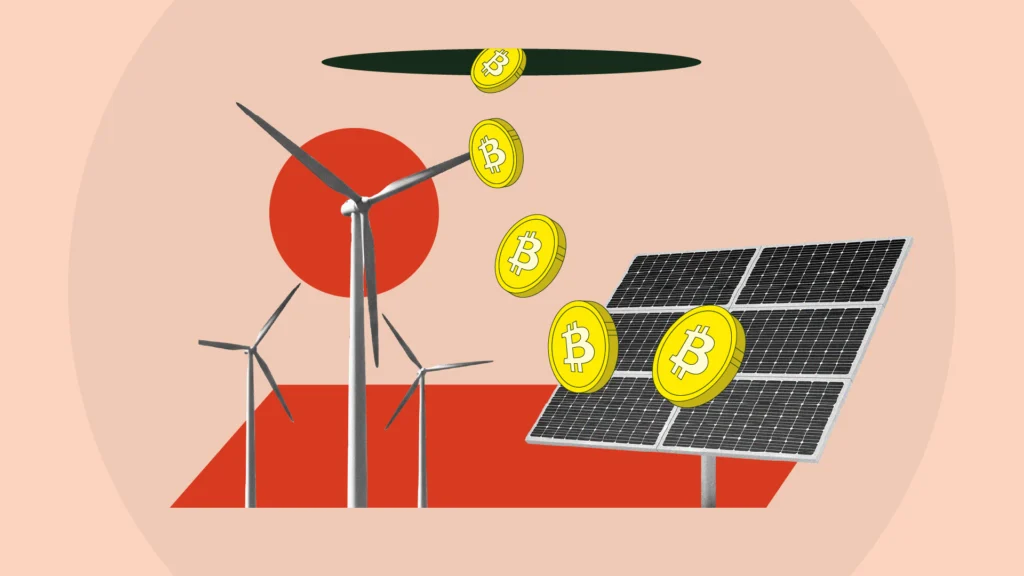
Japan has found an ingenious way to tackle one of renewable energy’s biggest problems: wasted power. As the country’s solar panels and wind farms generate more electricity than its grid can sometimes handle, Japan is converting the overflow into something entirely different, Bitcoin.
This isn’t a gimmick or a tech fad. It’s an energy innovation born from necessity. By using flexible Bitcoin-mining facilities as controllable power consumers, Japan is reducing renewable curtailment, stabilizing its grid, and creating new economic value from clean energy that would otherwise vanish unused.
The model is fast gaining global attention as a potential template for the next stage of the renewable revolution, where digital assets meet sustainable power management.
Japan’s Growing Renewable Energy and the Curtailment Challenge
Japan’s aggressive push toward renewable energy has created an unexpected dilemma. Solar and wind capacity has surged to record levels, but the national grid, fragmented across ten regional utilities, struggles to absorb the variable output.
During midday peaks, solar farms flood the grid with electricity that cannot be fully consumed or transmitted. In regions like Kyushu and Tohoku, operators are often forced to curtail, temporarily switching off clean power plants to avoid overloading the system.
In 2025 alone, more than 1.7 terawatt-hours of renewable electricity were curtailed across Japan, a 38% increase from the previous year. Every curtailed megawatt-hour represents lost revenue, wasted investment, and unnecessary carbon-free energy going unused.
To solve this, Japan needed an energy consumer that could instantly adjust its power demand to match supply. Bitcoin mining proved to be the perfect fit.
How Bitcoin Mining Solves Japan’s Renewable Energy Waste Problem
Bitcoin mining uses powerful computers, called ASICs, to verify transactions on the Bitcoin network. These machines require substantial electricity, but their load can be turned on or off at any time without consequence to the broader system.
In Japan’s renewable-heavy regions, that flexibility is gold. By colocating mining units directly beside solar or wind farms, operators can absorb excess electricity when output is high and shut down instantly when demand increases or grid conditions tighten.
This turns mining into a virtual battery, not storing energy physically, but converting it into digital assets that hold global monetary value. The approach transforms wasted renewable energy into a productive, exportable commodity, bridging the gap between the clean energy sector and the digital economy.
TEPCO’s Innovative Role in Japan’s Green Bitcoin Mining Revolution
Japan’s largest power utility, Tokyo Electric Power Company (TEPCO), has become the pioneer of this transformation. In 2022, TEPCO established Agile Energy X, a subsidiary focused on integrating flexible computing with renewable generation.
Agile Energy X developed mobile, container-based data centers capable of mining Bitcoin using surplus electricity. These units are stationed near renewable plants in prefectures such as Gunma and Tochigi, automatically activating when solar output spikes beyond grid needs.
Each container can be transported between regions, allowing TEPCO to target seasonal areas of curtailment. By doing so, the company converts what would be lost electricity into a financial asset, improving profitability for renewable producers and supporting Japan’s broader decarbonization goals.
4.5-Megawatt Pilot Project and Japan’s Next Step Toward Grid Efficiency
In late 2025, Japan launched a 4.5-megawatt state-linked Bitcoin mining project in partnership with hardware manufacturer Canaan Inc. The facility employs high-efficiency, hydro-cooled Avalon miners designed to synchronize automatically with grid conditions.
When renewable output rises, the mining operation scales up. When grid demand increases, the system throttles back. This dynamic balancing mechanism prevents power waste and smooths fluctuations that often destabilize regional grids.
The project represents Japan’s first government-supported initiative directly connecting renewable energy with Bitcoin mining. Its goal is to demonstrate that flexible digital loads can strengthen the national energy infrastructure while producing measurable financial returns.
Technical Blueprint Behind Japan’s Renewable-Powered Mining
Japan’s energy-to-Bitcoin framework follows a clear and efficient design philosophy:
- Direct colocation with renewable sources: Mining facilities are installed beside wind or solar farms to capture power at the generation point, avoiding transmission losses.
- Real-time grid integration: Control systems monitor power availability and grid stability, automatically adjusting mining activity to match energy surplus.
- Instant response capability: Mining rigs ramp up or down within seconds, behaving like a controllable load that enhances grid balance.
- Revenue conversion: Instead of wasting electricity, operators generate Bitcoin, providing a direct return from excess power.
- Portability and scalability: Modular mining units can be redeployed between sites, following seasonal renewable surpluses.
This blueprint enables a smarter, faster, and greener way to manage energy variability, without building expensive batteries or waiting for grid expansions.
Economic and Environmental Benefits of Japan’s Bitcoin Mining Model
The financial and environmental advantages of this model are profound.
- Economic efficiency: Electricity during curtailment has nearly zero market value. Redirecting it to mining transforms a cost center into a profit engine. Mining facilities require far less capital than large-scale batteries and can operate profitably at low power prices.
- Environmental sustainability: Every joule consumed by these mining systems originates from renewable energy that would otherwise go to waste. No additional fossil-fuel generation is required, meaning the overall carbon footprint remains minimal.
- Grid stability: Mining provides a flexible demand layer that helps regulate supply fluctuations, improving the overall resilience of Japan’s regional power systems.
- Renewable investment confidence: Developers gain an additional revenue stream, encouraging further expansion of green power capacity.
Key Challenges Facing Japan’s Energy-to-Bitcoin Transition
While Japan’s renewable-to-Bitcoin model is promising, several challenges must be addressed:
- Price volatility: The value of Bitcoin fluctuates, which can impact the profitability of mining operations.
- Hardware turnover: Mining rigs have limited lifespans and need regular upgrades to remain efficient.
- Public perception: Some critics still associate crypto mining with energy waste. Transparent data and clear environmental reporting are essential to maintain public trust.
- Regulatory adaptation: Japan’s policymakers must continue refining energy and digital-asset regulations to support flexible computing within grid frameworks.
Overcoming these hurdles will determine how quickly Japan’s model scales across regions.
The Future of Renewable Energy and Digital Value in Japan
Japan’s experiment marks the beginning of a new era where energy and digital value creation converge. By linking renewable generation with adaptive computing, the country is redefining how surplus electricity can serve both environmental and economic goals.
In the near future, similar systems could power artificial intelligence workloads, scientific computing, or hydrogen electrolysis, all dynamically adjusting to renewable availability. Bitcoin mining is simply the first commercially viable step.
Japan’s success demonstrates a powerful truth: sustainable technology and digital innovation are not opposing forces, they are natural allies when guided by smart engineering and economic insight.
FAQs
Bitcoin mining acts as a flexible energy consumer. It automatically adjusts to absorb excess electricity from solar and wind farms, preventing curtailment and turning wasted power into revenue.
Locating mining facilities beside renewable generators eliminates transmission losses, lowers costs, and enables immediate response to power fluctuations in regions with grid congestion.
Yes. The electricity used comes exclusively from surplus renewable energy that would otherwise be curtailed, meaning no additional fossil-fuel generation or carbon emissions are produced.
Absolutely. Regions with high renewable penetration and frequent curtailment, such as parts of the U.S., Australia, and Europe, can adopt similar systems to stabilize their grids and monetize excess clean energy.
The information provided in this article is for informational purposes only. It is not intended to be, nor should it be construed as, financial advice. We do not make any warranties regarding the completeness, reliability, or accuracy of this information. All investments involve risk, and past performance does not guarantee future results. We recommend consulting a financial advisor before making any investment decisions.

Onkar Singh has three years of experience as a digital finance content creator. Throughout his career, he has collaborated with various DeFi projects and crypto media outlets. In his leisure time, he enjoys fitness activities at the gym and watching movies across different genres. Balancing his professional and personal interests, Onkar continues to contribute to the digital finance landscape while pursuing his hobbies.


 Easy
Easy