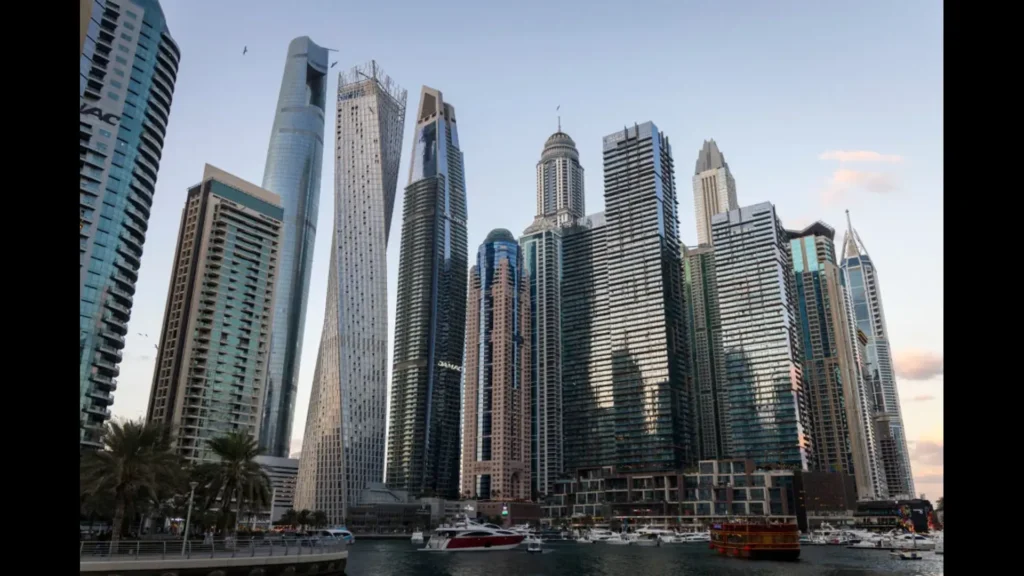
Dubai now lets tenants pay rent in Bitcoin. Here’s where and how. | Credit: Andrew Aitchison / In pictures via Getty Images
Share
Key Takeaways
With clear regulations, a crypto-friendly tax environment, and a large expat population, Dubai is the first major city to make Bitcoin rent payments practical at scale.
Tenants and landlords agree on terms, payments are routed through licensed gateways, and transactions are settled transparently on the blockchain.
Accepting Bitcoin diversifies income, speeds up payments, attracts international tenants, and positions landlords as innovative.
Volatility, uneven regulation, and adoption hurdles may slow wider rollout, especially among large developers and cautious institutions.
Dubai is no stranger to bold crypto experiments. From the world’s tallest tower to AI-driven police systems and driverless taxis, the city has consistently branded itself as a playground for futuristic ideas. Now, another innovation is making headlines: residents can pay their rent in Bitcoin (BTC).
What sounds like a marketing gimmick may in fact mark a turning point in how crypto enters everyday life. Rent is one of the most significant and recurring financial obligations for millions of people worldwide. If Bitcoin can cover that, it signals a new era where crypto moves from speculation to utility.
But what does this really mean—for tenants, landlords, and the broader crypto ecosystem? And is Dubai truly paving the way for “crypto living,” or is this just another headline-grabbing experiment?
Why Dubai? A Fertile Ground for Crypto Experiments
Dubai has spent the past two decades cultivating its image as a global innovation hub. It isn’t just about luxury real estate or tourism, it’s about being a forward-looking city where governments, businesses, and investors come to test new ideas.
Try Our Recommended Crypto Exchanges
Sponsored
Disclosure
We sometimes use affiliate links in our content, when clicking on those we might receive a commission at no extra cost to you. By using this website you agree to our terms and conditions and privacy policy.
Several factors explain why crypto rent payments took off in Dubai before other cities:
Regulatory clarity: In 2022, Dubai created the Virtual Assets Regulatory Authority (VARA), one of the world’s first dedicated crypto regulators. This legal framework has attracted both startups and global giants like Binance, Kraken, and Bybit.
Population profile: Around 90% of Dubai’s residents are expats, many of whom move funds across borders regularly. Paying rent in Bitcoin or stablecoins saves time, fees, and bureaucracy.
Government strategy: Dubai’s broader “Smart City” initiative emphasizes blockchain, artificial intelligence, and IoT integration as cornerstones of its economic model.
Dubai’s policies and demographics make it a perfect testing ground for large-scale crypto adoption.
How Paying Rent in Bitcoin Works
The process is simple:
Lease agreement: Tenant and landlord agree on rent being paid in Bitcoin (often pegged to a fiat value).
Payment gateway: The tenant sends Bitcoin through a licensed processor, which can convert it instantly into fiat if the landlord prefers.
Blockchain settlement: The transaction is confirmed on the Bitcoin network, providing a transparent and immutable record.
Receipts: Both parties receive documentation, just like with bank transfers.
Benefits: faster payments, global accessibility, and convenience for crypto holders. Challenges: volatility, uneven adoption, and varying regulations.
Where Rent Can Be Paid in Bitcoin in Dubai
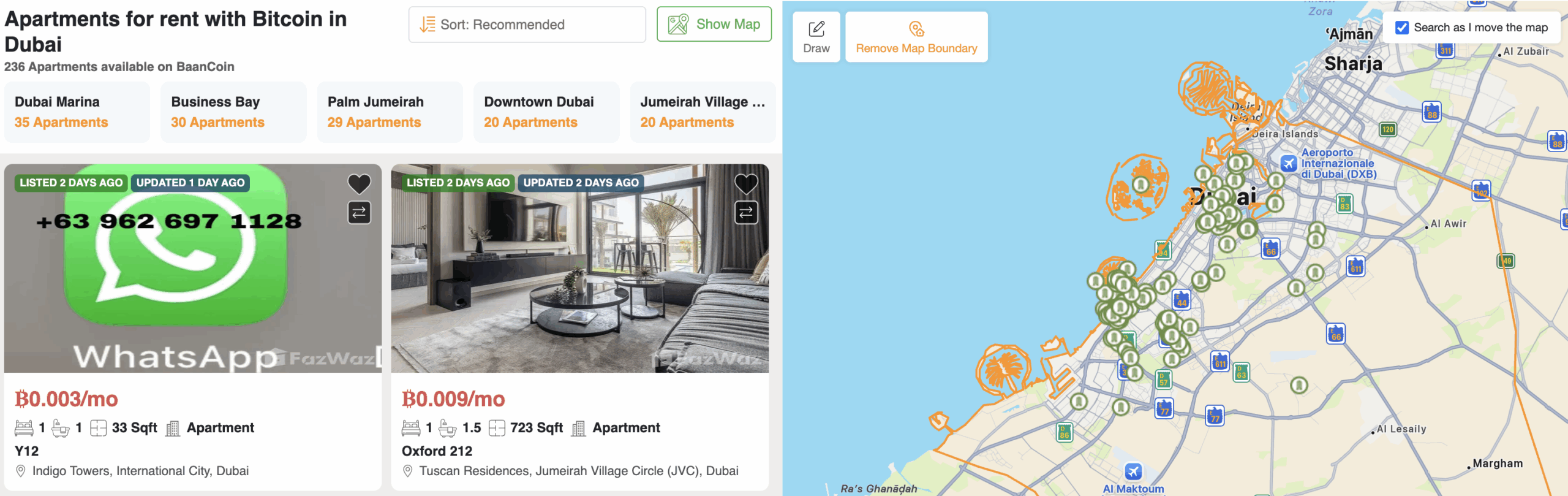
Dubai has made headlines by allowing tenants to settle housing costs in cryptocurrency. While adoption is still early, a few platforms and property groups already facilitate Bitcoin rent payments:
Where to rent a house with Bitcoin in Dubai. | Credit: Baancoin
BaanCoin: A real-estate rental platform listing apartments across Dubai, such as Marina, JVC, and Downtown, with prices denominated directly in Bitcoin.
fäm Properties (City Walk): Some landlords within the City Walk project, managed by fäm Properties, have publicly accepted annual rent payments in Bitcoin via licensed crypto gateways.
What’s Still Emerging
Other property developers and agencies are experimenting with crypto payments, though most focus on sales rather than rentals:
Paragon Properties: Markets cryptocurrency payments for both off-plan and ready-to-move homes, with limited clarity on rental agreements.
Sobha Realty: Accepts Bitcoin and other crypto through payment processors, but this is mainly for purchases, not recurring rent contracts.
Why Paying Rent in Bitcoin Appeals to Tenants in Dubai
For renters, the appeal of paying rent in Bitcoin runs deeper than novelty—it’s about convenience, flexibility, and identity.
Seamless for crypto holders: Those who have already hold Bitcoin can pay directly, without converting to fiat or dealing with banking delays.
Cross-border freedom: With Dubai’s large expat population, tenants from cities like London, New York, or Mumbai can send payments instantly, avoiding costly international transfers.
Faster settlement: Bitcoin transactions are confirmed within minutes, unlike traditional wires that can take days.
Banking alternatives: Tenants who prefer financial independence gain an option outside conventional banking rails.
Lifestyle statement: For crypto enthusiasts, paying rent in Bitcoin isn’t just practical, it’s a way of signaling they’re living in the future.
How Accepting Bitcoin Sets Dubai Landlords Apart
For landlords, the motivation to accept Bitcoin goes beyond simply collecting rent—it’s about positioning themselves at the forefront of a changing market.
In a city like Dubai, where property competition is fierce, saying “we accept Bitcoin” can be a powerful marketing edge, particularly when appealing to wealthy expats, entrepreneurs, and younger professionals who are comfortable with digital assets.
The benefits aren’t only about image. Accepting Bitcoin also opens up tangible financial advantages. Rent received in crypto can provide diversification into a new asset class, while transactions settle much faster than traditional cross-border bank transfers.
This speed translates into quicker liquidity, which is especially valuable for landlords dealing with international tenants.
At the same time, offering Bitcoin as a payment option broadens global reach, attracting renters who prefer to transact in crypto rather than fiat. Beyond the financials, it reinforces a modern, tech-forward brand image, one that signals innovation and can even justify a premium positioning in the market.
What Could Hold Back Bitcoin Rent Adoption
Despite the appeal, the model isn’t without its friction points.
Volatility: Bitcoin’s price may swing at times. Landlords who don’t convert instantly risk receiving less than expected.
Regulation across borders: While Dubai is supportive, tenants paying abroad may face compliance issues.
Technical learning curve: Not all landlords are comfortable handling wallets, private keys, or crypto accounting.
Dubai has solved some of these through licensed payment gateways that handle conversion and compliance. Still, volatility and international regulation remain open questions.
The Bigger Picture: What Bitcoin Rent Means for Adoption
Rent is one of life’s most significant recurring expenses, and unlike discretionary purchases, it cannot be avoided.
The ability to pay it in Bitcoin elevates the currency beyond speculation, positioning it as a tool for everyday living. This shift carries weight for several reasons.
First, it brings legitimacy. Housing is necessary, and when Bitcoin can cover something so fundamental, it challenges the notion of the asset as merely “digital gold” and reframes it as usable money.
Second, it triggers a network effect: the more tenants who choose Bitcoin, the more landlords will be incentivized to accept it, creating a cycle of adoption. Finally, it opens the door to institutional exposure, as property developers and financial institutions begin to integrate crypto payment rails into their larger operations.
In this way, paying rent with Bitcoin could become as symbolically important as the first Bitcoin e-commerce purchases over a decade ago—only now, the stakes are far higher, touching on one of the most essential aspects of modern life.
Hedging Against Geopolitical Risk
Beyond housing, research also suggests crypto can serve as insurance in the face of sanctions risk. A 2025 study by Matthew Ferranti in the Journal of International Money and Finance shows that central banks may diversify into Bitcoin alongside gold to reduce exposure to fiat reserve currencies vulnerable to sanctions.
This dynamic underscores how Bitcoin rent payments tie into a broader trend, positioning crypto not just as a consumer tool, but as part of systemic financial resilience.
“Law is nothing without a little order and a little crypto”
Shireen Kapoor, Strategic Legal Counsel for Global Founders, says this all may sound fantastic. But some challenges remain.
“Sounds futuristic, right? But here’s the legal catch: you can’t walk into the Dubai Land Department waving your Ledger wallet. By law, crypto payments must be converted into AED through VARA-approved channels before the sale is registered. VARA is the licensing body for Crypto and blockchain,” she said.
“Smart contracts are valid here (yes, finally law and code are getting along), but only if they’re coded and executed properly. Furthermore, developers like MAG, Damac, Emaar, and Nakheel are already boarding this rocket. Crypto isn’t just the playground of techies anymore—it’s writing itself into Dubai’s property deeds.”
Kapoor recalls that Dubai is now home to over 1,000 crypto-related businesses under VARA, that nearly 30% of property buyers under 35 globally prefer crypto payments when given the option, and that, in 2022, a penthouse on the Palm Jumeirah sold for the equivalent of $10 million in Bitcoin.
“Your Bitcoin is welcome, but only after it turns into dirhams. Contracts must align with UAE civil law—don’t trust a code snippet without legal review. Disputes? Still resolved under UAE law, not the blockchain (sorry, Ethereum). Also, recent judgments have approved court fees to be paid in Crypto in UAE,” Kapoor added.
Comparing Dubai With Other Global Cities
Dubai isn’t alone in experimenting; it leads in scale and seriousness.
London: Luxury real estate brokers occasionally accept Bitcoin for property sales or high-end rentals.
What makes Dubai different is government endorsement and regulatory support, turning experiments into real options for thousands of tenants.
Bitcoin or Stablecoins: Which Makes More Sense for Rental Payments?
Whenever Bitcoin is mentioned as a payment method, one question naturally arises: why not just use stablecoins instead? After all, stablecoins like USDT and USDC are pegged to the U.S. dollar, designed to avoid the price swings that often make Bitcoin unpredictable.
The Case for Stablecoins
Stability: Their peg to the dollar (or other fiat currencies) removes volatility, ensuring that rent denominated at $2,000 today is worth the same tomorrow.
Speed and efficiency: Like Bitcoin, stablecoins settle quickly on the blockchain, often within seconds.
Existing adoption: Stablecoins are heavily used for remittances, cross-border settlements, and payments in emerging markets.
Practicality for landlords: For property owners who don’t want exposure to crypto price fluctuations, stablecoins provide predictability while offering blockchain rails’ benefits.
The Case for Bitcoin
Global brand recognition: Bitcoin is the most recognized cryptocurrency worldwide, often seen as synonymous with crypto itself.
Broad ownership: More people hold Bitcoin than any stablecoin, meaning it’s the asset most tenants are likely to own already.
Cultural significance: For many enthusiasts, spending Bitcoin isn’t just practical—it’s symbolic, demonstrating that crypto can function as real money.
First-mover appeal: Paying rent in Bitcoin carries prestige, much like the early stories of buying coffee or pizza with BTC in crypto’s formative years.
In the long run, stablecoins may dominate rent payments because they combine fiat reliability with crypto’s efficiency. They are more practical for contracts and long-term agreements, where predictability is critical.
Yet, Bitcoin’s role should not be underestimated. In Dubai’s case, allowing tenants to pay rent in Bitcoin gives the initiative visibility and credibility. It ties the project to the world’s most famous cryptocurrency, making it as much a statement as a service.
Beyond Rent: Tokenized Real Estate and Smart Living
Allowing tenants to pay rent in Bitcoin is just the start. It opens doors to bigger shifts:
Tokenized real estate: Properties could be fractionalized into blockchain tokens, letting renters buy shares of the building they live in.
Crypto-native living: Rent, utilities, groceries, and school fees could all be paid in crypto. Dubai could become the first city where a household budget is fully blockchain-powered.
Integration with DeFi: Imagine using crypto collateral to secure a lease, or earning yield on a rental deposit through DeFi protocols.
In this sense, Bitcoin rent isn’t an endpoint, it’s a first step toward a tokenized property economy.
Why Bitcoin Rent Isn’t Risk-Free — Even in Dubai
Even in Dubai, momentum could stall if key risks aren’t addressed:
Banking friction: Property developers may hesitate if local banks resist crypto-linked transactions.
Legal disputes: Rent contracts denominated in Bitcoin may raise enforceability questions if values fluctuate between payment and receipt.
Global perception: Other regulators may consider this risky, limiting cross-border tenant participation.
Conclusion
Dubai’s decision to let residents pay rent in Bitcoin is more than a flashy headline—it’s a live experiment in building a crypto-native city. Tenants gain convenience, landlords gain flexibility, and the city gains a reputation as the global leader in digital finance.
Challenges remain—volatility, regulation, and adoption gaps—but the symbolism is powerful. Rent isn’t just another purchase; it’s one of life’s most significant obligations. If you can pay it in Bitcoin, you’re not just investing in crypto—you’re living on it.
Whether this becomes a global norm or stays a Dubai specialty, one thing is clear: the lines between digital assets and real life are blurring faster than ever.
Not all landlords accept Bitcoin yet. The option is mostly available through select developers, property managers, and landlords who work with licensed crypto payment gateways.
How does the payment actually work?
Tenants send Bitcoin through a regulated payment processor. The landlord can either receive Bitcoin directly or have it instantly converted into UAE dirhams.
Why not just use stablecoins instead?
Stablecoins like USDT or USDC are pegged to the dollar and avoid volatility, making them practical for rent. But Bitcoin has global recognition, broad ownership, and symbolic value, which is why Dubai chose it to lead the initiative.
Does this mean crypto is replacing fiat in Dubai?
Not quite. Bitcoin rent is an option, not a requirement. But it signals Dubai’s intent to integrate crypto into daily life more deeply than most other cities.
Disclaimer:
The information provided in this article is for informational purposes only. It is not intended to be, nor should it be construed as, financial advice. We do not make any warranties regarding the completeness, reliability, or accuracy of this information. All investments involve risk, and past performance does not guarantee future results. We recommend consulting a financial advisor before making any investment decisions.
Giuseppe Ciccomascolo began his career as an investigative journalist in Italy, where he contributed to both local and national newspapers, focusing on various financial sectors.
Upon relocating to London, he worked as an analyst for Fitch's CapitalStructure and later as a Senior Reporter for Alliance News. In 2017, Giuseppe transitioned to covering cryptocurrency-related news, producing documentaries and articles on Bitcoin and other emerging digital currencies. He also played a pivotal role in establishing the academy for a cryptocurrency exchange website. Crypto remained his primary area of interest throughout his tenure as a writer for ThirdFloor.


 Easy
Easy