Bitcoin’s arrival in traditional hospitality is no longer just a technology story. For English Lakes Hotels, Resorts and Venues, it is also a question of long-term savings, customer demand, and whether tourism businesses can plug into a financial network that operates beyond banks and card processors.
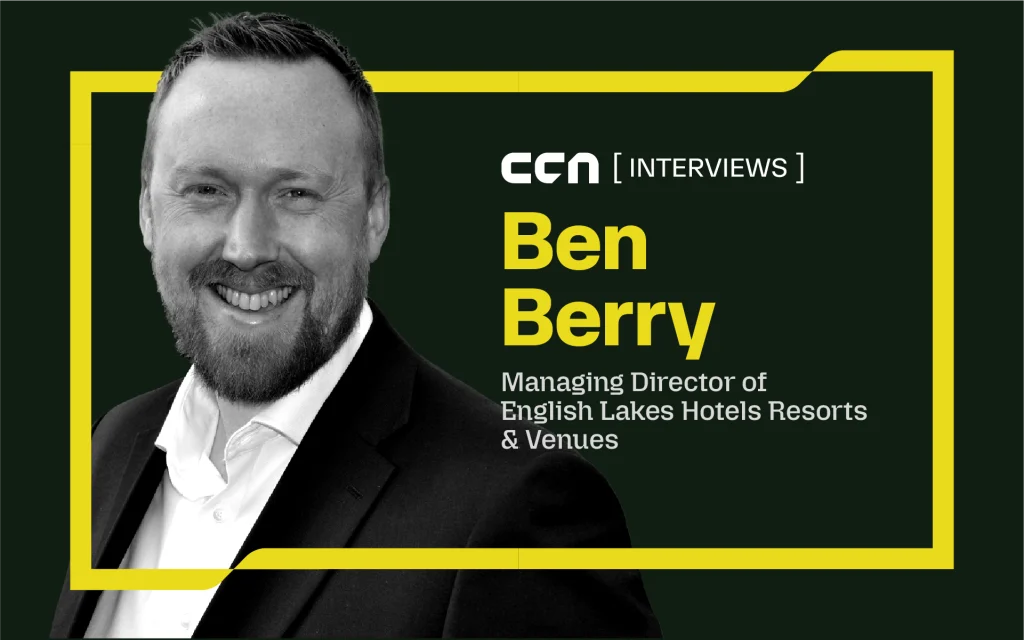
CCN’s Dr. Lorena Nessi interviewed Ben Berry, Managing Director of English Lakes Hotels, Resorts and Venues, about why the Lake District hotel group began accepting Bitcoin, how the company built the payment infrastructure, and whether Bitcoin can move from store of value to an everyday payment tool in travel and hospitality.
Bitcoin Became Relevant Because Inflation Hit Hospitality
Berry said Bitcoin is relevant to the Lake District for the same reason it is relevant elsewhere: businesses and households are looking for ways to protect value over time.
“When I think about Bitcoin, I think about it for all of humanity,” he said. “Where is Bitcoin not relevant?”
He said tourism and agriculture are major parts of the local economy, but the region faces the same pressures as the rest of the world, including inflation and the financial aftershocks of the pandemic.
“For us, the question is, why wouldn’t it be relevant here in the English Lake District?” Berry said.
Board Approval Started With Money, Not Bitcoin
Berry said the company’s Bitcoin journey began internally with education rather than technology.
He organized an away day for the board and spent several weeks discussing money, investment, long-term value protection, and wealth preservation before introducing Bitcoin directly.
“As a family business, we’ve been here for more than 70 years and I look forward to us being here for another 170 years,” he said.
For Berry, Bitcoin was part of a broader question: how does a long-established family business protect itself for future generations?
CoinCorner Helped Solve the Operational Challenge
English Lakes wanted to accept Bitcoin both on-chain and through the Lightning Network, but Berry said managing Lightning liquidity and payment channels internally would have created unnecessary operational complexity.
The company partnered with CoinCorner, based on the Isle of Man, to handle payment tools, custody questions, and transaction verification.
“They helped us with a lot of the operational challenges in terms of where and how to custody the asset, how to receive it, how to verify that a customer has paid,” Berry said.
Bitcoin Payments Are Easier Than Many Merchants Expect
Berry said merchant hesitation often comes from not understanding how Bitcoin payments work, but customers who already use Bitcoin usually know how to complete the transaction.
“The Bitcoiner who’s paying knows how to do it,” he said. “You’ve almost got tech support from the person who’s going to be buying from you.”
He compared the shift to the early adoption of credit cards, when businesses also had to learn new payment processes.
“Once you’ve done it once or seen it once, it’s too easy,” Berry said.
Spending Bitcoin Remains the Biggest Paradox
Berry said Bitcoin’s strength as a long-term asset is also what slows its use as everyday money.
“Volatility is a feature, not a bug of Bitcoin,” he said.
Because many holders expect Bitcoin to increase in value, they often prefer to save it rather than spend it.
“People see the number go up and then they start to want to accumulate a lot more Bitcoin and don’t want to spend it,” Berry said.
International Payments Show Bitcoin’s Practical Value
Berry said one of Bitcoin’s clearest business uses is cross-border payment.
He said English Lakes buys products internationally, including coffee from El Salvador, and Bitcoin allows the company to send large payments with lower friction than traditional banking rails.
“I can send tens of thousands of dollars worth of Bitcoin for literally cents,” he said.
For Berry, that is where Bitcoin moves from theory to practical business infrastructure.
“Seeing that happen is literally magic,” he said.
Bitcoin Customers Are Helping the Lake District Brand
Berry said adopting Bitcoin has introduced English Lakes to new customers who may not have visited the Lake District before.
“We found new customers through it,” he said.
He added that Bitcoin users often want to support businesses that accept the asset, whether they pay in Bitcoin or in pounds.
“Bitcoiners want to support Bitcoin businesses,” Berry said.
Long-Term Savings Matter More Than Payment Volume
Asked what matters most, merchant adoption, spending velocity, or long-term Bitcoin saving behavior, Berry chose savings.
“The number goes up and solves all the other problems,” he said.
He said English Lakes effectively acquires Bitcoin by accepting it from customers in exchange for hospitality services.
“We’re buying it from our customers and providing them a service for it,” Berry said.
Success Means Building Bitcoin Reserves
Berry said he does not expect millions of pounds in Bitcoin payments immediately, but success would mean steadily growing the company’s Bitcoin reserves.
“What I’d like to see is our reserves of Bitcoin continuing to grow,” he said.
In the long term, his ambition is much bigger: using Bitcoin as an asset the business can borrow against, rather than relying mainly on property-backed debt.
“Having enough Bitcoin that we no longer rely on a bank for debt, that would be when I know that I’ve succeeded,” Berry said.
The information provided in this article is for informational purposes only. It is not intended to be, nor should it be construed as, financial advice. We do not make any warranties regarding the completeness, reliability, or accuracy of this information. All investments involve risk, and past performance does not guarantee future results. We recommend consulting a financial advisor before making any investment decisions.

Dr. Guneet Kaur is a senior editor at CCN.com and a Science Fellow at Exponential Science. She is a fintech and blockchain expert with extensive experience in digital finance education, blockchain ecosystems, and cryptocurrency markets. She has worked with global media such as Cointelegraph, as well as education and blockchain platforms, to design and lead strategic content and learning initiatives. As an educator and assessor for top-tier executive programs, she bridges real-world fintech trends with academic insight.
Dr. Kaur is also a published researcher and peer reviewer across fintech and data science journals, including Financial Innovation Journal and International Journal of Big Data Intelligence and Applications. Her work spans data-driven analysis, Web3 innovation, and technical content development. With a strong foundation in both industry and academia, she translates complex financial technologies into practical applications, empowering learners, professionals, and institutions across the rapidly evolving digital finance landscape.

Dr. Lorena Nessi is an award-winning journalist and media technology expert with 15 years of experience in digital culture and communication. Based in Oxfordshire, UK, she combines academic insight with hands-on media practice.
She holds a PhD in Communication, Sociology, and Digital Cultures, and an MA in Globalization, Identity, and Technology.
Lorena has taught at Fairleigh Dickinson University, Nottingham Trent University, and the University of Oxford. She is a former producer for the BBC in London, with additional experience creating television content in Mexico and Japan.
Her research focuses on digital cultures, social media, technology, capitalism, and the societal impact of blockchain innovation.
She has written extensively on digital media and emerging technologies, with her work featured in both academic and media platforms. Her Web3 expertise explores how blockchain technologies shape culture, economics, and decentralized systems.
Outside of work, Lorena enjoys reading science fiction, playing strategic board games, traveling, and chasing adventures that get her heart racing. A perfect day ends with a relaxing spa and a good family meal.


 Easy
Easy