

Use Cases That Matter
Where crypto hits real life:
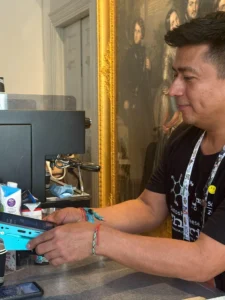
- Daily Lightning purchases for pupusas, coffee, groceries, and services in Bitcoin Beach, Surf City, and nearby coastal towns
- Remittances from the United States routed through BTC and Lightning to cut fees and speed up transfers
- Ordinals artists in beach towns selling Bitcoin-native art to tourists and global collectors
- Freelancers and remote workers receiving part of their income in BTC from clients worldwide
- Micro-earning, tipping, and “stacking sats” through local circular-economy apps, small tasks, and tourism-driven incentives.
Citizen Voices
How Bitcoin is used and experienced on the ground in El Salvador
Bitcoin Beach, in El Zonte, has evolved into a local economic circle where Bitcoin is used in everyday life. From accommodation and food to small beach vendors, Bitcoin functions as a practical payment method rather than a novelty.
Jacky Rivero, El Zonte (Bitcoin Beach)
The constant flow of visitors has made onboarding and education an ongoing process. Learning to use Bitcoin in El Zonte often happens informally, through daily interactions rather than structured explanations.
Jacky Rivero, El Zonte (Bitcoin Beach)
Rather than lengthy explanations or technical discussions, Bitcoin adoption in El Zonte is immediate and experiential, driven by simple peer-to-peer interactions.
Jacky Rivero, El Zonte (Bitcoin Beach)
Bitcoin has also extended into everyday services, reinforcing its role as a functional medium of exchange. BitDriver began as El Salvador’s first taxi service to accept Bitcoin and has since grown into a coordinated fleet offering rides, airport transfers, and private rentals settled entirely in BTC.
Beyond daily spending, a parallel ecosystem has emerged around relocation and long-term settlement for Bitcoin holders moving to El Salvador.
Tom, Good Life Consultancy, El Zonte
Relocation requirements remain relatively accessible, with costs varying mainly by location rather than strict legal or financial barriers.
Tom, Good Life Consultancy, El Zonte
Support typically includes assistance with paperwork and administrative processes upon arrival.
Tom, Good Life Consultancy, El Zonte
Residency is usually a gradual process, beginning with tourist visas and extending over time as individuals settle more permanently.
Tom, Good Life Consultancy, El Zonte
Crypto cost of living: What 1 BTC buys here
A glimpse into the lifestyle economy — measured in sats, not cents.
While Bitcoin remains legal to use, hold, and trade, most everyday transactions in El Salvador still rely on the U.S. dollar. The dollar remains the currency people trust for shopping, salaries, and savings, while Bitcoin plays a secondary role in the economy.
Core Lifestyle Benchmarks
BTC-to-Housing: The Long View
How far has 1 BTC gone over time in the housing market
Regulatory + Economic Snapshot
The administration treats Bitcoin as a strategic asset, maintaining national BTC reserves, encouraging mining, and promoting El Salvador as a Bitcoin destination.
No capital gains or income tax on Bitcoin under current rules, positioning the country as a tax haven for BTC-heavy individuals and companies.
The government has focused on Bitcoin rather than a central bank digital currency, framing BTC as a preferred alternative to CBDCs.
Traditional banks remain cautious but collaborate with payment providers and Lightning solutions in certain corridors, especially for businesses courting tourists and foreign investors.
Most crypto-related problems involve fraud, phishing, or informal schemes; large on-chain hacks linked directly to the country are rare, but authorities still build cybercrime capacity.
President Nayib Bukele is the central figure, repeatedly defending Bitcoin policy, posting national BTC purchases, and backing initiatives for geothermal mining and Bitcoin tourism.
Risk Barometer
Gives time-sensitive readers a feel for how volatile or stable the legal landscape is.
Crypto Adoption Timeline
-
2019
Bitcoin Beach project starts in El Zonte, kickstarting the local circular economy.
-
2021
Bitcoin becomes legal tender; Chivo Wallet launches with a $30 BTC signup bonus.
-
2022
International media focus peaks; early data shows mixed citizen adoption.
-
2023
Geothermal mining projects progress; Bitcoin tourism packages grow.
-
2025
Policy and practice align around voluntary BTC acceptance; circular economies deepen where Bitcoin use proved sticky.
Meet Your Fellow Crypto Citizens
El Salvador’s Bitcoin community is vibrant, hyper-local, and deeply tied to real-world projects. From education hubs to merchant networks, there are constant opportunities to learn, connect, and participate.
Local community hubs and education
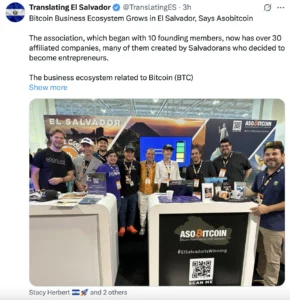
Asobitcoin, the country’s main Bitcoin education NGO, organizes regular workshops, open classes, and community meetups in San Salvador. These sessions cover wallets, Lightning payments, security basics, and hands-on Bitcoin use.
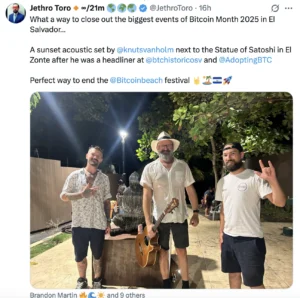
In El Zonte, also known as Bitcoin Beach, gatherings are frequent and informal. Visitors and locals connect through beach meetups, wallet onboarding sessions, and spontaneous Lightning demonstrations, all rooted in the circular Bitcoin economy that began in 2019.
Across San Salvador, Bitcoin cafés, coworking spaces, and tech hubs host weekly discussions on mining, node operation, merchant adoption, and the regulatory landscape, attracting both locals and international Bitcoiners.
Everyday coordination and social networks
A growing network of Bitcoin-focused Telegram groups connects residents, expats, and travelers. These channels act as hubs for community news, safety updates, conference information, and introductions to local merchants that accept BTC.
Smaller pop-up events, film screenings, mining talks, merchant onboarding days, Bitcoin Pizza Day celebrations, and youth workshops continue to shape a grassroots culture that blends financial education with local identity.
Community in Action
Main Events in El Salvador
 Nov 12-13, 2025
 San Salvador
November 14–15, 2025
San Salvador
Jan 30–31, 2026
San Salvador
Jan 26-27, 2026
El Zonte, La Libertad
San Salvador
November 14–15, 2025
San Salvador
Jan 30–31, 2026
San Salvador
Jan 26-27, 2026
El Zonte, La Libertad
El Salvador also hosts educator-led Bitcoin events, including the Bitcoin Educators Unconference organized by My First Bitcoin, where teachers, community leaders, and grassroots advocates meet to share tools, methods, and real-world experiences in Bitcoin education.
Top 5 Trends to Watch
1. Lightning-first commerce growth
- Tourism zones and selected urban corridors continue expanding Lightning payments.
- El Zonte, El Tunco, parts of La Libertad, and some San Salvador cafés show the strongest activity.
- Lightning is mainly used for food, retail, and micro-transactions.
- Adoption grows organically where tourism and merchant incentives overlap.
2. Geothermal and renewables-powered Bitcoin mining
- State-linked Bitcoin mining operations continue scaling at volcanic sites.
- Geothermal facilities near Berlín use volcanic energy sources.
- Public data in late 2025 shows increased renewable-based hashpower.
- Mining is framed as an energy-export strategy rather than a revenue pillar.
3. Remittances shifting toward Lightning
- More Salvadorans in the U.S. use Lightning for small-value remittances.
- Transaction fees remain just a few cents.
- Overall volumes remain modest compared to national remittance totals.
- Growth is steady rather than explosive.
4. Bitcoin education reboot
- Mi Primer Bitcoin educated over 27,000 students nationwide.
- Its Ministry of Education partnership ended in April 2025.
- Education continues through NGOs, community programs, and international partners.
- No centralized nationwide replacement program has emerged yet.
5. Crypto tourism & “Bitcoin lifestyle” zones
- Hotels, surf hostels, cafés, and tour operators market Bitcoin-friendly experiences.
- Tourism packages increasingly highlight BTC acceptance.
- El Salvador is positioned as a safe hub for long-stay digital nomads.
- The narrative focuses on living day-to-day using Bitcoin.
Neighbour Watch: What’s Happening Next Door?
🇭🇳 Honduras — Legal but cautious
- Regime: Strict banking rules enforced nationally.
- Reality: Small crypto-tourism pockets exist in Roatán, despite tight oversight elsewhere.
🇬🇹 Guatemala — Legal, crypto-friendly
- Regime: Crypto is legal with no restrictive framework.
- Reality: P2P trading and remittances drive adoption, mainly in Guatemala City.
🇨🇷 Costa Rica — Legal, pro-innovation
- Regime: Open stance toward crypto and financial innovation.
- Reality: Widely used by freelancers and digital nomads, especially in coastal hubs.
References
- Satoshi Gallery. Satoshi Nakamoto
- CIA World Factbook. El Salvador Factsheet
- DataReportal. Digital 2025: El Salvador
- Chainalysis. Latin America Crypto Adoption 2025
- Coin ATM Radar. Bitcoin ATM in San Salvador
- Instagram. Reel (DJXvHqsNesu)
- Asamblea Legislativa. Correspondencia (PDF)
- Torres Legal. Cómo tributan las criptomonedas en El Salvador
- International Monetary Fund (IMF). Home
- CCN. Volatility Glossary
- CCN. KYC Glossary
- Dig.watch. Bitcoin is no longer legal tender in El Salvador
- El Salvador in English. Satoshi Nakamoto statue revealed in El Salvador
- AfroTech. Fewocious NFT artist brings in $20M in sales
- NFT Calendar. CryptoPresis
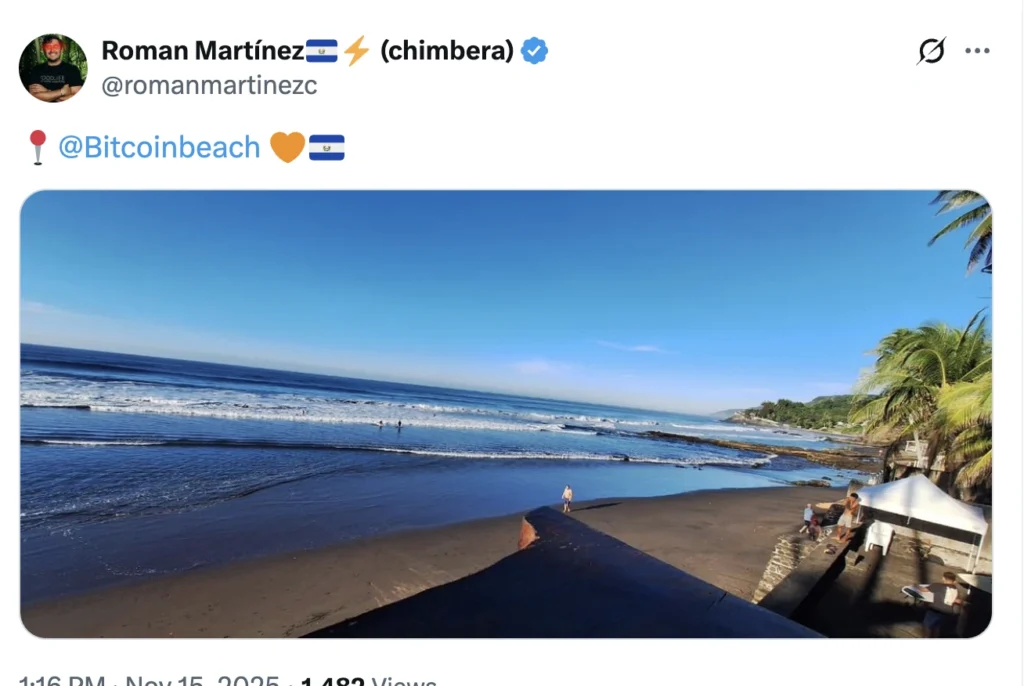
- X. Post by @romanmartinezc
- McDonaldsPrices. McDonald’s El Salvador precios
- Xataka. Cuánto cuesta una taza de café en cada país del mundo
- Numbeo. Cost of Living in El Salvador
- ASOBITCOIN. Official website
- Bitcoin Beach. Official website
- Bitcoin News. Bitcoin Histórico, El Salvador conference
- Pretix. Adopting Bitcoin 2025 (AB25)
- Plan ₿ Forum. Official website
- Bitcoin Beach. Bitcoin Circular Economies Summit 2026
- X. Post by @bitdriver_sv (photo)