Bitcoin adoption is booming in Mexico. | Source: CCN
Share
Key Takeaways
Crypto use in Mexico is growing.
Platforms like Bitso, widespread mobile apps, and Bitcoin ATMs are boosting access.
Adoption is growing through real-world use cases.
From retail giants to boutique hostels and niche bars, a growing number of businesses in Mexico are accepting Bitcoin as payment.
While Bitcoin is not legal tender in the country, a combination of regulatory clarity and a large unbanked population has encouraged merchants to experiment with crypto payments, offering new options for locals and international travelers alike.
Below are five notable examples of businesses and services integrating Bitcoin into everyday commerce, and what it means for visitors navigating Mexico’s evolving payment landscape.
Elektra (Retail & Finance)
Grupo Elektra, owned by billionaire Ricardo Salinas Pliego, became the first major Mexican retailer to accept Bitcoin, marking a significant step toward mainstream adoption.
The company sells a wide array of goods, from motorcycles to electronics and household appliances.
Elektra has promoted the use of the Lightning Network, a technology designed to enable near-instant, low-cost Bitcoin transactions, helping address common concerns around fees and processing times.
What Does It Mean For Travelers?
Visitors can use Bitcoin for high-value purchases at a nationally recognized retailer, offering a practical alternative to currency exchange or card payments.
The Lightning Network integration also reduces friction for tourists accustomed to fast digital payments.
Casa Pepe (Boutique Hostel)
Located in Mexico City’s historic centre, Casa Pepe has positioned itself as a cultural hub for international travellers and digital nomads.
The hostel integrates Bitcoin into its operations and is listed as a Bitcoin Teller Machine (BTM) hostel.
Guests can use Bitcoin for bookings and on-site services, embedding crypto directly into its hospitality experience.
What Does It Mean For Travelers?
For crypto-savvy tourists, Casa Pepe offers a seamless stay without needing local currency.
It also serves as a gateway for travellers interested in Mexico’s crypto scene, particularly among those looking to enter the digital nomad community.
Café Punta del Cielo (Coffee Chain)
Mexican coffee chain Café Punta del Cielo has experimented with Bitcoin payments, notably through a pilot programme at its Universidad de las Américas Puebla (UDLAP) location.
Payments were facilitated via BitsoPagos, a crypto payment processor, as part of efforts to explore wider adoption.
What Does It Mean For Travelers?
While not widespread, the pilot highlights how everyday purchases like coffee could increasingly be made with Bitcoin — though visitors should verify acceptance at individual locations.
Mobla (Furniture Boutique)
Mobla, a family-run furniture business in Guanajuato with more than 70 years of history, represents how traditional enterprises are adopting digital assets.
The company accepts Bitcoin, Ethereum and Litecoin, and has installed a Bitcoin ATM on-site — a rare example of deep crypto integration in a legacy business.
What Does It Mean For Travelers?
Mobla highlights that Bitcoin acceptance is not limited to tech-forward startups. Visitors exploring smaller cities can still encounter crypto-friendly businesses, expanding usability beyond major urban centres.
Bitcoin ATMs (Financial Infrastructure)
Bitcoin ATMs, or BTMs, are a key part of Mexico’s crypto ecosystem.
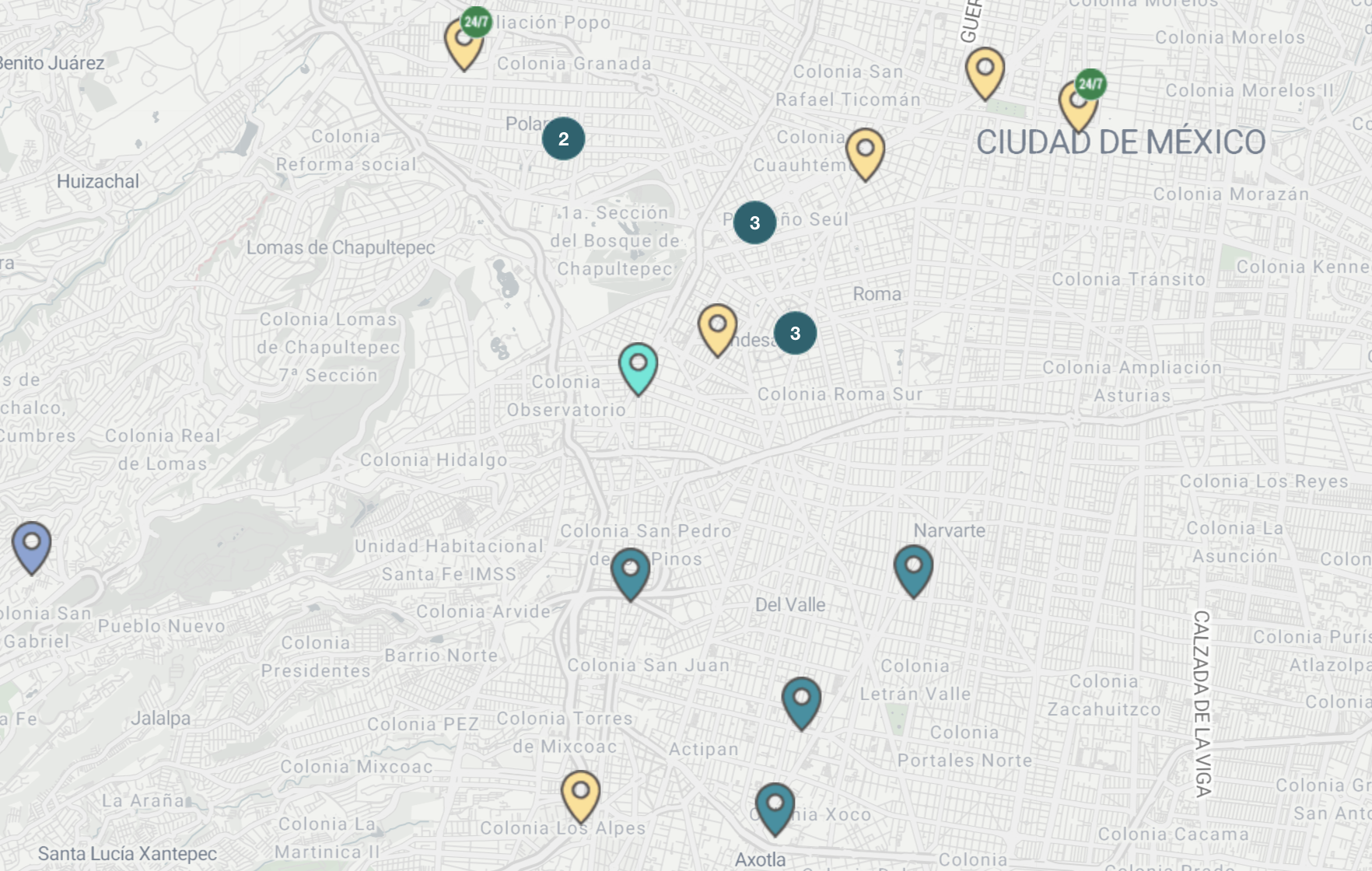
Concentrated in cities such as Mexico City, Guadalajara, and tourist hotspots like Playa del Carmen and Tulum, these machines allow users to buy and sell Bitcoin using cash.
Bitcoin ATMs in Mexico City, Mexico | Source: Coin ATM Radar
Many offer “two-way” functionality, enabling conversion between Bitcoin and Mexican pesos.
Smaller transactions typically require only phone verification, while larger amounts may trigger stricter identification checks.
What Does It Mean For Travelers?
BTMs provide a practical bridge between crypto and local currency, allowing tourists to access pesos without traditional banking.
They also offer flexibility for those managing funds in Bitcoin during their trip.
Honourable Mention: Bitcoin Embassy Bar (Closed in 2024)
Before closing its doors in 2024, Mexico City’s Bitcoin Embassy Bar stood as one of the country’s most visible symbols of grassroots crypto culture.
Described by writer Mia Armstrong-Lopez in Slate as a place where “I’m drinking a beer next to a Bitcoin ATM,” the Roma Norte venue embodied the collision between digital finance and real-world social life.
During its four year run, the bar was littered with pictures of Satoshi Nakamoto and taglines about the world of crypto. There was even reportedly a screen above the bar that tracked live crypto prices.
Co-founder Lorena Ortiz described its mission as creating a space where people could “learn and ask questions,” with crypto payments accounting for as much as 50% of transactions during events, according to the Slate report.
What Does It Mean For Travelers?
Although no longer operating, the venue symbolized the country’s growing crypto adoption and helped build the community that continues to support Bitcoin use across Mexico today.
Mexico: a Bitcoin-Friendly Hub?
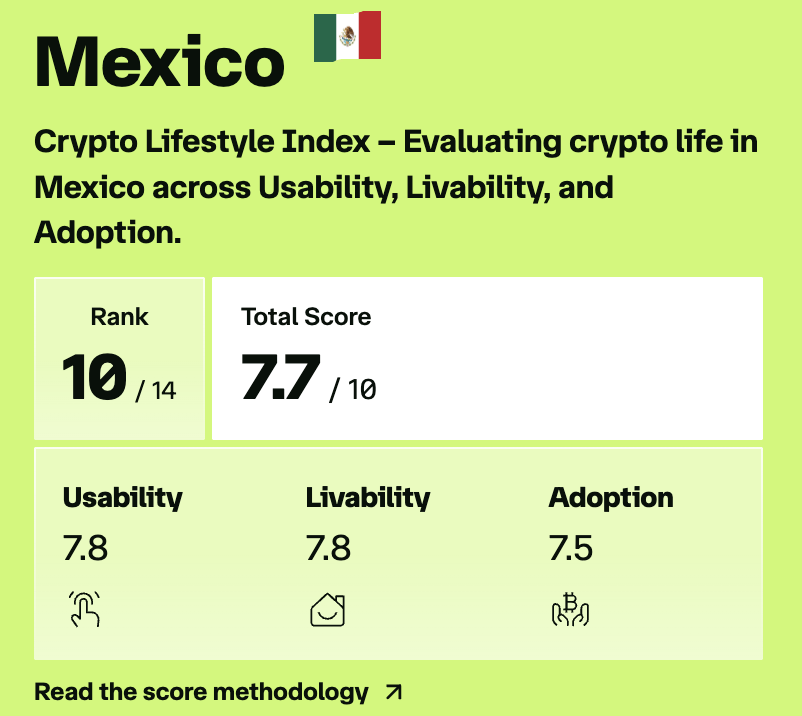
Mexico’s reputation as a Bitcoin-friendly market is increasingly supported by both regulatory structure and real-world usage, according to data from CCN’s Global Crypto Lifestyle Index, which assigns the country an overall score of 7.7 out of 10, ranking it 10th out of 14 markets assessed.
Mexico has earned a CCN GCLI usage score of 7.5/10, reflecting the outsized role crypto plays in cross-border payments rather than everyday retail spending.
The country is the world’s second-largest recipient of remittances, receiving more than $63 billion annually, much of it from the US.
CCN reports that Bitso alone processed over $6.5 billion in U.S.-Mexico remittances in 2024, representing more than 10% of the corridor.
Mexico is 10th on the Global Crypto Lifestyle Index (GCLI) | Source: CCN
In livability, Mexico scored 7.8/10.
CCN reports that international clients are increasingly paying freelancers and developers in cities like Mexico City and Guadalajara in Bitcoin, Ethereum, or stablecoins.
Crypto-related employment is also expanding, with fintech firms like Bitso hiring across engineering, compliance and operations roles.
CCN gives Mexico a crypto adoption score of 7.5 out of 10, noting that people increasingly view crypto as both a practical financial tool and a broader societal movement.
Mexico City, for example, has emerged as a regional hub for Web3 activity, hosting events such as ETHMexico and NFT exhibitions tied to major art festivals.
Kurt Robson is a London-based reporter at CCN, specialising in the fast-moving worlds of crypto and emerging technology. He began his career covering local news in Cornwall after graduating from Falmouth University with First Class Honours in Journalism. There, he cut his teeth on everything from council meetings to missing swans.
He quickly rose through the ranks to become a frontline journalist at several of the UK’s leading national newspapers. Over the years, he has interviewed musicians and celebrities, reported from courtrooms and crime scenes, and secured multiple front-page exclusives.
Following the upheaval of the COVID-19 pandemic, Kurt shifted his focus to technology journalism—just ahead of the AI boom. With a natural curiosity and a trained eye for emerging trends, he has found a new rhythm in reporting on innovation.
At CCN, Kurt's work focuses on the cutting edge of crypto, blockchain, AI, and the evolving digital world. Drawing on his background in people-first reporting and his deep interest in disruptive tech, Kurt delivers stories that are insightful, entertaining, and human-centric.