Key Takeaways
- AVAX One positions itself as the only publicly traded digital asset treasury for Avalanche, focused on bringing more businesses onto the blockchain.
- Rather than targeting large institutions, AVAX One is prioritizing small- and mid-sized companies, where Kahn sees significant untapped use cases.
- The biggest challenge to adoption is not technology, but lack of understanding and credibility among institutions and the public.
- Overregulating infrastructure could discourage innovation, highlighting the need to distinguish it from regulated intermediaries.
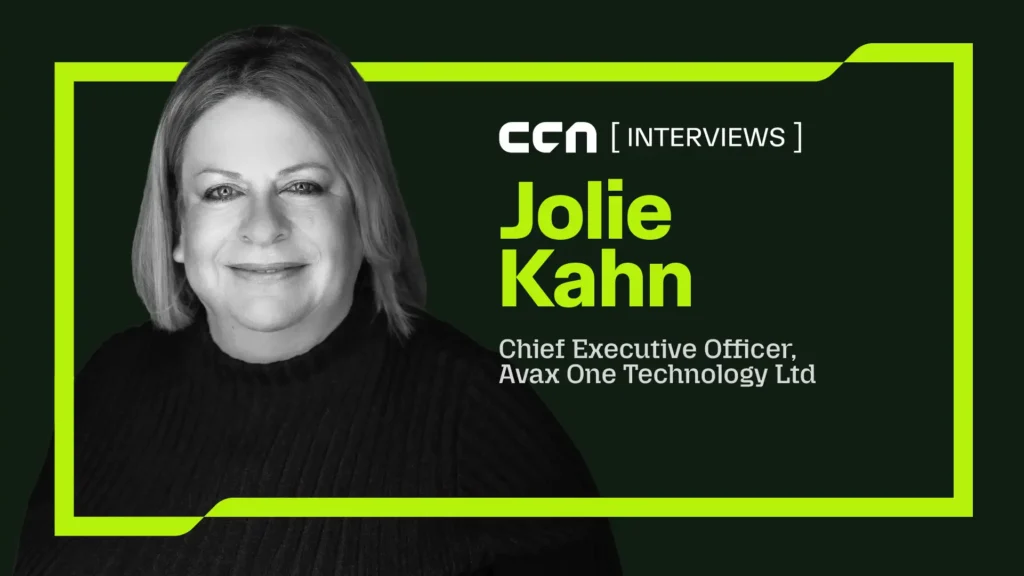
At DC Blockchain Summit 2026 in Washington, D.C., policymakers, industry leaders, and blockchain innovators gathered to discuss the next phase of digital asset adoption. Among them was Jolie Kahn, CEO of AVAX One, a company positioning itself at the intersection of traditional finance and the Avalanche ecosystem.
As institutional interest in blockchain continues to grow, alongside ongoing debates around regulation and security, Kahn offered a grounded perspective on what it will take to move the industry forward.
In a conversation with Crypto Citizen Network (CCN)’s Senior Editor Dr. Guneet Kaur, Kahn spoke candidly about AVAX One’s mission, the unique advantages of Avalanche’s architecture, and the persistent challenges slowing broader adoption.
From educating smaller businesses to navigating regulatory uncertainty, her message was clear: the technology is ready, but awareness, trust, and clarity still need to catch up.
How AVAX One Is Driving Avalanche Adoption Among Businesses
Kahn described AVAX One as uniquely positioned within the Avalanche ecosystem, emphasizing its role as a bridge between traditional businesses and blockchain technology.
“We are the only publicly traded digital asset treasury for Avalanche,” she said. “The problem we’re trying to solve is, how do we get more companies that would benefit from being on the Avalanche blockchain to join it?”
While much of the industry focus has been on large institutions, Kahn stressed that AVAX One is targeting a different segment.
“We want to focus on the smaller to middle market, because we believe there are lots of applications,” she explained.
She pointed to Avalanche’s architecture as a major differentiator. “Avalanche is the first one that’s multi-chain, multi-asset,” Kahn said.
“We can have different chains with different protocols, different permissions, different levels of confidentiality built in, but because they’re all Avalanche, they can talk to each other.”
Why Avalanche’s Speed, Compliance and Flexibility Matter for Enterprises
A recurring theme throughout the conversation was the need to address concerns around security and compliance, often cited as barriers to adoption.
Kahn highlighted Avalanche’s ability to integrate regulatory requirements directly into its infrastructure.
“You can build KYC, AML, any sort of compliance mechanism you want,” she said. “You can set up these private chains that all operate under Avalanche.”
At the same time, she emphasized performance as a critical advantage. “Avalanche is very fast from the beginning to end, one transaction can happen in under one second,” she noted.
To illustrate real-world impact, Kahn shared an example: “It used to take 2.5 to 3 months to sell a car in California… I’m told it now takes 2.5 minutes to transfer the title, and 12 seconds of that is the Avalanche transaction.”
Despite these benefits, Kahn acknowledged that perception remains a challenge. “There are still a lot of people in the world who don’t believe in blockchain,” she said.
“What we’re trying to solve for is credibility… and getting everybody to understand that you can have the safety you’re concerned about.”
Crypto Regulation and Avalanche: Why Clarity Is Key for Institutional Adoption
On regulation, Kahn made it clear that clarity, not necessarily leniency, is what the industry needs.
“The sooner we get consistent clarity in the regulatory world, the better off we are,” she said. “If everybody knows what to expect… then it’ll run a lot more smoothly.”
She pointed to ongoing legislative efforts in the U.S., including the CLARITY Act and broader Market Structure proposal, as important steps forward. However, she stressed the importance of precision in policymaking.
“The drafting here by legislators is incredibly important… the more we can get everybody on the same page, the better off we are.”
Kahn also raised concerns about overregulating the wrong parts of the ecosystem. “There’s a concept here of infrastructure versus intermediaries,” she explained.
“If we try to overregulate the infrastructure piece, that’s going to cause a lot of disincentive for people to actually work in the space.”
How AVAX One Is Addressing Crypto Security Risks and Compliance
When asked about security, Kahn outlined a layered approach. On compliance, AVAX One works with established partners.
“We have an asset manager, Hivemind; they have very strong KYC/AML,” she said. “Before we do business with any third party, we do due diligence.”
On cybersecurity, the company is evolving its strategy as it grows. “We do have a cybersecurity policy, and I am now working with one of the experts in Washington,” Kahn noted.
“As we look to bring other businesses onchain, we will be working with an outside firm to ensure that we have everything we need in place.”
Ultimately, Kahn believes the biggest hurdle is not technological, but educational. Institutional adoption, she said, depends on better understanding.
“The biggest barrier right now is just… getting more people out there talking about it and educating the public,” she concluded.
The information provided in this article is for informational purposes only. It is not intended to be, nor should it be construed as, financial advice. We do not make any warranties regarding the completeness, reliability, or accuracy of this information. All investments involve risk, and past performance does not guarantee future results. We recommend consulting a financial advisor before making any investment decisions.

Giuseppe Ciccomascolo began his career as an investigative journalist in Italy, where he contributed to both local and national newspapers, focusing on various financial sectors.
Upon relocating to London, he worked as an analyst for Fitch's CapitalStructure and later as a Senior Reporter for Alliance News. In 2017, Giuseppe transitioned to covering cryptocurrency-related news, producing documentaries and articles on Bitcoin and other emerging digital currencies. He also played a pivotal role in establishing the academy for a cryptocurrency exchange website. Crypto remained his primary area of interest throughout his tenure as a writer for ThirdFloor.


 Easy
Easy